

Can damaged commercial glazing be repaired rather than replaced?
Yes, some damaged commercial glazing can be repaired rather than replaced, particularly where the surrounding frame and glass remain suitable for safe retention. GlassPlus UK assesses the damage, installation and compliance requirements before recommending the most appropriate repair or replacement solution.
Repair may be appropriate where the damage is localised and the glazing system can remain safe, stable and compliant. It is not suitable for every defect: a cracked or shattered pane will usually require replacement, while minor surface damage, failed seals, defective fittings or isolated frame issues may be capable of repair.
The condition of the glass is the first consideration. Small chips, light scratches and limited surface marks can sometimes be treated by a specialist process, provided they do not affect the glass’s structural performance or create a visible distortion that is unacceptable for the property. Any crack that extends through the pane, reaches an edge or continues to spread is generally a replacement matter. Toughened glass that has broken into small fragments cannot be repaired in place, because its safety performance has been compromised.
Insulating glass units require particular care. A failed perimeter seal may allow moisture or misting to develop between the panes. If the glass itself and the surrounding system remain sound, replacing the sealed unit may resolve the defect without replacing the complete frame or installation. This is different from attempting to repair the glass within the sealed unit, which is not normally a practical option.
Some problems relate to components around the glass rather than the pane itself. Worn gaskets, deteriorated sealant, loose beads, damaged handles, hinges and other glazing hardware can sometimes be renewed or adjusted. Repairs to these elements can help restore weather resistance, security or operation while retaining serviceable glass and framing. The surrounding frame must still be checked for distortion, corrosion, movement and water ingress.
Commercial glazing is often part of a larger system, particularly in curtain walling and shop fronts. A repair that appears adequate at pane level may not address movement within the framing, failed drainage, impact damage to mullions or transoms, or a defective connection. Retaining the existing installation is therefore sensible only when the supporting elements remain fit for purpose. Where the frame has been significantly damaged, replacement of the affected section or a wider installation may be more appropriate than a limited repair.
Safety and regulatory requirements also determine the available option. The proposed work must take account of the glass specification, location, size, access, impact risk and the function of the area. Safety glass, fire-related requirements, thermal performance and protection against weather exposure may all influence whether an existing pane can be retained. A visually acceptable repair is not sufficient if it leaves the installation unsuitable for its use or inconsistent with current building and safety regulations.
For occupied commercial premises, the decision should also consider how the defect affects employees, visitors, stock and day-to-day operations. A temporary measure may be needed where damaged glazing presents an immediate hazard, but this should not be treated as a permanent solution. The final recommendation should distinguish between a cosmetic repair, a component repair, a sealed-unit replacement and a full replacement of the glazing or framing.
GlassPlus UK draws on more than 30 years of industry experience when considering these distinctions. Its approach is to identify the actual cause of the defect, establish whether the remaining installation can be safely retained and explain the implications of repair and replacement before work is agreed. This helps commercial property owners and facilities teams choose a solution based on condition, compliance and service requirements rather than appearance alone.
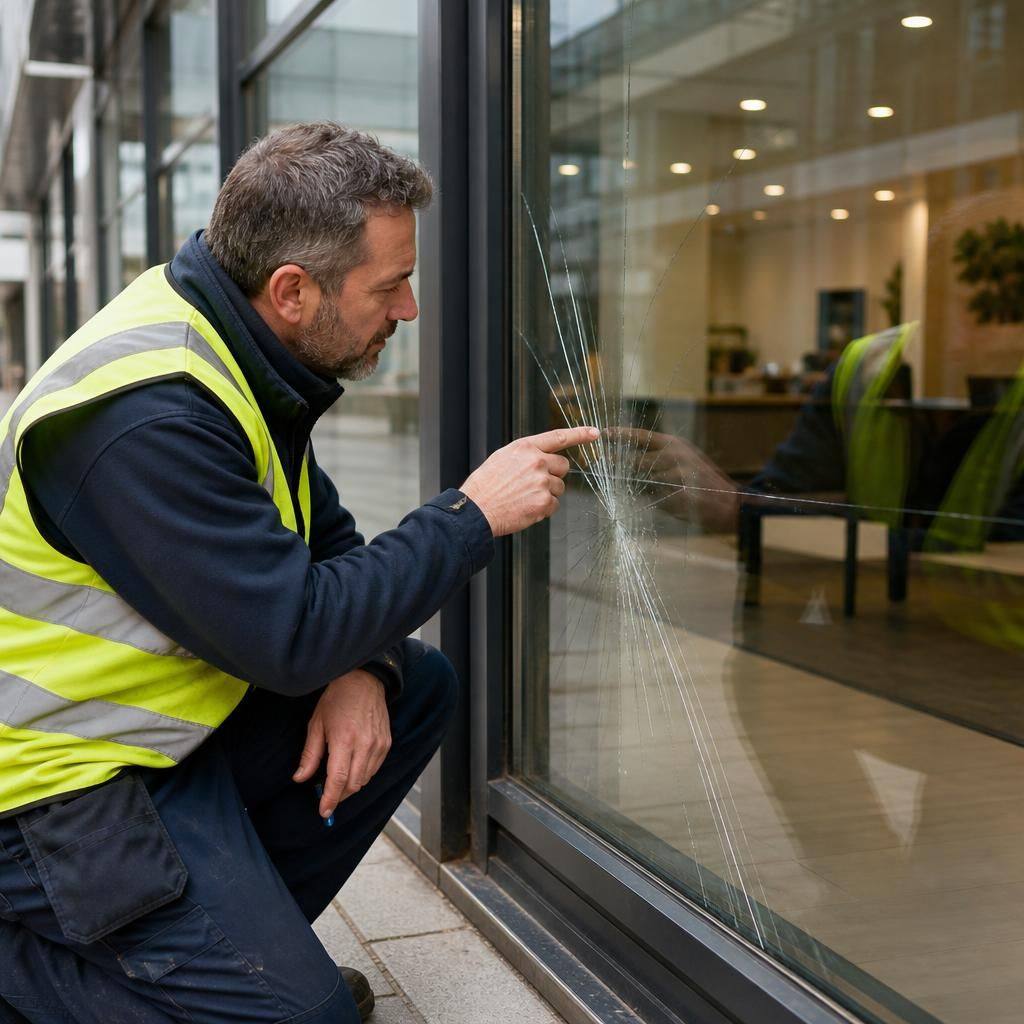
Repairability should be judged against the complete glazing assembly, not the damaged area in isolation. A suitable recommendation identifies which parts can remain in service and which require attention, so the proposed work has a defined scope rather than treating the visible defect alone.
This distinction is particularly important when a repair is being considered for an existing commercial installation. The assessment should explain the limits of the proposed work, any elements that remain under observation and the circumstances that would make replacement necessary. This gives property owners and facilities teams a clear basis for deciding whether repair is an appropriate long-term option.