Can commercial glass installation take place while a business remains operational?
Yes, commercial glass installation can often take place while a business remains operational, provided the work is properly planned and the area can be segregated from staff, visitors and customers. GlassPlus UK can coordinate phased installation, controlled access and suitable safety measures to help minimise disruption while maintaining a secure working environment.
Commercial glass installation can take place while a business is operating, but only where the proposed method is suitable for the building, the glazing system and the activities taking place nearby. GlassPlus UK assesses these factors before work begins so that installation arrangements are practical, proportionate and compliant with current building and safety regulations.
The first consideration is the extent of the work. Replacing an isolated pane or completing work in a defined section of a shop front may be easier to accommodate than installing large units across an occupied office, entrance area or façade. The size and weight of the glass, access for handling equipment, the position of the installation and the need to remove existing glazing all affect whether the area can remain in use.
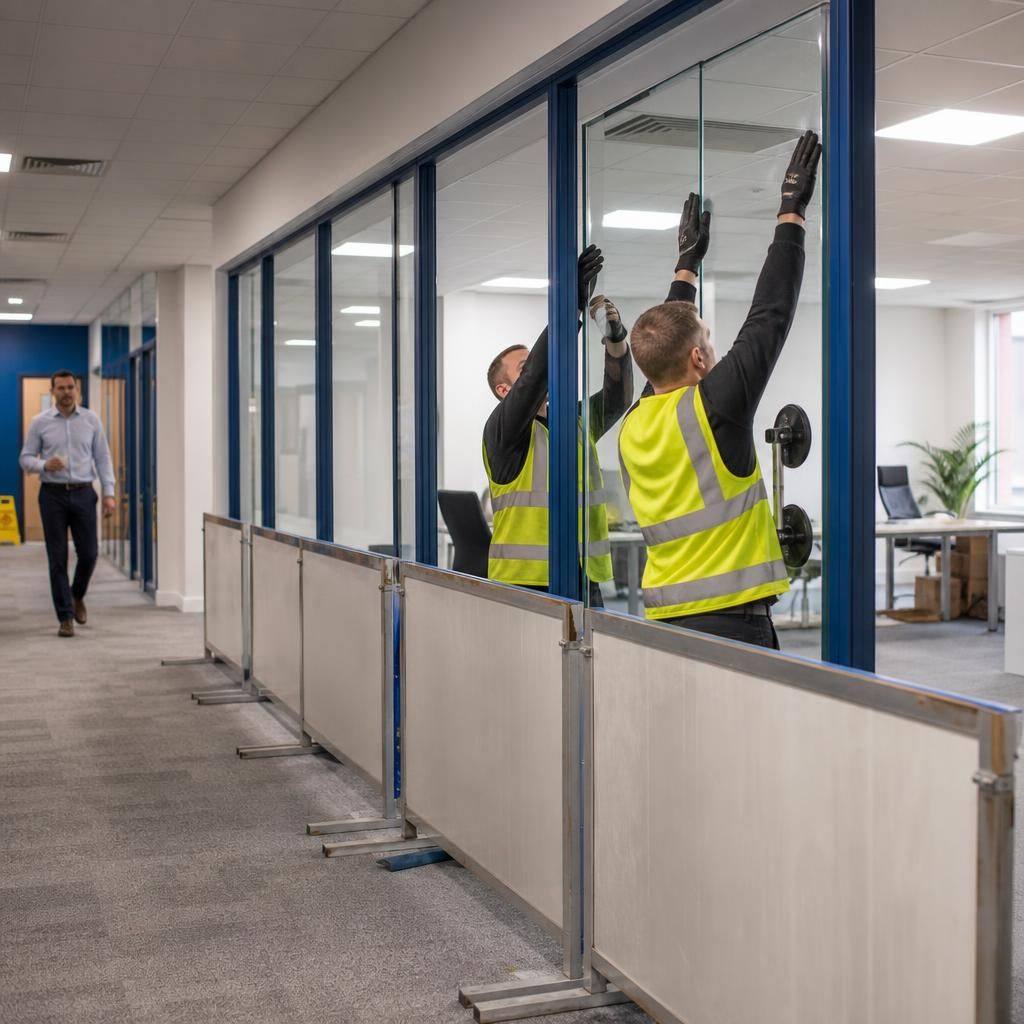
Where the work is suitable for an occupied premises, the installation can be organised around the way the business operates. This may involve agreeing suitable work areas, arranging access routes and sequencing the installation so that only the necessary part of the building is affected at any one time. Staff responsible for the premises should identify entrances, customer routes, reception areas, escape routes and operational zones that need to remain accessible.
It is also important to consider activities that may be affected by the work. Glass handling, removal of existing units, drilling, sealant application and the movement of tools or equipment can create temporary noise, restricted access or localised debris. These issues should be discussed in advance, particularly where the installation is close to public-facing areas, sensitive equipment or areas used for meetings and deliveries.
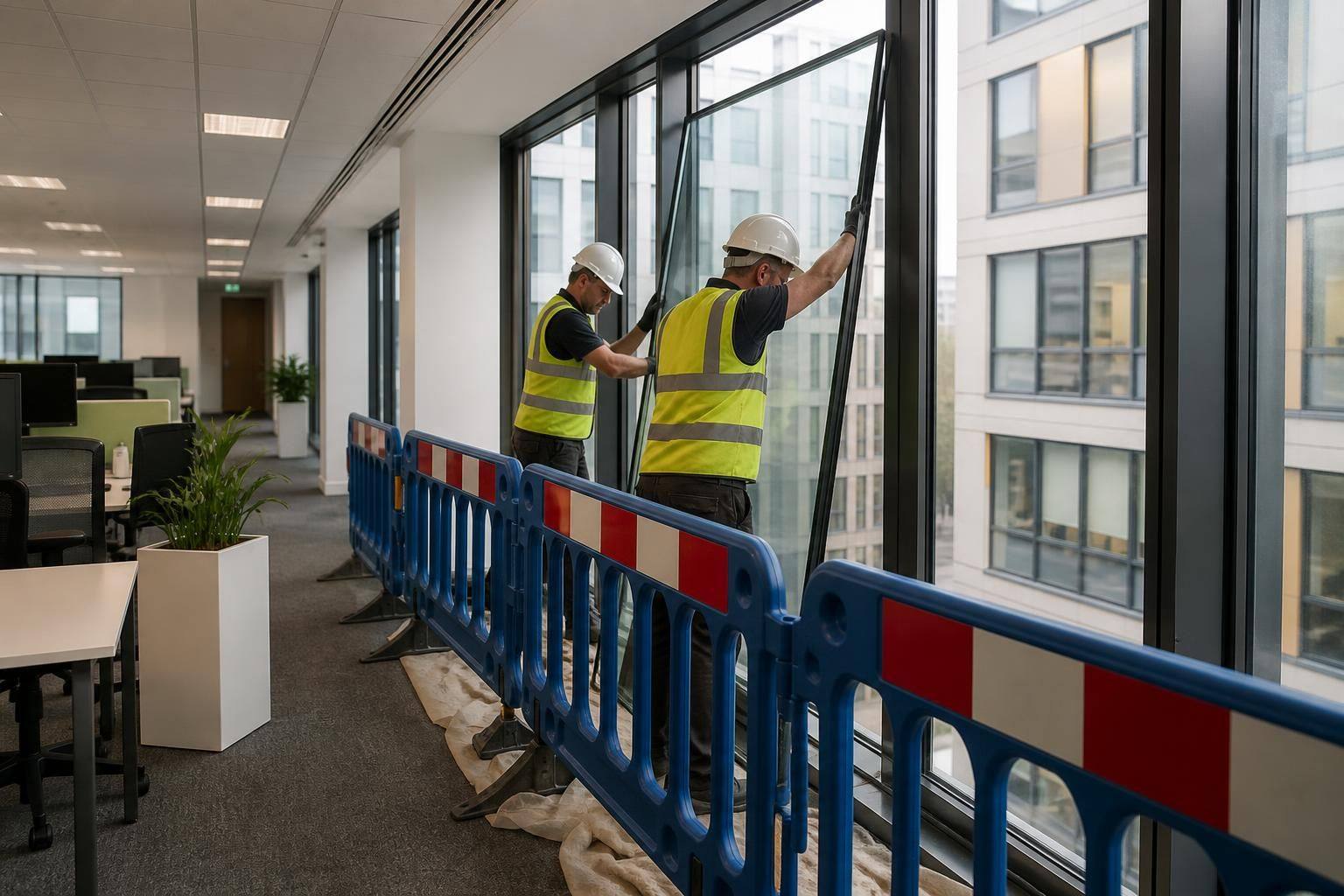
Before fitting begins, the installation team should confirm how the working area will be controlled. Suitable arrangements can include physical barriers, warning notices, temporary protection and a clearly defined route for materials. The exact measures depend on the premises and the installation method. They should prevent unauthorised access without creating confusion for staff, visitors or customers.
Security is another practical consideration. If an existing window, door or façade section must be removed, the opening may need to be managed carefully until the replacement glass is fitted and secured. The programme should account for the condition of the existing frame, the availability of the replacement unit and any necessary preparation. A business should not assume that an opening can simply be left exposed during normal trading or office activities.
For larger commercial installations, additional planning may be needed for delivery, lifting and positioning. Access to the building, loading arrangements, internal routes and the location of handling equipment should be checked beforehand. This is particularly relevant where the premises has restricted access, shared entrances or limited space around the installation area.
GlassPlus UK can discuss the proposed work with the responsible building representative and identify the information needed before installation is scheduled. Clear communication helps establish what must remain operational, which areas can be temporarily restricted and whether the work should be completed in stages. It also gives the business an opportunity to inform staff, tenants and visitors about any temporary changes.
Not every installation is appropriate during normal business activity. Large-scale façade work, installations affecting the principal entrance or projects involving extensive removal may require wider restrictions or a different programme. If continued operation would create an unacceptable risk or prevent the work from being completed properly, the installation should be rescheduled or planned around a more suitable access arrangement.
For a reliable assessment, businesses should provide details of the affected location, the type and extent of the proposed glazing work, access constraints and any operational requirements. GlassPlus UK can then advise whether installation during the business’s normal operating period, Monday to Friday from 7.30am to 4.30pm, is appropriate and what preparation is required.
A controlled handover helps a business keep unaffected areas in use during installation. Once a section is fitted, the installation team can complete the necessary securing, sealing and checks before that area is returned to staff or visitors. This avoids reopening a space while materials, tools or unfinished glazing remain present.
GlassPlus UK can use this approach where the layout and scope of the project allow it. The responsible building representative remains informed about which section is being worked on, which areas are available and when access can safely resume. This gives the business a clearer basis for maintaining day-to-day operations without compromising the quality or safety of the installation.