
How much privacy does a commercial glass partition provide?
A commercial glass partition can provide anything from open visibility to a high degree of visual privacy, depending on the glazing specification. Clear glass preserves sightlines, while frosted or obscured glass limits direct views without removing natural light.
The privacy provided by a commercial glass partition depends on the type of glass, its finish, the layout of the space and whether privacy is required visually, acoustically or both. A carefully specified partition can screen sensitive discussions and working areas while still allowing daylight to pass between rooms, but glass alone does not automatically provide complete confidentiality.
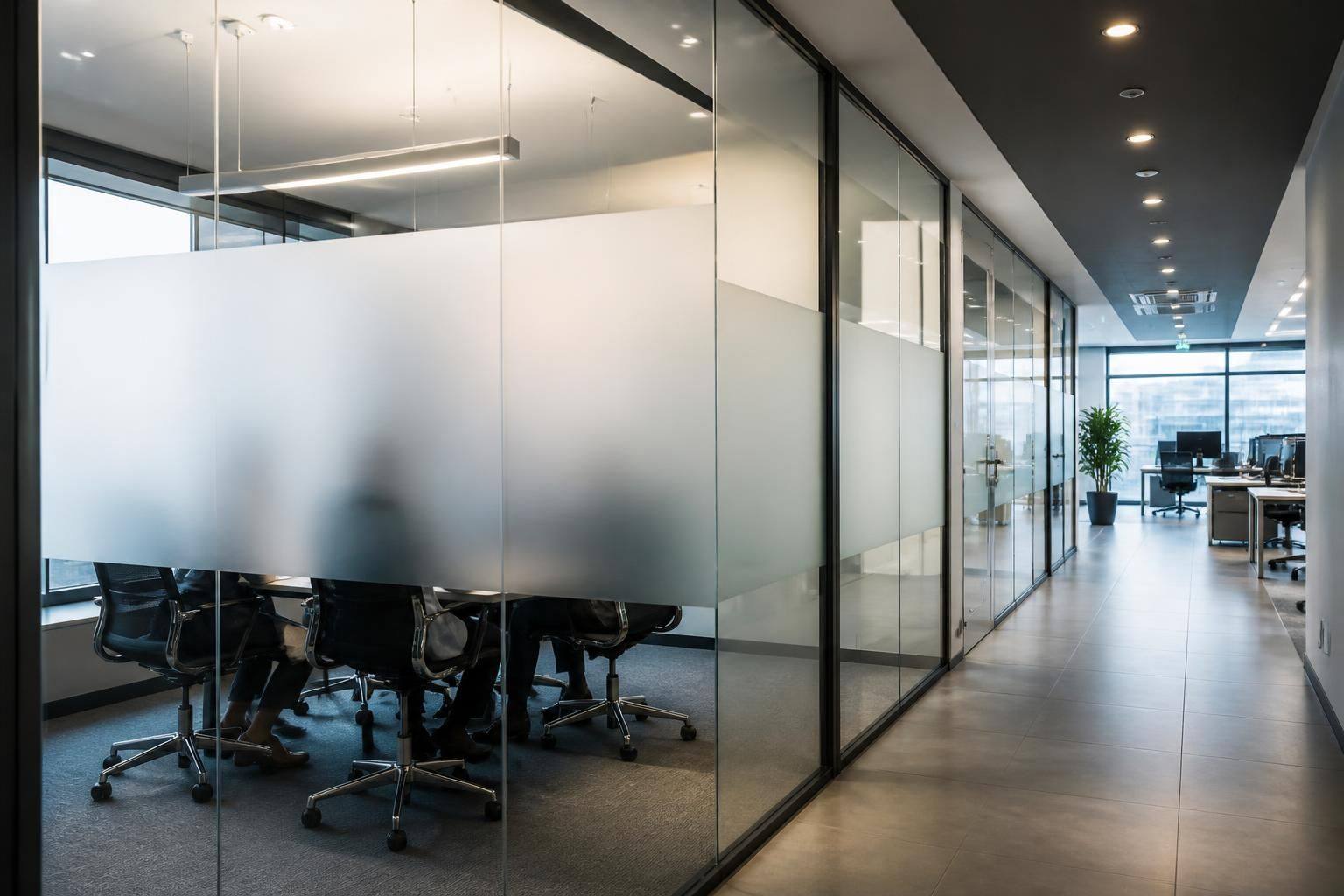
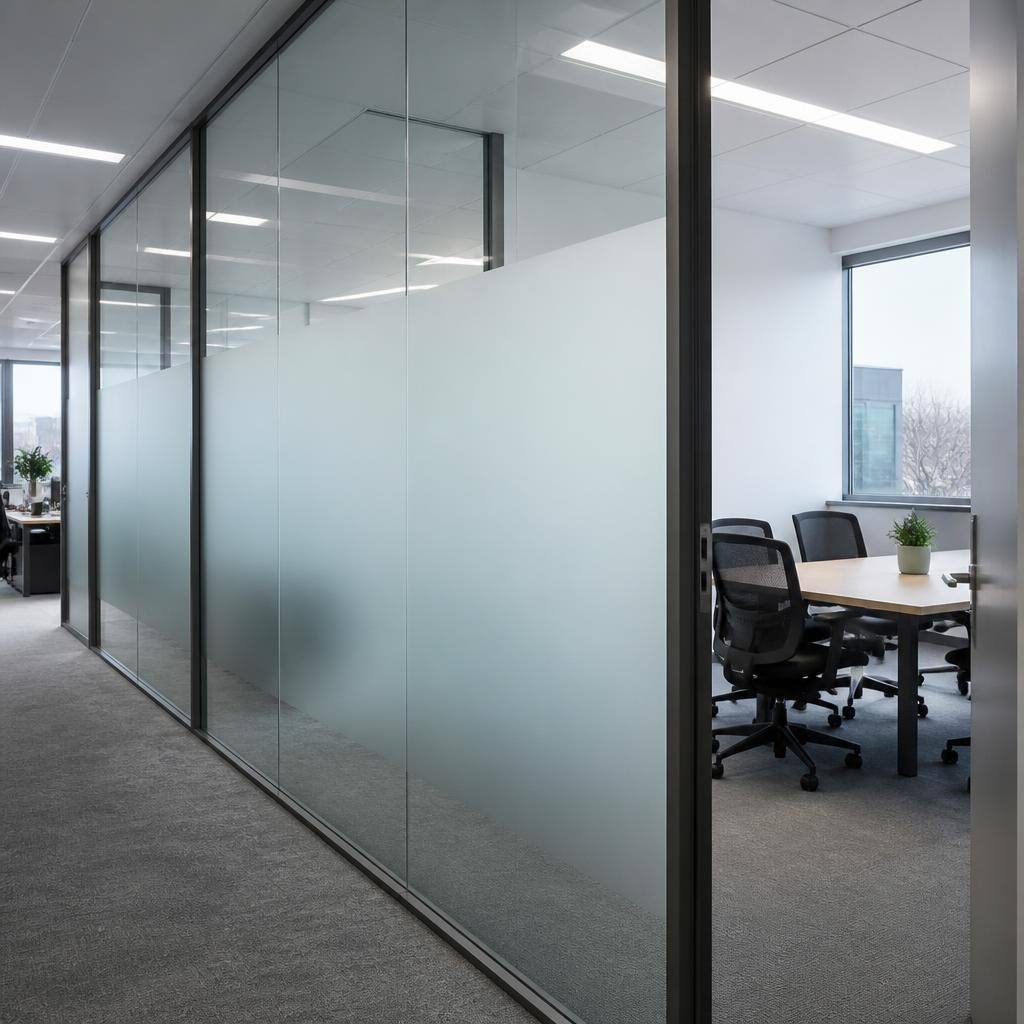
Visual privacy is determined mainly by how clearly people, documents and equipment can be seen through the partition. Clear glazing offers the greatest transparency and is often suitable for circulation areas, reception spaces or offices where openness and supervision are useful. Where a room needs greater discretion, obscured, frosted or etched glass can soften or remove the view through the panel. These finishes may cover the whole pane or be applied selectively as bands, panels, logos or other manifestations.
Partial obscuring is useful where occupants need privacy at seated or eye level but still want borrowed light above the partition. Full-height obscuring provides a higher level of visual screening, although the design should still consider the glazed door, frame gaps and any adjacent sections that may allow views into the room. A partition’s privacy specification therefore needs to be considered as a complete arrangement rather than by looking at the central glass panel alone.
Privacy film can provide a practical way to alter the appearance of existing or proposed glazing. It is available in different patterns and levels of opacity, allowing a business to balance branding, daylight and screening requirements. Film can also be more adaptable than permanently treated glass if the internal layout or privacy needs may change. Its suitability depends on the condition and construction of the glass, the quality of the installation and the cleaning regime.
Acoustic privacy is separate from visual privacy. Frosted glass can prevent people from seeing into a meeting room, but it does not by itself stop speech travelling through the partition. Sound can pass through the glass, framing, doors, ceiling void, floor and adjoining walls. If confidential conversations are expected, the specification may need to include acoustic-rated glazing, well-sealed joints, suitable door sets and attention to the surrounding construction. Gaps above a partition or poorly sealed interfaces can undermine the acoustic performance of an otherwise substantial installation.
For meeting rooms, interview rooms and areas handling commercially sensitive information, the appropriate solution may combine obscured glazing with solid elements, seals, acoustic treatments or a carefully positioned partition. A room used for ordinary team discussions may require a different balance from a boardroom or confidential consultation space. The right level of privacy should therefore be established before the glass and framing are selected.
Design details also affect how private a partition feels in day-to-day use. Reflections, lighting levels and the position of desks can make an interior more or less visible, even where the glass specification is unchanged. Internal blinds or switchable privacy glazing may offer adjustable screening, while decorative manifestations can improve awareness of the glass and help meet safety requirements without making the whole partition opaque.
Glass type and thickness should be selected alongside the intended use of the room, the dimensions of the panels and the fixing system. Safety glazing and visible manifestations must be considered in line with current building and safety regulations. The existing structure, floor, ceiling and adjacent walls also need to be assessed so that the partition is stable, properly sealed and compatible with the surrounding commercial space.
In practice, a commercial glass partition can provide privacy ranging from transparent separation to strong visual screening, with acoustic performance treated as a separate design requirement. GlassPlus UK assesses the intended use of each area and the surrounding conditions before advising on a suitable combination of glazing, finish, framing and privacy features for commercial premises.
A commercial glass partition should not be treated as a security barrier. Even where the glazing prevents direct views, authorised access, door control and the handling of confidential documents remain separate considerations. Businesses dealing with sensitive information may therefore need suitable access arrangements alongside the chosen privacy finish.
This distinction helps define what the partition is expected to achieve. It can manage visibility between areas and support a more discreet working environment, but it should form part of a wider privacy plan rather than being relied upon as the sole safeguard for confidential activity.
Discuss your commercial glass partition privacy requirements
Businesses reviewing privacy requirements for a new or altered partition can discuss the intended use of each space with GlassPlus UK. This helps establish whether the proposed arrangement needs visual screening, acoustic consideration or a combination of both.