
How is safety managed during commercial glass installation?
Safety during commercial glass installation is managed through suitable risk assessments, careful site preparation and secure fitting procedures. GlassPlus UK works in line with current building and safety regulations, helping businesses maintain a controlled installation environment.
Commercial glass installation safety is managed as a controlled sequence, with responsibilities, equipment, access arrangements and installation methods considered before work begins. GlassPlus UK applies this approach to reduce avoidable hazards for installers, building occupants, visitors and other contractors working on the same premises.
Clear responsibility and communication are central to safe work. The installation team confirms who is responsible for site access, isolating affected areas, coordinating with the business and authorising the work to proceed. Any restrictions relating to deliveries, security systems, fire routes, customer access or shared areas should be communicated before installation starts. This avoids uncertainty when the glazing team is working inside an occupied commercial building.
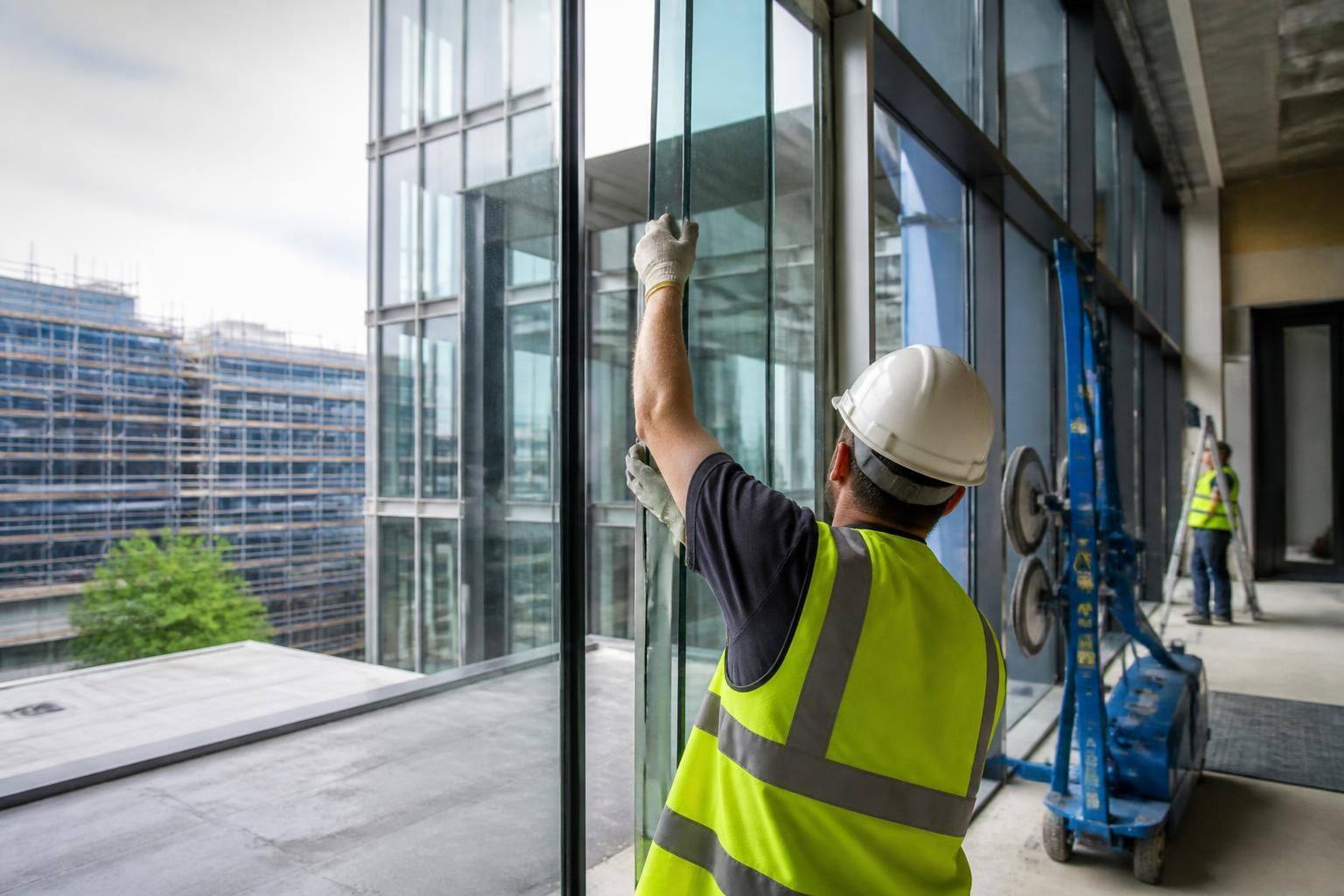
Glass is handled as a specialist material. Its weight, size, edges and centre of gravity affect how it must be moved and positioned. The team selects suitable handling equipment and enough personnel for the individual unit, rather than treating every pane in the same way. Glass is kept supported during movement, and installers avoid placing weight or pressure on areas that could cause cracking or loss of stability.
The work area is controlled throughout the installation. Barriers, warning notices and controlled access help keep staff, customers and visitors away from lifting and fitting operations. Tools, frames and materials are arranged to maintain safe walkways, while the team takes account of doors, corridors, stairways and other routes used by the building. Where work affects a shared or public-facing space, the installation sequence can be coordinated with the person managing the premises.
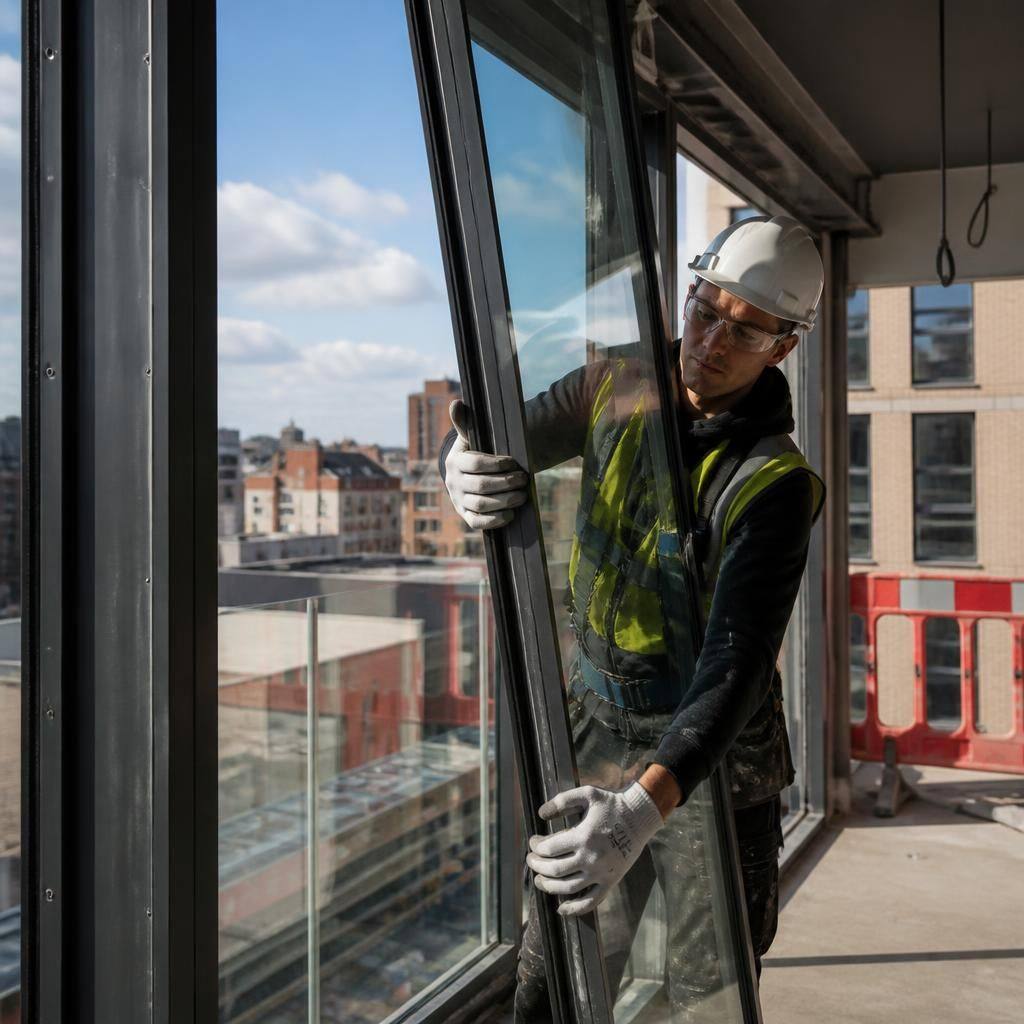
Personal protective equipment and suitable tools are selected for the task. This may include protection for hands, eyes and feet, together with equipment suited to handling glass and working at height where applicable. Access equipment is used only on an appropriate surface and in a suitable position. The method is adjusted if the glazing cannot be safely reached from ground level or if the surrounding structure does not provide adequate support.
The building itself is protected as part of the safety process. Before fitting, the team considers the condition of the opening, the frame, surrounding finishes and any nearby services. This helps prevent damage caused by movement, drilling, sealant application or the removal of existing glazing. Existing glass is removed in a controlled manner, with fragments collected and disposed of safely rather than left where they could create a later hazard.
Installation quality also affects long-term safety. The replacement unit must be correctly positioned and supported, with suitable clearances, packers, seals and fixings for the particular frame and glass specification. Poor support or incorrect pressure can place stress on the pane and may affect its performance. GlassPlus UK checks that the finished installation is stable, secure and appropriately finished before the area is returned to normal use.
Particular care is required where the installation involves large panes, elevated positions, fragile finishes, restricted access or a building that remains operational. In these circumstances, the sequence may be divided into manageable stages, with additional coordination between the glazing team and the business. Work is paused and reviewed if conditions change or if the agreed method can no longer be followed safely.
On completion, the work area is checked for loose materials, sharp remnants, packaging and other obstructions. The installed glass and surrounding frame are visually reviewed, and any relevant issues are raised with the client. This final check provides a clear handover and helps ensure that the glazing can be brought back into service without leaving an unmanaged risk behind.
GlassPlus UK brings more than 30 years of industry experience to commercial glazing work and carries out its work in line with current building and safety regulations. For businesses comparing installation providers, this combination of structured control, specialist handling and attention to the occupied working environment is an important part of selecting a dependable commercial glazing contractor.
Safety management should remain clear after the installation team has left site. A well-organised handover records what was installed, identifies any limitations affecting use and highlights actions that remain with the building manager. This gives the business a useful reference for future maintenance, inspections or alterations.
For companies comparing glazing contractors, the quality of this information is a practical indicator of professionalism. GlassPlus UK provides a considered handover as part of its commercial glazing approach, helping the responsible person understand the completed work and retain relevant details for the property record.
Discuss your commercial glass installation requirements
Businesses planning a commercial glass installation can contact GlassPlus UK to discuss the site requirements, proposed safety arrangements and suitable next steps. The team can then help establish a clear basis for the quotation and installation plan.