
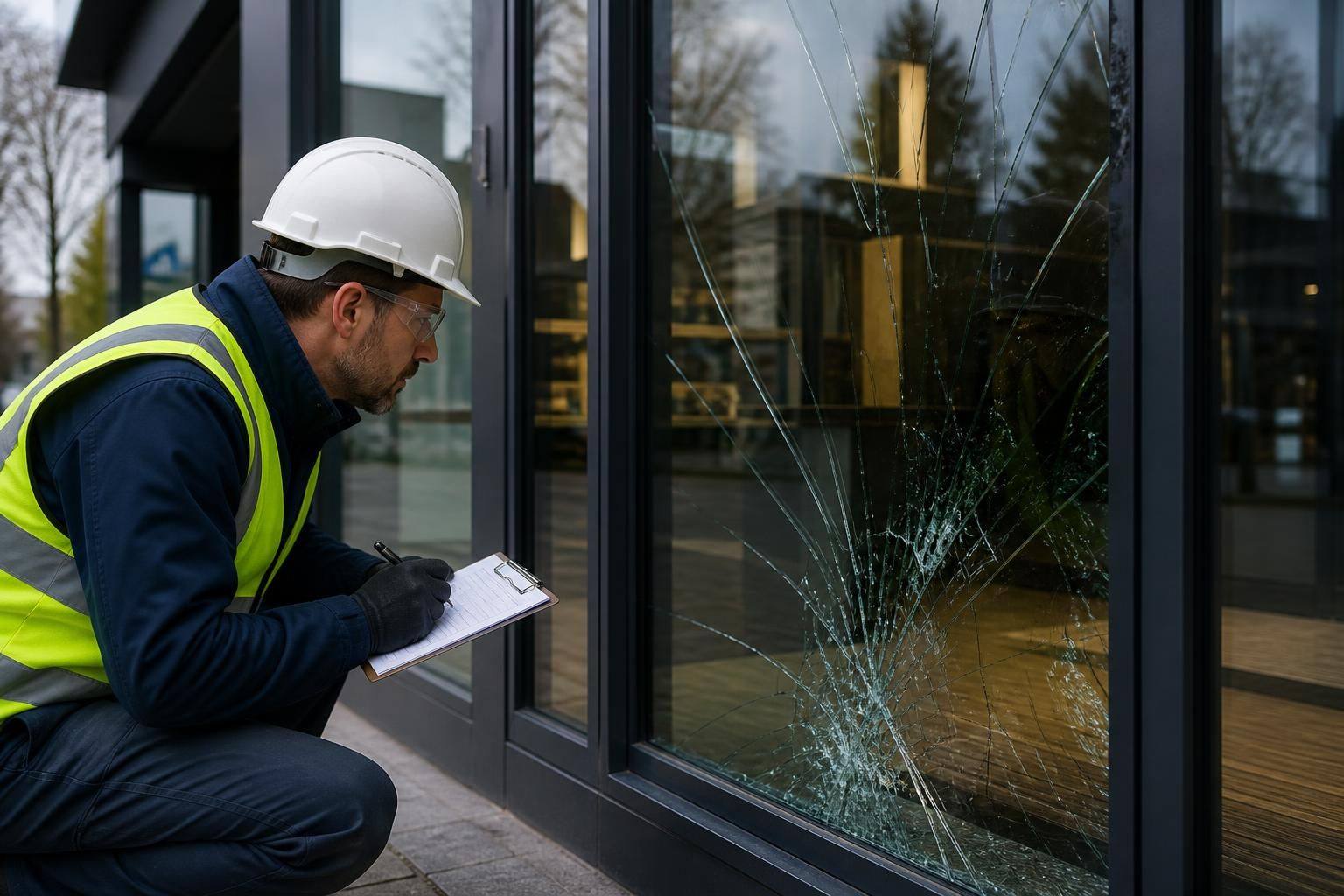
When does damaged commercial glazing require specialist installation planning?
Damaged commercial glazing requires specialist installation planning when the replacement involves large or complex panes, curtain walling, shop fronts, unusual access conditions or potential risks to people and the building. Planning also helps coordinate measurements, suitable materials, safe removal and fitting, and any work needed to minimise disruption to the business.
Damaged commercial glazing requires specialist installation planning when the replacement affects the building’s structure, security, appearance, access arrangements or day-to-day operation. Planning is particularly important where the glass forms part of a larger system rather than being a simple, readily accessible pane. A planned approach establishes what must be measured, which specification is suitable, how the work will be controlled and what checks are required before the area is returned to use.
One of the first considerations is whether the damaged glazing is an isolated unit or part of a connected assembly. Glass within curtain walling, framed shop fronts and modular window systems may share seals, pressure plates, beads, gaskets or drainage routes. Removing one section without understanding these interfaces can affect adjacent panels or allow water and air leakage. Specialist planning identifies the components involved and considers whether surrounding sections need inspection before installation begins.
The condition of the existing frame also influences the installation plan. Frames may have been distorted by impact, weakened by corrosion or affected by previous repairs. If the frame is no longer sound or correctly aligned, fitting replacement glass alone may not provide a suitable result. The assessment should therefore consider:
- Whether the frame remains secure, level and capable of supporting the replacement unit.
- Whether seals, gaskets, beads and fixings are serviceable or need renewal.
- Whether adjacent glazing has suffered movement, cracking or loss of weather protection.
- Whether the replacement must match the existing appearance and performance of neighbouring panels.
Specialist planning is also needed when the glass has a particular safety or performance function. Depending on its position and use, the replacement may need to provide suitable resistance to impact, heat, noise, fire or unauthorised access. Insulated units, laminated glass and other specialist constructions can differ in thickness, weight and edge detail from standard panes. The correct specification must be confirmed before ordering, rather than selected solely by matching the visible size of the damaged glass.
Access arrangements can determine the method as much as the glass specification. The installation plan may need to account for restricted entrances, narrow service routes, internal obstructions, upper-level work, adjoining properties or the need to protect finished surfaces. Where mechanical handling equipment or temporary access equipment is required, its position, loading requirements and route through the site should be considered in advance. This helps prevent an otherwise suitable replacement from being delayed by practical limitations at the property.
Occupied commercial premises often require additional planning. The proposed sequence should take account of staff, visitors, customers, deliveries and other contractors using the area. It may be necessary to separate the work zone, protect nearby fittings and keep escape routes and access points clear. In retail, office and managed property environments, the building manager, landlord or facilities team may also need information about the proposed work before approval is given.
Weather and site conditions can be relevant where the opening will be exposed during the repair. Wind, rain, temperature and the condition of surrounding sealants may affect when removal and installation can proceed. A suitable plan considers how the opening will be controlled between stages and how the completed installation will be protected while materials cure or settle. This is especially important where the glazing forms part of the building envelope.
Planning should include the information needed to verify the finished work. This can include the agreed glass specification, frame condition, fixing and sealing requirements, safety arrangements and any limitations identified during the assessment. After fitting, the installation should be checked for secure retention, correct alignment, consistent seals, damage and an appropriate finish. For glazing connected to wider façade or window systems, the surrounding area may also require a visual and functional review.
Professional planning is therefore justified whenever the consequences of an incorrect measurement, unsuitable glass, poor access method or uncontrolled opening could extend beyond the damaged pane itself. A specialist commercial glazing assessment helps establish the installation requirements before work is scheduled, supporting a controlled repair that is compatible with the building and its use. GlassPlus UK provides commercial glazing repair expertise for businesses across London and surrounding areas, with work carried out in accordance with current building and safety regulations.

Specialist installation planning is particularly valuable where damaged glazing interfaces with other building systems. Shop fronts and commercial entrances may incorporate access control, alarms, signage, automatic doors or internal finishes that cannot simply be removed without coordination. The installation sequence should identify these interfaces in advance, so the glazing work does not interfere with connected equipment or leave surrounding elements incomplete.
This assessment also helps establish who needs to be involved before the work is arranged. A facilities manager, landlord, security contractor or other appointed specialist may need to confirm requirements before the damaged section is removed. Clear coordination reduces uncertainty on site and supports a controlled installation that fits the wider building arrangements.
Discuss specialist planning for damaged commercial glazing
Businesses assessing damaged commercial glazing can contact GlassPlus UK to discuss the installation requirements and arrange a specialist assessment. Providing details of the affected glazing, its location and any access constraints will help inform the next steps.