
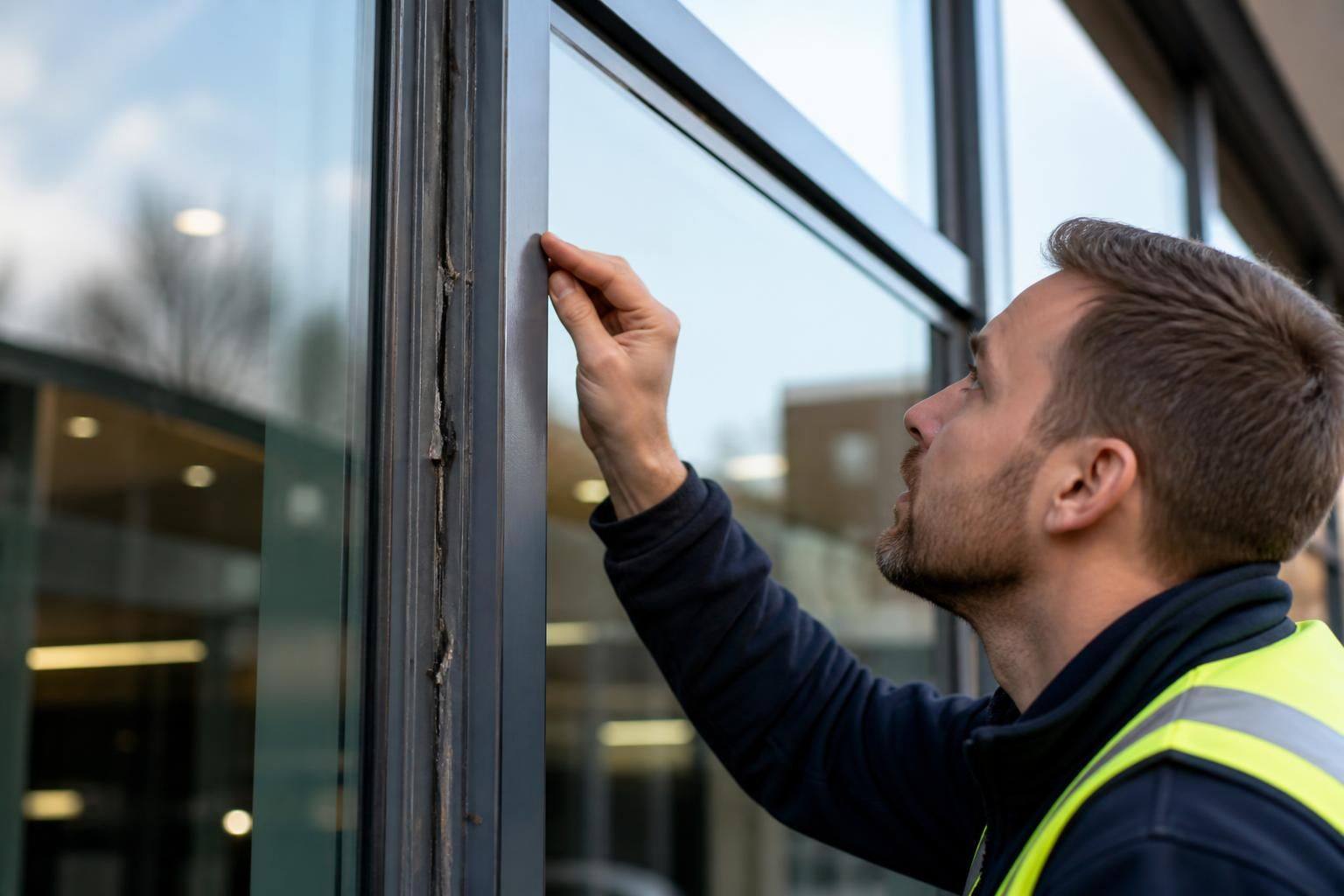
Can commercial glass replacement address damage to the surrounding frame?
Commercial glass replacement can address the glazing, but it will not by itself repair a damaged surrounding frame. The frame should be assessed first to determine whether it can be repaired or whether the complete glazed unit and frame section require replacement.
Surrounding frame damage can sometimes be addressed during a commercial glass replacement project, but replacing the glass alone will not correct a defective frame. The frame must be inspected to establish whether the damage is cosmetic, locally repairable or serious enough to require replacement of the affected frame section or the complete glazed assembly.
The frame is essential to the performance of the glazing. It supports the glass, maintains the intended weather seal and contributes to the security and stability of the installation. Damage such as distortion, impact marks, corrosion, failed joints, loose beads or degraded gaskets can prevent replacement glass from seating correctly. In curtain walling and shop fronts, even a relatively localised defect may affect adjoining panels or the connection between the glazing system and the building.
An assessment will typically consider:
- whether the frame remains straight, stable and securely fixed;
- the condition of beads, gaskets, setting blocks, seals, drainage paths and other glazing components;
- signs of water ingress, air gaps, movement or recurring condensation around the opening;
- whether the damage affects only the surface finish or has weakened the frame itself;
- the compatibility of the proposed replacement glass with the existing frame and glazing system; and
- whether adjacent panels, mullions, transoms or fixings have also been affected.
Minor defects may be dealt with by replacing seals, gaskets, beads or other compatible components, provided that the main frame is sound. Local repairs may also be suitable where the frame has limited surface damage and its alignment, fixings and structural condition remain satisfactory. These measures should not be used to conceal distortion, movement or deterioration that could compromise the new glazing.
More extensive damage may require the affected frame section to be removed and replaced alongside the glass. This can apply where an impact has bent a shop front frame, where corrosion has weakened a metal section, or where a curtain walling component no longer holds the glass securely. If the frame is obsolete, extensively damaged or no longer compatible with the required glazing specification, replacing the complete glazed unit and frame section may provide the more appropriate solution.
Glass selection must be considered together with the frame condition. The replacement pane needs to match the available rebate, glazing method and load requirements, while its safety, thermal and acoustic characteristics should suit the commercial application. Existing glass should not be copied by appearance alone, as the correct specification may depend on the opening’s use, position and surrounding construction.
Where a damaged frame is left in place, the new glass may be exposed to uneven pressure or inadequate support. That can lead to poor sealing, movement, further cracking or premature failure. A proper assessment therefore helps distinguish a straightforward pane replacement from work requiring frame components, surrounding finishes or a wider section of the installation.
GlassPlus UK assesses the condition of the surrounding assembly before recommending the appropriate repair or replacement approach. The completed work should be checked for secure fixing, consistent seals, correct drainage and a sound finish, with the installation carried out in accordance with current building and safety regulations.
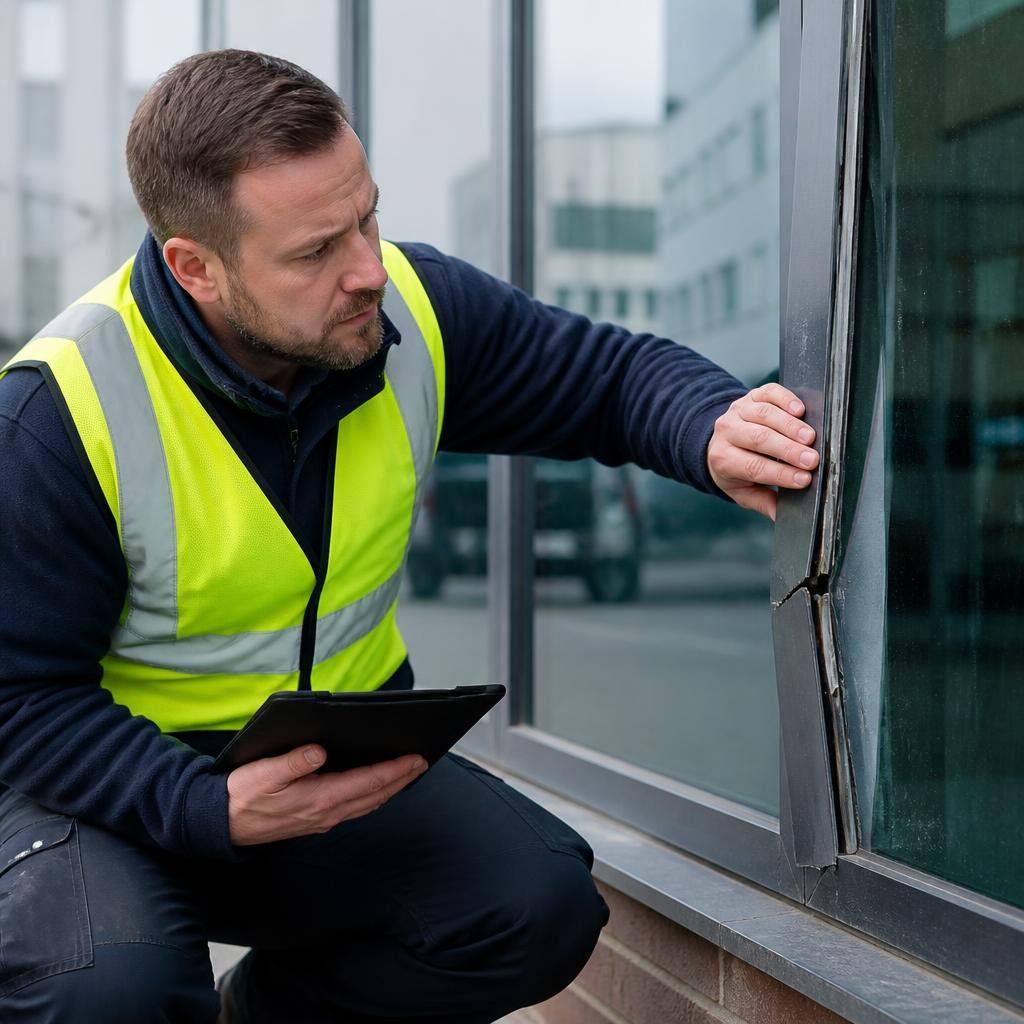
Not all frame damage is caused by the original impact. Cracked joints, recurring gaps or a frame that has shifted out of alignment may indicate movement in the surrounding structure or failure of a fixing. In these circumstances, fitting replacement glass without addressing the underlying cause could place fresh stress on the new installation.
The glazing contractor should record relevant signs before removal and identify whether further investigation by the building’s maintenance team or an appropriate structural professional is needed. Establishing the cause helps ensure that the replacement glass and any associated frame work form part of a suitable, properly coordinated repair.