
Can commercial building glass replacement be carried out while premises remain open?
Yes, commercial building glass replacement can often be carried out while premises remain open, provided the work is carefully planned around safe access, customer and staff movement, and the affected area. GlassPlus UK can assess the site and recommend a practical replacement approach that limits disruption while maintaining compliance with current building and safety regulations.
In many cases, commercial building glass replacement can be completed while a business continues trading. The decision depends on the location and size of the damaged pane, the condition of the surrounding frame, the equipment required and whether the work area can be separated safely from staff, visitors and customers.
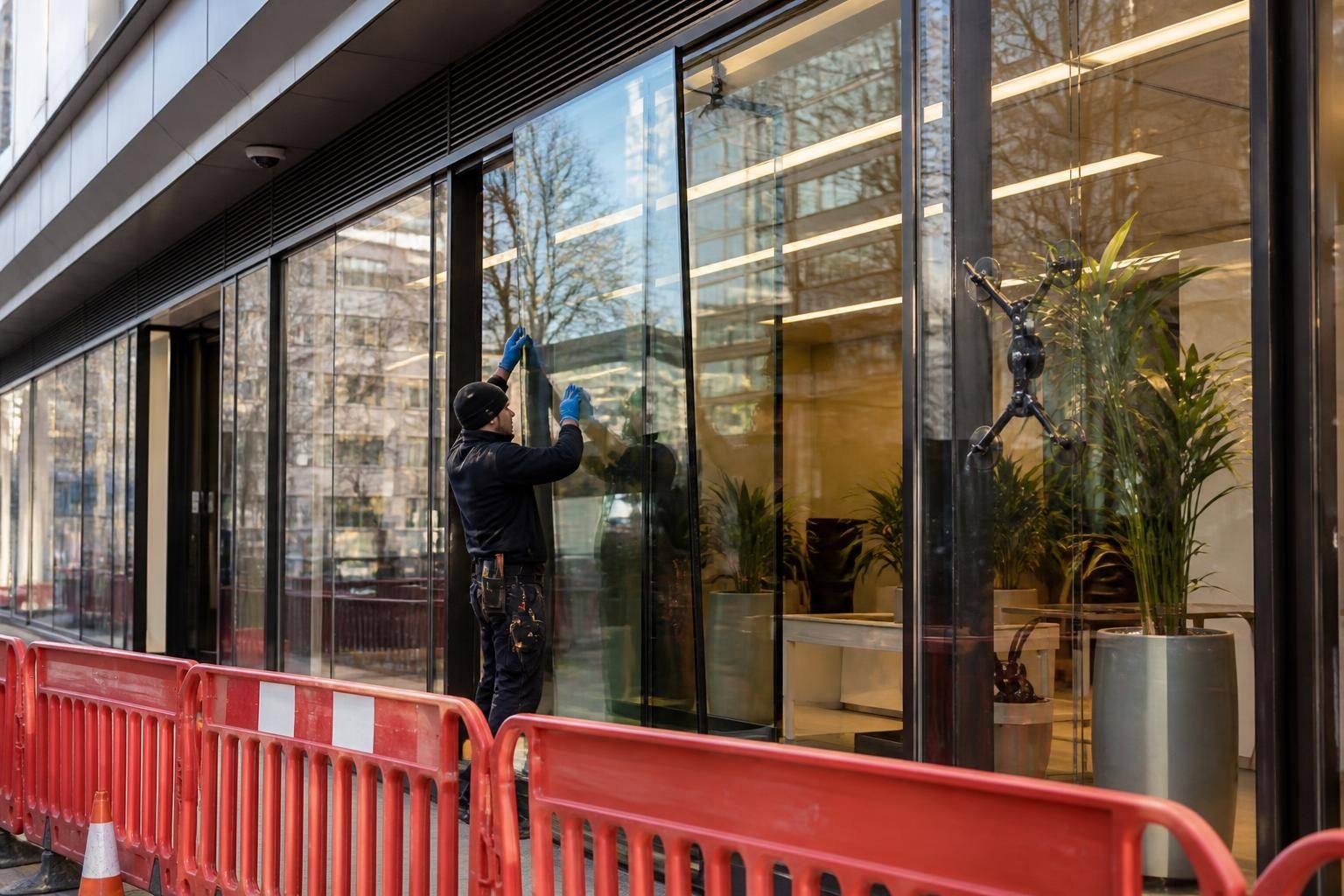
A suitable approach normally begins with a site assessment. GlassPlus UK considers how people enter and move through the premises, whether the affected glazing forms part of a customer-facing area, and whether the replacement can be carried out from inside, outside or both. This helps determine the safest sequence for removing the damaged glass, preparing the opening and installing the replacement.
Where the work is compatible with an open premises, the area can be managed through measures such as:
- clearly defined exclusion zones around the glazing;
- barriers and warning signs to keep staff and visitors away from the work;
- planned movement of people, stock or furniture before work begins;
- careful coordination with the building manager or facilities team; and
- timing the more disruptive stages to suit the property’s daily operations.
The replacement may still involve noise, restricted access and temporary disruption. Businesses should therefore identify any sensitive activities nearby, including reception areas, retail displays, meeting rooms, circulation routes and emergency access points. If the glazing is situated above a busy entrance or in a position requiring specialist lifting equipment, additional controls may be needed before the work can proceed.
Keeping the premises open is not always the safest option. A temporary closure of part of the building may be more appropriate where the glass is unstable, the opening is extensive, the frame has suffered significant damage or the work would leave people too close to lifting, cutting or installation activities. In such circumstances, restricting access to the affected section can provide a safer and more controlled working environment without necessarily closing the whole property.
Commercial buildings also need to consider the effect of the work on security, weather protection and the building’s normal operation. The replacement should be selected and installed with regard to the existing system, including curtain walling, shop fronts or commercial window assemblies. GlassPlus UK applies more than 30 years of industry experience to these assessments and carries out work in line with current building and safety regulations.
For a business comparing replacement options, the key issue is not simply whether the premises can remain open, but whether the work can be properly segregated and sequenced. A site-specific assessment gives the building owner, occupier or facilities manager a clearer basis for deciding between continued operation, partial restriction or a planned closure of the affected area.
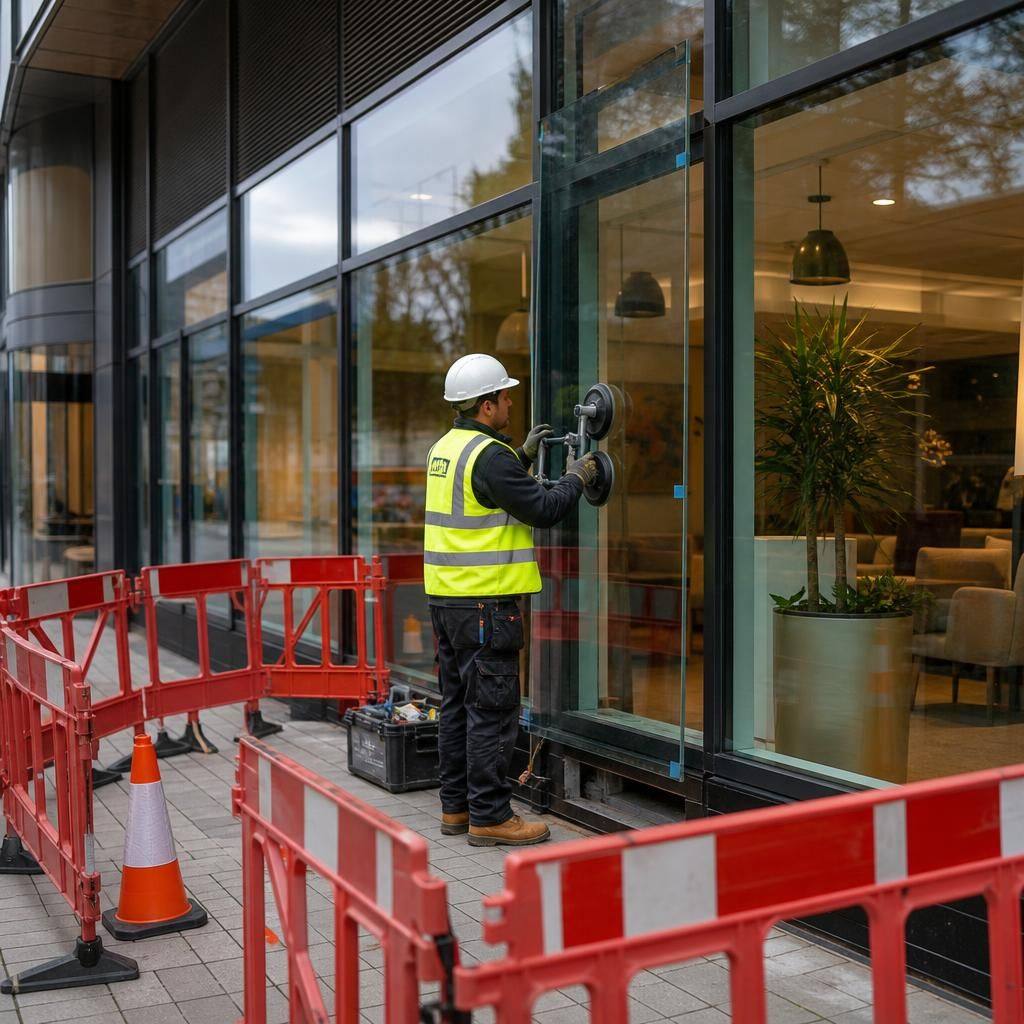
Keeping a commercial building open should not mean compromising the specification of the replacement. The new pane needs to be suitable for the existing assembly and the way the space is used, including its required safety characteristics, appearance and performance. A like-for-like approach may be appropriate in some situations, while damaged frames or changes to the building can require a more considered solution.
Before the area is returned to normal use, the installation should be checked for secure fixing, sound seals and a clean finish. Barriers and restrictions should remain in place until the glazing and surrounding work area are safe for staff, visitors and customers. This gives the building owner or facilities manager a clear point at which the affected part of the premises can be handed back without relying on an unfinished installation.