
When is commercial building glass replacement preferable to repairing existing glazing?
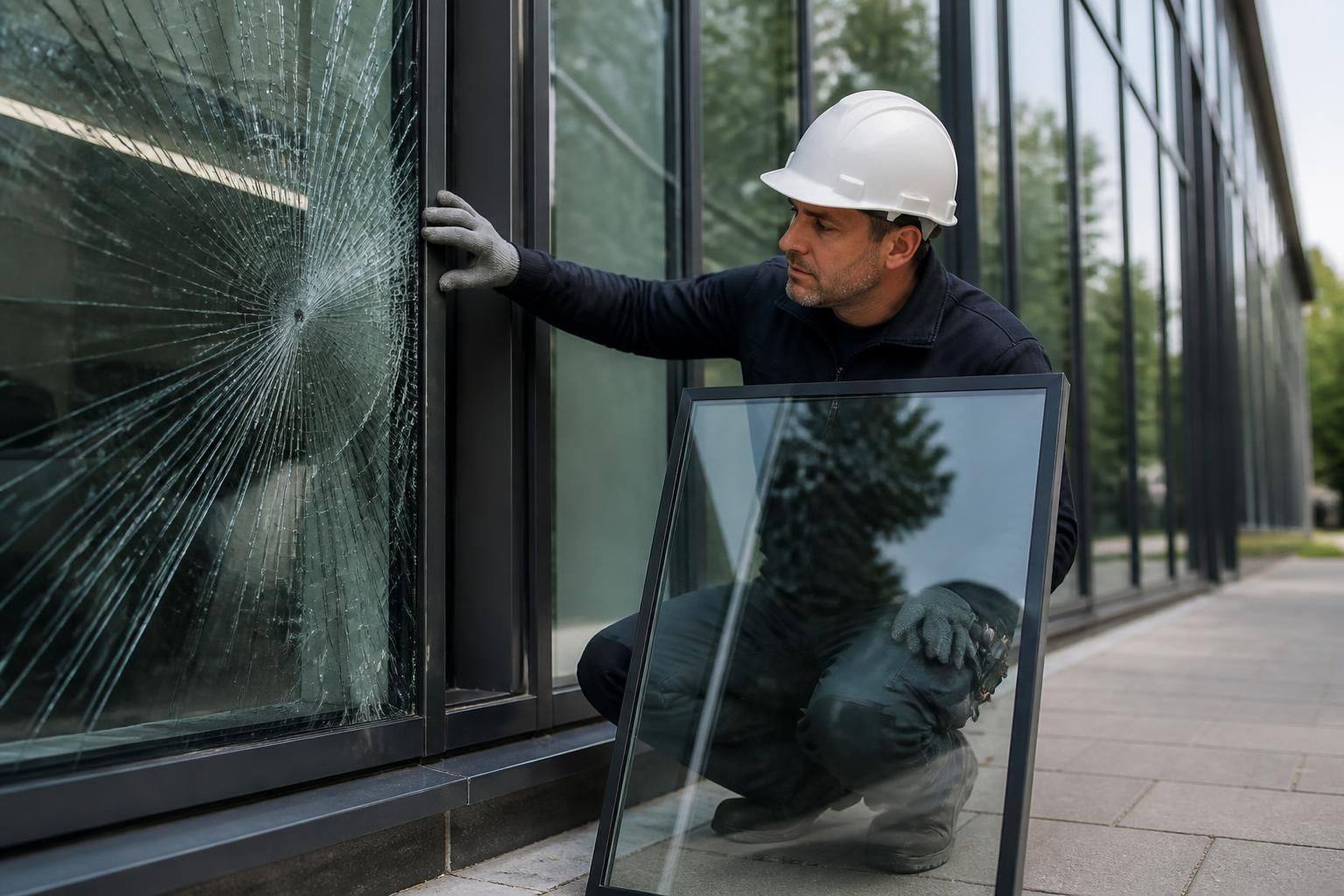
Commercial building glass replacement is preferable when glazing is cracked, shattered or otherwise damaged beyond a safe, effective repair. It is also appropriate when the existing glass no longer meets current building and safety requirements, or when replacing the pane is the more reliable long-term solution.
Commercial building glass replacement is generally preferable where the condition of the glazing means a local repair would be temporary, visually inconsistent or unable to restore the performance of the installation. The decision should take account of the glass itself, the surrounding frame, the sealing system and the demands placed on the building, rather than relying on the visible mark or defect alone.
Replacement is often the more appropriate option when damage extends beyond one small, isolated area. A pane with extensive cracks, multiple impact points or widespread surface deterioration may be difficult to repair effectively. Replacing the complete pane provides a consistent surface and avoids leaving weakened areas within the installation.
It can also be preferable where the glazing unit has failed internally. Double-glazed and sealed units may develop condensation between the panes, misting or a noticeable deterioration in appearance when the edge seal is no longer performing properly. In these circumstances, treating the visible symptom will not restore the sealed unit. A correctly specified replacement unit is normally the more dependable solution.
The surrounding frame and fixing arrangement are equally important. If the glass is damaged because of movement, distortion, failed beads or deterioration around the opening, replacing the pane alone may not address the underlying issue. A survey can establish whether the frame, gaskets, sealants and drainage paths remain suitable, or whether additional remedial work is needed before new glazing is installed.
Replacement may be preferable when a business wants to improve the practical performance of an existing elevation. The specification can be reviewed for factors such as thermal control, solar gain, acoustic requirements, privacy and the level of safety needed in that location. This is particularly relevant where the use of a room or the operation of the premises has changed since the original glazing was fitted. Any proposed specification must remain compatible with the existing frame and the building’s requirements.
Appearance can also influence the decision. A repair to one section may leave a noticeable difference in colour, reflectivity or clarity when viewed beside older glazing. On a shop front, office entrance or glazed elevation, that inconsistency can affect the presentation of the premises. Replacement allows the new pane or unit to be selected with the surrounding installation in mind, although an exact visual match cannot always be assumed where older glass has weathered or where the original specification is unavailable.
For a commercial property, the wider cost and operational implications should be considered rather than comparing only the initial repair price with the price of a replacement. A repair may be suitable for limited, non-structural damage where the remaining glass and sealing system are sound. Replacement is more likely to make sense when repeated repairs, continuing defects or uncertainty about the condition of the unit would create further maintenance concerns.
A practical assessment normally considers:
- the type, position and extent of the damage;
- whether the defect affects the sealed unit, frame, beads or surrounding seals;
- the required safety, security, acoustic and thermal performance;
- whether the replacement can be matched to adjacent panes and the existing frame;
- the effect of the work on the building’s appearance and day-to-day operation; and
- whether the proposed solution is suitable for the construction of the elevation.
GlassPlus UK can assess commercial windows, shop fronts and curtain walling to distinguish between a viable repair and a replacement that offers a more appropriate long-term solution. Its experience in commercial glazing helps ensure that the recommendation considers the complete installation, not just the damaged pane.
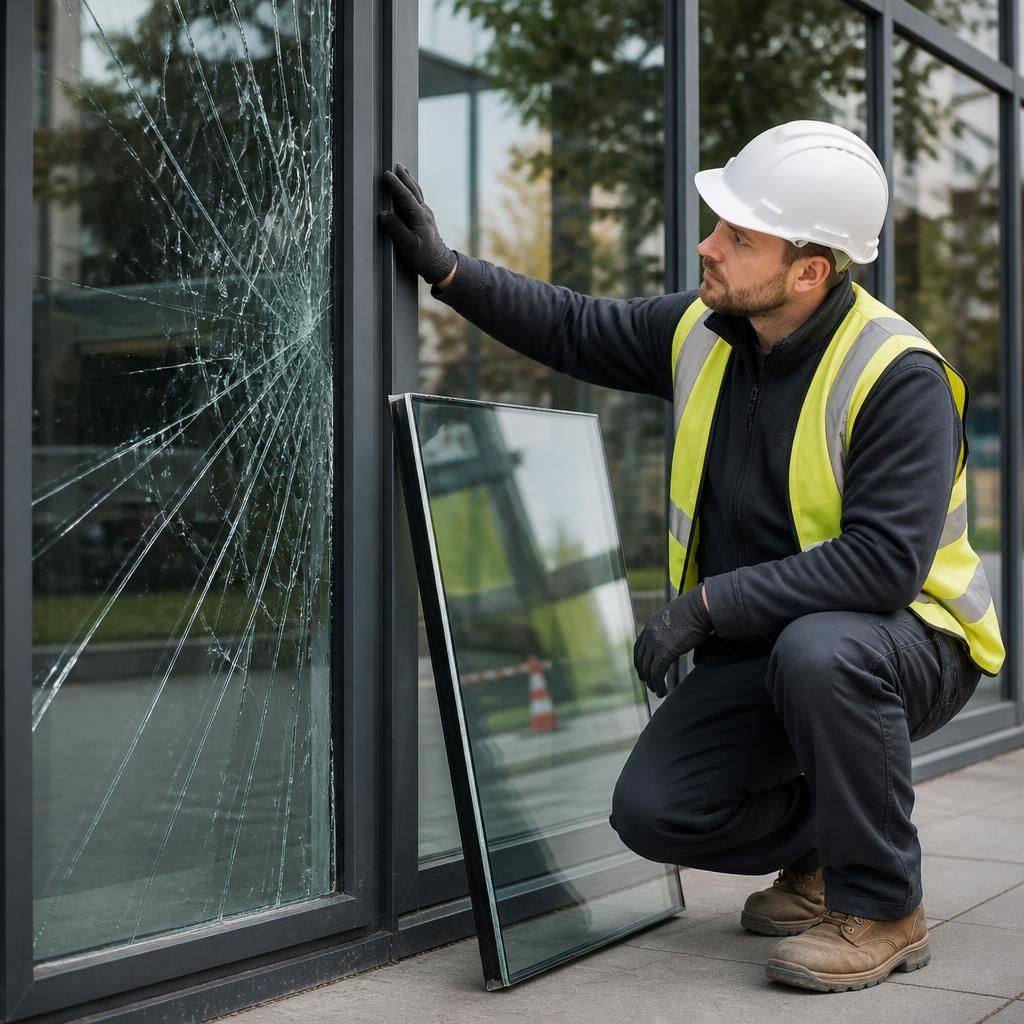
Replacement is normally preferable when damage has affected safety glass, such as toughened or laminated glazing. Once this type of glass has cracked, a surface treatment cannot reinstate its original strength or safety characteristics. Replacing the complete pane allows the specification to be checked against the location and use of the installation, particularly where glazing is positioned in a door, entrance or other area vulnerable to contact.
This approach also helps avoid treating visibly damaged glass as a purely cosmetic issue. The replacement should be specified to suit the existing system and the relevant building and safety requirements, with the surrounding frame assessed at the same time. A properly considered replacement therefore addresses both the immediate defect and the role the glazing performs within the commercial property.
Discuss whether commercial building glass replacement is the right option
Businesses uncertain whether to repair or replace damaged glazing can contact GlassPlus UK to discuss the installation and arrange an informed assessment. The team can advise on the most suitable solution for the building’s condition, use and operational requirements.