
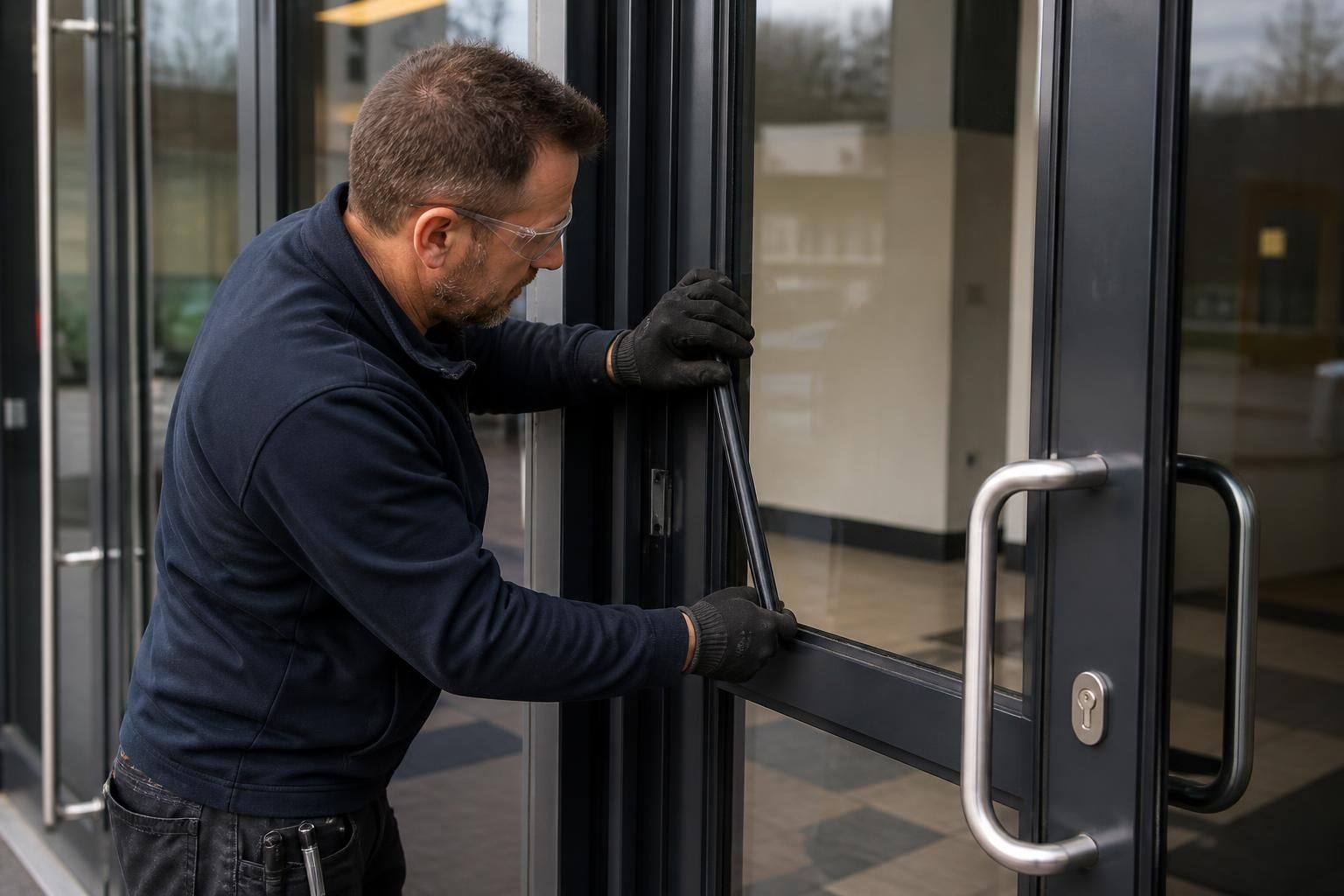
Can commercial door glass be replaced without removing the door?
Often, commercial door glass can be replaced without removing the door, provided the frame, glazing system and access around the panel allow safe removal and refitting in situ. A site assessment determines the safest and most practical method.
In many cases, commercial door glass can be replaced while the door remains in its frame. This is generally possible where the glazing is held by removable beads, clips or a suitable pressure system, and where the surrounding structure provides enough safe access for the damaged pane to be taken out and the new glass installed.
The replacement method depends on the door’s construction rather than the glass alone. Common considerations include:
- how the glass is retained within the door leaf;
- whether the glazing beads can be removed without damaging the frame or finish;
- the size, weight and position of the pane;
- the condition of the seals, gaskets and setting blocks;
- the clearance available on both sides of the door; and
- whether the door can be kept stable and safely secured during the work.
Where these conditions are suitable, an experienced glazier can protect the surrounding area, remove the retaining components and release the damaged pane in a controlled manner. The opening is then checked before the replacement unit is positioned, supported and sealed. Retaining beads and other components must be refitted correctly so that the glass remains secure and the door continues to operate as intended.
Removing the door may be necessary where access is restricted, the pane is particularly heavy, or the door design requires work to be carried out on a stable, horizontal surface. It may also be the safer option if hinges, closers, pivots or other hardware prevent adequate access to the glazing. A door that has dropped, twisted or suffered damage to its frame may require more than a straightforward glass change, and replacing the pane without addressing those issues could lead to further problems.
The condition of the existing glazing system is important. Damaged gaskets, distorted beads, failed seals or worn setting blocks may need attention during the replacement. If the frame or door leaf is damaged, the glazier will assess whether it can continue to support the new pane safely. In some cases, the appropriate solution may involve repairing or replacing associated components rather than fitting glass alone.
The replacement glass must also be suitable for the door’s location and use. Its specification may be affected by the risk of impact, the position of the glazing and the requirements applying to the commercial premises. GlassPlus UK carries out the necessary assessment so that the proposed replacement supports compliance with current building and safety regulations, as well as the practical demands placed on the door.
Before work begins, the glazing specialist should establish the approximate pane dimensions, identify the door and glazing system, and consider access to the area. Final measurements are taken from the installation rather than relying solely on an existing pane, particularly where the original glass has fractured or the frame has moved. This helps determine whether an in-situ replacement is appropriate and what equipment, protection and replacement components are required.
For businesses, retaining the door in place can reduce disruption where the installation permits it, but safety remains the deciding factor. GlassPlus UK assesses the condition and construction of the door before recommending whether the pane can be replaced in situ or whether temporary removal is the more responsible method.
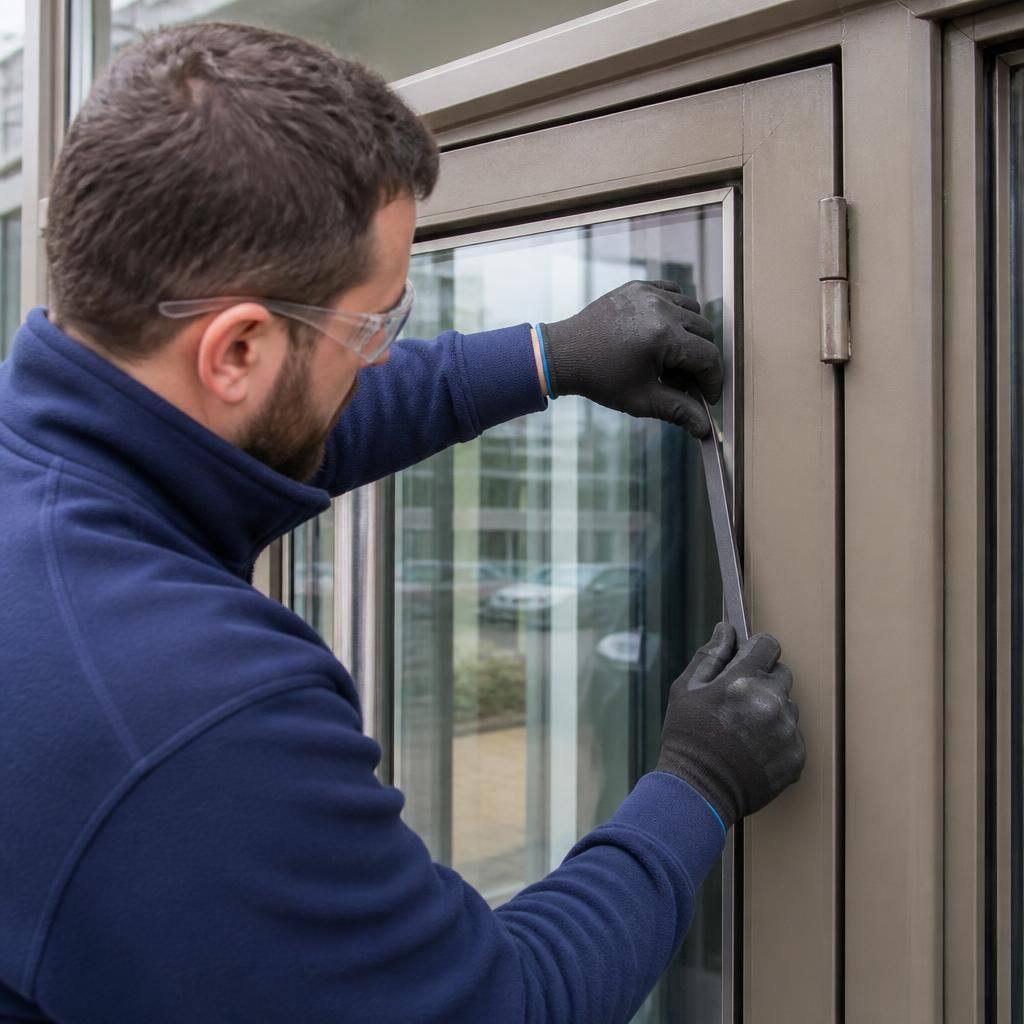
Keeping the door in its frame does not mean the entrance can remain in normal use while the work is carried out. The immediate area may need to be controlled so that staff, visitors and passing members of the public are kept clear of the glazing operation. For commercial premises, the glazier will also consider how the work affects pedestrian routes and whether a temporary alternative entrance is needed during the replacement. This planning helps the work proceed in a controlled manner without creating additional risk around the doorway.