
Does replacement door glass need to meet specific safety requirements?
Yes. Replacement door glass must be suitable for its location and use, with safety glazing such as toughened or laminated glass selected where required and installed in compliance with current building and safety regulations.
Replacement door glass must be selected for the door’s position, size, surrounding structure and expected use. In a commercial property, the specification should address impact safety, visibility, retention, fire performance where relevant and compliance with the current regulations that apply to the installation.
Door glazing is considered a higher-risk area because it can be struck by people moving through an entrance or opening. Glass at low level, within or beside a door, and in large uninterrupted panels may therefore need to be safety glass. The precise requirements depend on the door design, the dimensions of the glazed area and whether the glass is in a critical location.
- Toughened glass is heat-treated to improve its resistance to impact and thermal stress. If it does break, it normally forms small granular fragments rather than large, sharp shards.
- Laminated glass contains an interlayer that holds the broken pieces together. This can help retain the panel in its frame and maintain a barrier after breakage, making it useful where continued protection or security is important.
- Insulating glass units used in glazed doors must be specified as complete units, with suitable safety glass incorporated on the relevant face or faces. Replacing only one pane without checking the unit’s construction may not provide an appropriate result.
Safety glass should have the appropriate impact classification for its location. Testing and classification are commonly considered under standards such as BS EN 12600, while the applicable requirements for glazing in doors and other vulnerable locations are set out through current building regulations and supporting guidance. The glass type alone is not enough: the complete installation, including the frame, beads, gaskets and fixings, must also be suitable.
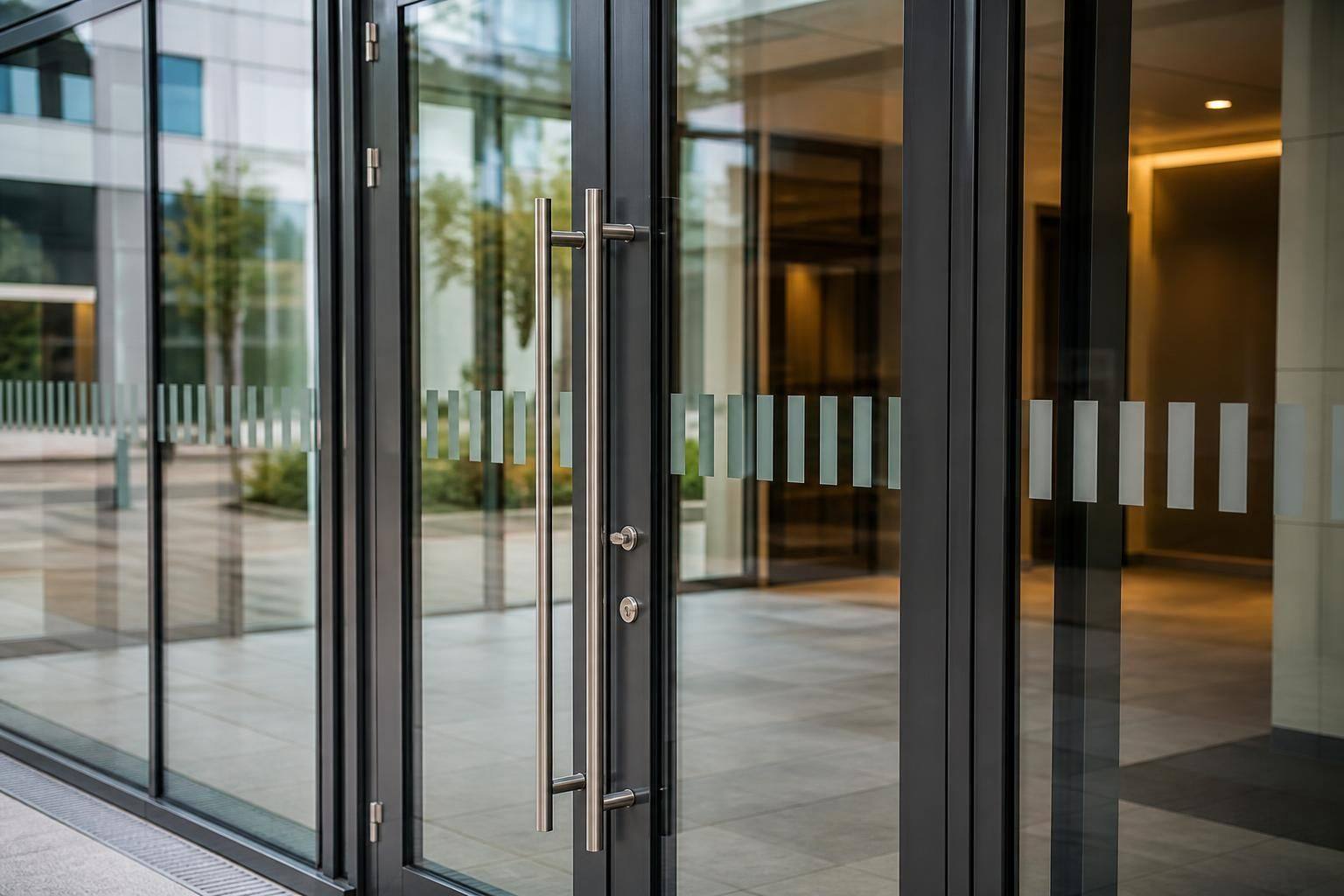
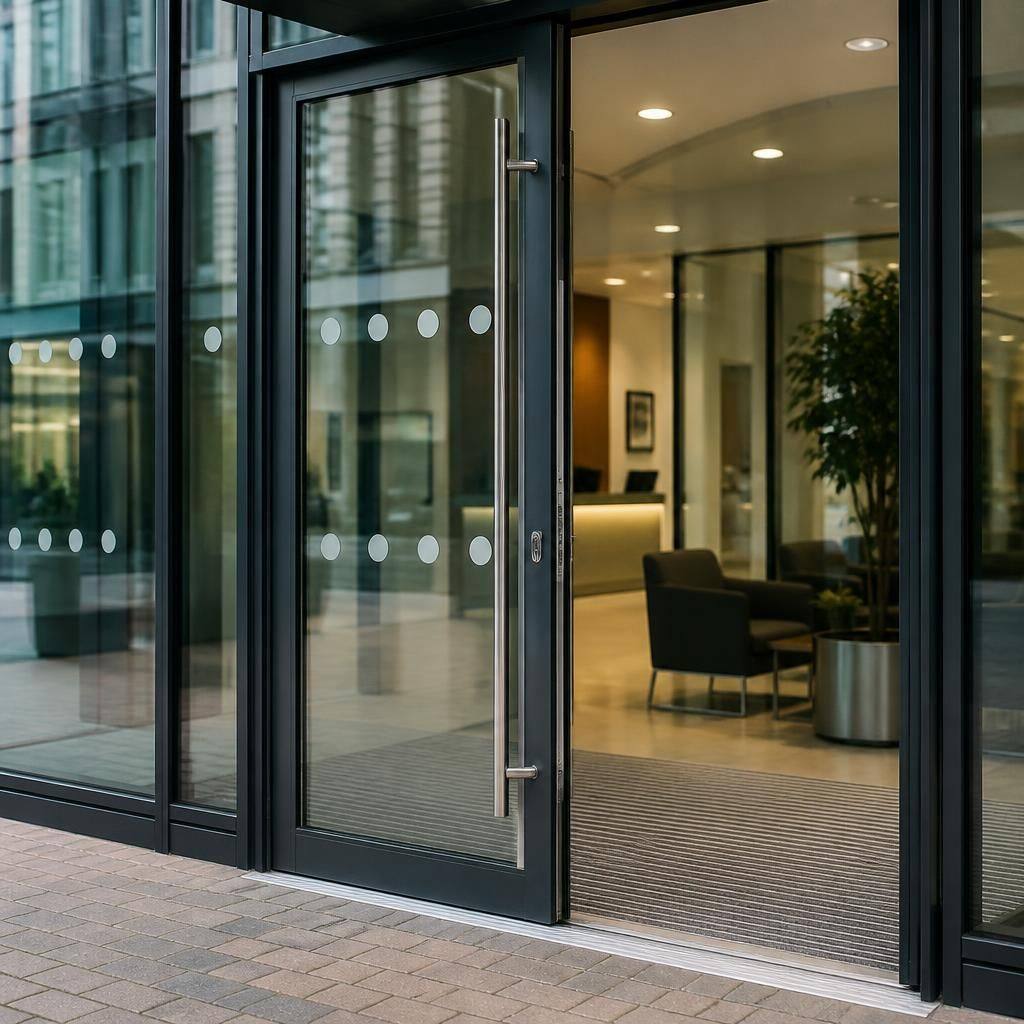
Visibility is another important consideration. A fully glazed door can be difficult to distinguish from its surroundings, particularly in busy entrances. Manifestation, such as contrasting bands, dots or other permanent markings, may be needed to make the door more apparent to users. Its position, contrast and arrangement should be considered alongside accessibility guidance and the overall design of the entrance.
Where a door forms part of a fire-resisting construction, ordinary toughened or laminated glass may not be suitable. Fire-resisting glazing must be designed and tested as part of an appropriate doorset, with the correct frame, seals and hardware. Substituting a standard pane into a fire-rated door can compromise the performance of the complete assembly.
A proper replacement assessment should also check the original glass markings, the pane’s thickness and dimensions, the method of retention, drainage, clearances and the condition of the frame. The replacement must fit securely without placing undue stress on the glass. If the frame or supporting components have been damaged, installing new glass alone may not resolve the safety issue.
For commercial premises, it is sensible to retain product information and installation records, particularly where the glazing is in a public entrance, forms part of a fire door or is subject to a landlord, insurer or facilities-management requirement. GlassPlus UK can assess commercial door glazing and advise on a suitable repair or replacement specification for the existing installation.
Safety requirements should be confirmed before replacement glass is ordered, rather than assuming that a pane matching the original appearance will be suitable. The correct specification depends on the complete door system and the way the entrance is used, so dimensions and appearance alone are not sufficient.
A competent assessment can identify whether the existing door can safely accept the proposed glass and whether any associated components need attention. This helps prevent an apparently straightforward replacement from leaving the door with an unsuitable or non-compliant installation.
Discuss Your Replacement Door Glass Safety Requirements
Businesses can contact GlassPlus UK to discuss their existing door glazing and the information needed to assess a suitable replacement specification. The team can advise on the next steps for a compliant commercial door glass repair or replacement.