
How long does commercial door glass replacement usually take?
The time required for commercial door glass replacement depends on the door design, the required safety specification, site access and whether the replacement glass is readily available. GlassPlus UK confirms the expected timescale after assessing the damage and the installation requirements.
Commercial door glass replacement is usually completed in two stages: arranging the correct replacement unit and fitting it on site. The fitting itself may be relatively brief, but the overall timescale depends on the preparation, manufacture and delivery of glass to the required specification.
The process normally begins with an assessment of the damaged door and its surrounding frame. The glazing contractor needs to establish the pane dimensions, glass thickness, edge detail, method of retention and the condition of the seals, beads or glazing channels. Door type and usage are also relevant, particularly where the entrance is heavily used or forms part of a controlled access system.
Once these details have been confirmed, the replacement glass can be specified. A like-for-like appearance is not always sufficient: the new unit may need to provide the appropriate level of impact resistance, safety performance or security for its position in the building. If the glass is toughened or laminated, it generally has to be manufactured to the required size rather than cut during the installation visit. This can make the production stage a significant part of the overall timeframe.
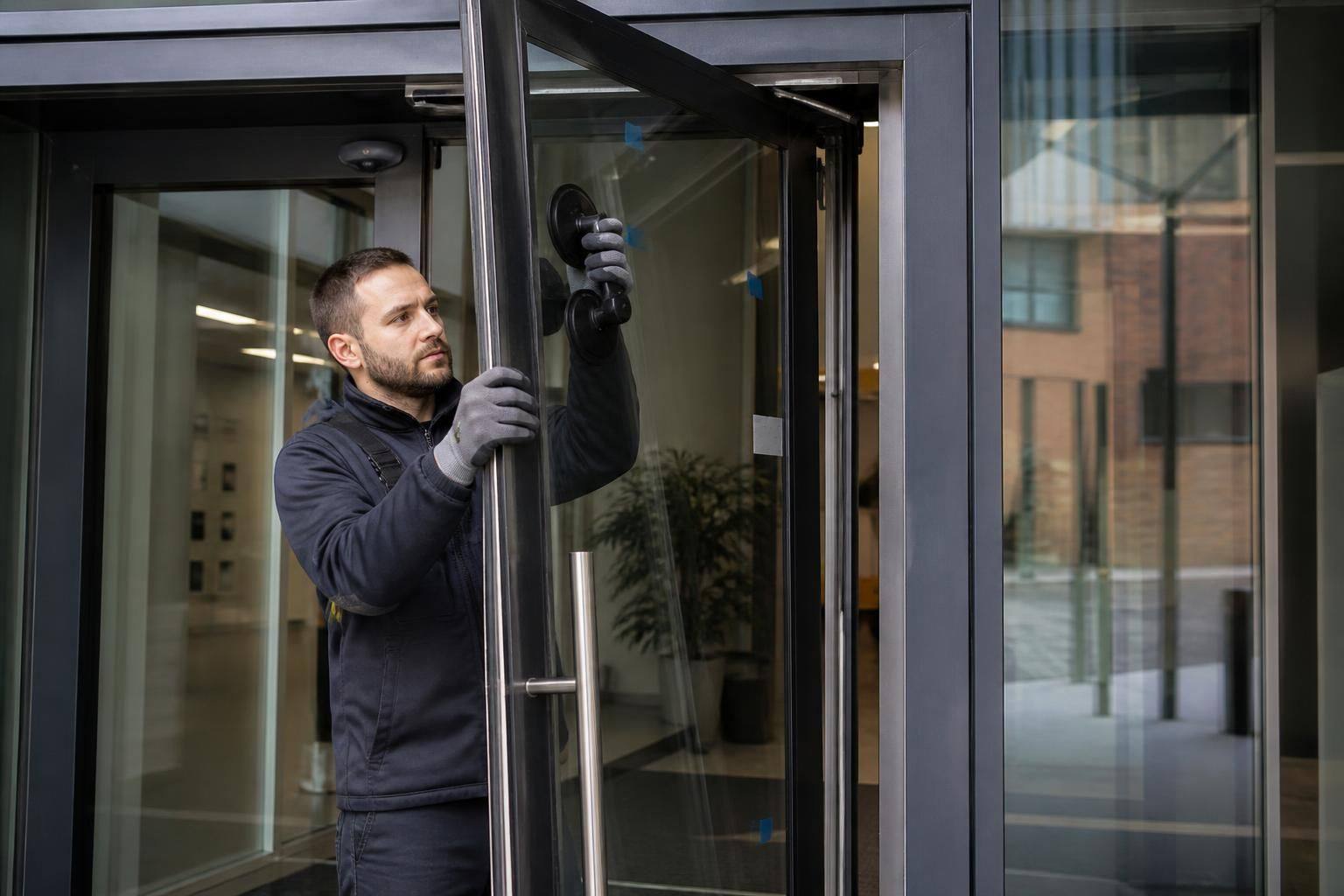
For a straightforward replacement, the work on site commonly involves making the area safe, removing the damaged glass and retaining materials, preparing the opening, installing the new pane and securing it correctly. The installer then checks the edges, seals, clearances and door operation. Where the frame or associated components have been damaged, additional preparation may be needed before the new glass can be installed safely.
The elapsed time can therefore be affected by several practical considerations:
- whether the required glass specification is a standard or bespoke product;
- whether the replacement must be manufactured before delivery;
- the condition of the door, frame, beads, seals and hinges;
- whether the door is linked to access control, automatic opening equipment or other building systems;
- the availability of safe working space and access to the affected entrance; and
- whether the work needs to be coordinated with the building manager, occupier or other contractors.
Businesses should also distinguish between the time spent fitting the glass and the time from initial enquiry to final completion. A replacement may be installed during one arranged visit once the correct unit is ready, while bespoke manufacture, delivery arrangements or remedial work can extend the total project period.
Where a damaged entrance creates a security, weatherproofing or safety concern, the immediate priority is to assess and protect the opening appropriately. The final replacement should not be selected solely on the basis of speed; it must be suitable for the door and comply with the relevant building and safety requirements. GlassPlus UK uses the site assessment and technical specification to provide a realistic timescale rather than relying on a standard estimate for every type of commercial door.
A clear enquiry should include photographs of the damage, the door location, approximate pane dimensions and any information about the existing glass or door system. These details can help establish the likely scope of work, although the confirmed timescale follows assessment of the installation requirements and availability of the correct replacement unit.
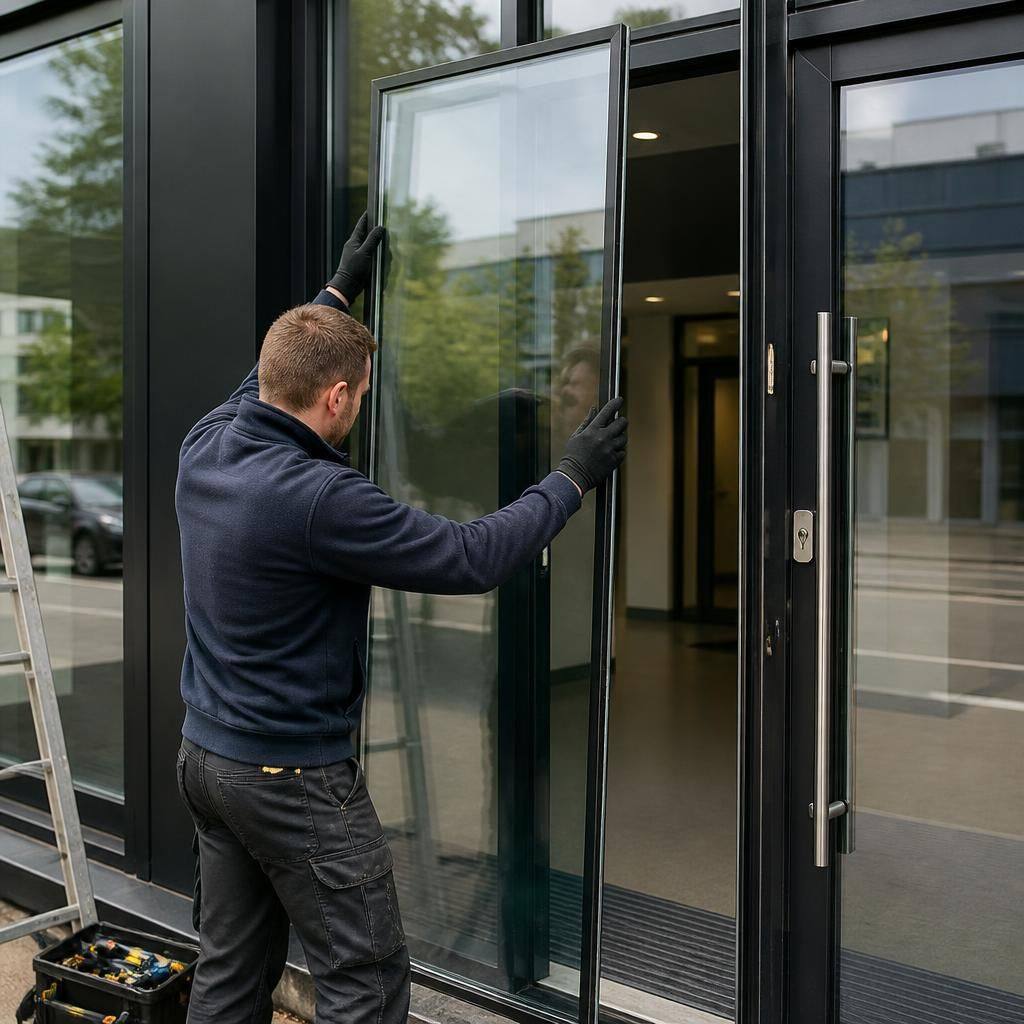
For occupied commercial premises, the planned installation also needs to account for how the entrance will be managed while work is underway. The building manager may need to identify an alternative route, notify occupants and arrange any site permissions before the visit. Having these arrangements in place can help prevent avoidable delays on the day.
Where the door is part of an automatic or controlled entrance, the relevant building contact should also be available to confirm that the system is operating correctly after the glass has been fitted. This final check helps ensure the replacement is not only secure and correctly installed, but suitable for normal use by the business.