What affects the cost of commercial door glass replacement?
The cost of commercial door glass replacement depends on the pane’s size, thickness and safety specification, together with the door type, access and installation requirements. A quotation can therefore be prepared once the existing glass and surrounding door assembly have been assessed.
Commercial door glass replacement costs are influenced by the specification of the replacement unit, the condition of the door and frame, and the work needed to complete the installation safely. A reliable quotation should therefore cover both the glass itself and the associated survey, preparation and fitting work.
The main cost factors include:
- Glass specification: Toughened, laminated, wired or insulating glass may be required depending on the door design, location and performance requirements. Laminated glass, for example, is made to retain its bonded layers when damaged, while toughened glass is processed to provide increased resistance to impact and thermal stress. The required specification can affect the material cost.
- Dimensions and shape: Larger panes generally require more material and may need additional handling equipment. Unusual shapes, cut-outs, drilled holes or prepared edges can also increase manufacturing and installation complexity.
- Door construction: Aluminium-framed, steel, timber, frameless and automatic doors may use different glazing methods. The existing beads, gaskets, channels and retainers must be compatible with the replacement unit. If these components are worn or damaged, replacement parts may need to be included.
- Single or insulating glazing: A single pane and a sealed insulating glass unit have different construction and fitting requirements. Where an insulating unit has failed or been damaged, the replacement must be manufactured to suit the frame and the original arrangement.
- Access and handling: Restricted entrances, upper-floor locations, busy premises and limited working space can make removal and installation more involved. The quotation may need to account for safe movement of the glass, protection of surrounding surfaces and controlled access to the work area.
- Condition of the opening: Once the damaged glass is removed, the glazing channel, seals, beads or frame may be found to have deteriorated. Any necessary preparation or associated repair work can affect the final cost.
The type of damage also matters. A clean break confined to the pane may allow a straightforward glass replacement, whereas damage to the frame, door leaf, hinges, closer or locking area may require further investigation. A replacement that involves altering the door assembly is a different scope of work from simply fitting a new pane.
For commercial premises, the correct safety glass is an important part of the specification rather than an optional upgrade. The replacement should be suitable for the door’s use and installed in accordance with current building and safety regulations. Using an unsuitable pane may create a safety concern and could result in further work later, so the lowest initial material price is not necessarily the most appropriate basis for comparison.
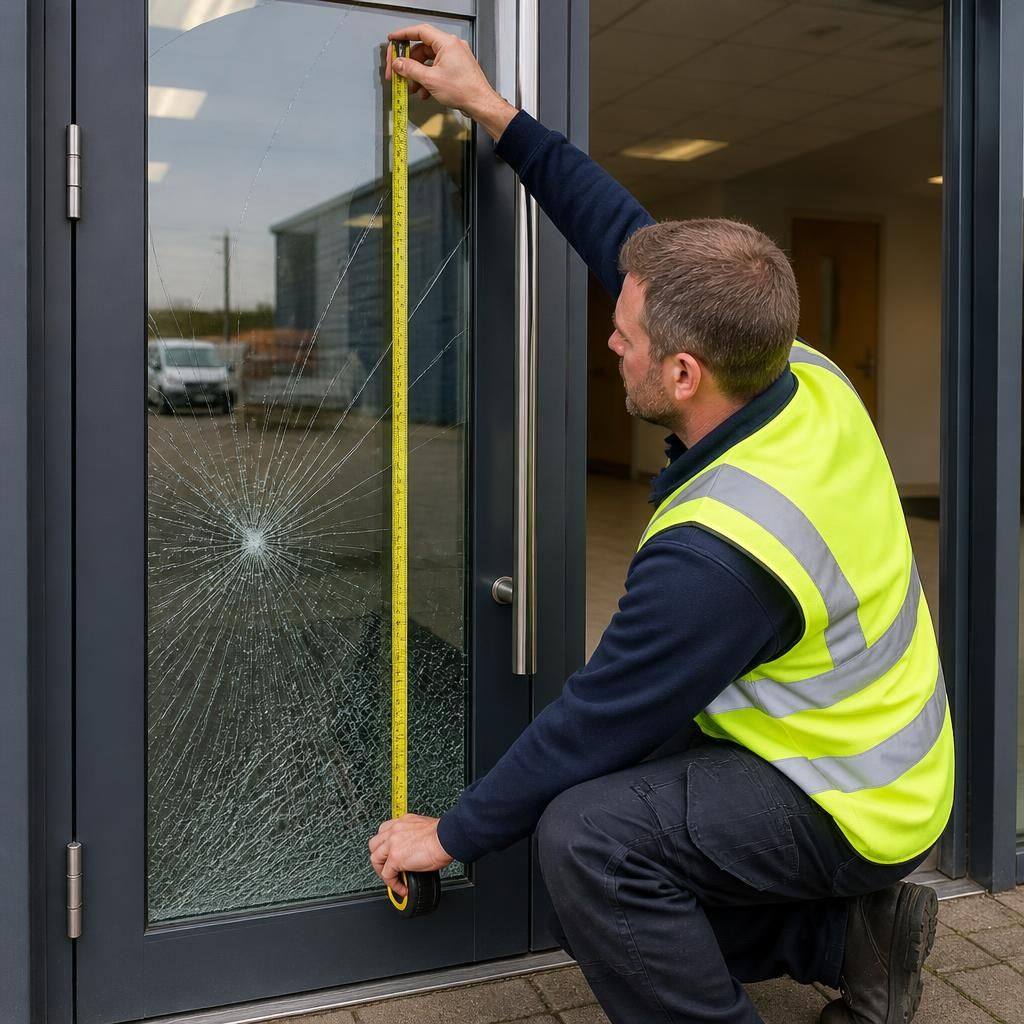
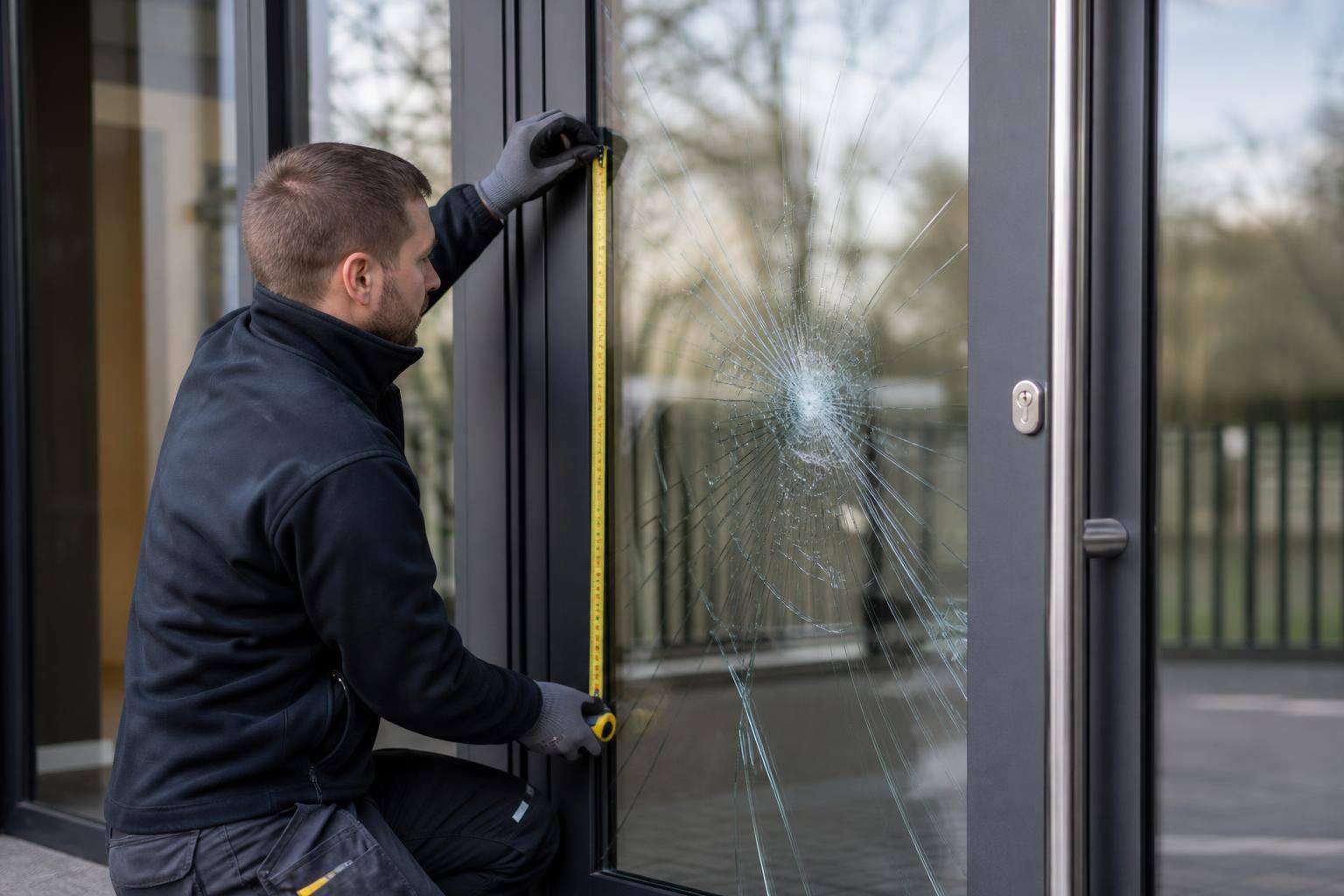
A professional assessment normally records the pane’s measurements, edge condition, markings, glazing method and surrounding frame details. It should also consider whether the door remains secure, whether the area can be safely accessed and whether the damaged glass needs temporary protection before the permanent replacement is available. These details help prevent incorrect ordering and unexpected alterations during installation.
When comparing quotations, the scope should be checked carefully. A clear quotation will identify the proposed glass specification, the quantity and approximate dimensions, removal of the damaged pane, disposal, installation, and any replacement seals or beads. It should also make clear whether additional remedial work is included or would be reported separately if discovered after removal.
In some cases, a like-for-like replacement is appropriate. In others, the assessment may identify a need to improve the glazing specification or bring an older installation into line with current requirements. The most suitable option depends on the door’s construction, its setting and the way the premises are used. GlassPlus UK can assess these points as part of preparing a commercial quotation, enabling the property manager or facilities team to understand what the proposed cost covers before instructing the work.
The appearance of the replacement glass can also influence the quotation. Tinted, coated or patterned panes may need to match adjacent glazing, particularly where the door forms part of a shop front or a coordinated commercial entrance. Finding a suitable match may involve more detailed specification than using a standard clear pane.
Where appearance is important, the assessment should record any visible tint, finish, pattern or markings before the glass is ordered. This helps the property manager compare quotations on a like-for-like basis and avoid an unsuitable replacement that stands out from the surrounding installation.