
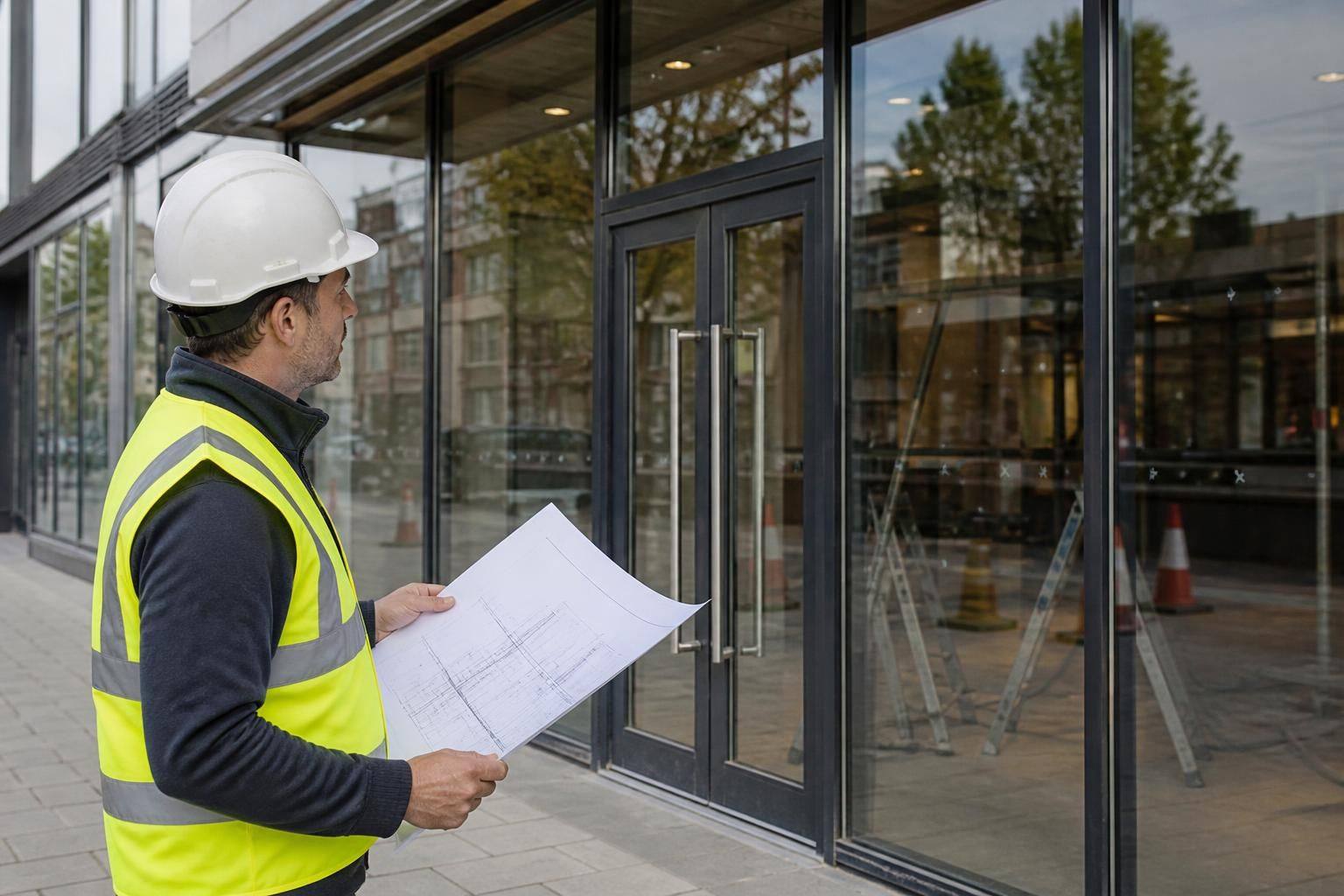
What preparation is needed before commercial glass replacement?
Before commercial glass replacement, the site should be made safe, the work area cleared and suitable access arranged for the glazing team. Businesses should also inform affected staff or visitors and provide details of any site restrictions, security requirements or access equipment needed.
The most effective preparation for commercial glass replacement is to confirm the scope, existing installation and agreed glass specification before work begins. This allows the glazing team to plan the work accurately, identify any site-specific constraints and reduce the risk of avoidable delays.
A pre-work survey should establish the dimensions of the pane, the condition of the frame or supporting system and the way the glass is retained. This is particularly important for curtain walling, shop fronts and larger commercial windows, where the replacement may depend on glazing beads, gaskets, pressure plates, seals or surrounding panels. Any signs of water ingress, distortion, corrosion or movement should be reported before the replacement is scheduled, as these conditions may affect the work required.
The business should also confirm the required glass specification in writing. Relevant details may include:
- Whether the glass needs to be toughened, laminated or otherwise safety-rated.
- The required thickness, dimensions and edge treatment.
- Any thermal, acoustic, solar-control, privacy or appearance requirements.
- Whether the replacement must match adjacent panes or form part of a wider façade design.
- Any markings, manifestations, coatings or other features required for the installation.
The agreed specification should be checked against the building’s existing design and the applicable current building and safety regulations. Where the property is leased, managed or subject to landlord requirements, the relevant approvals should be obtained before the work is commissioned. Listed-building, planning or façade-control considerations may also need to be reviewed by the person responsible for the premises.
Clear information about the site should be provided in advance. This includes the location of the affected elevation or room, the nearest practical delivery point, restrictions on vehicle movement, internal routes and any limitations affecting lifting or handling. Details of loading bays, reception procedures and building management requirements can help the contractor plan the installation without relying on assumptions made on the day.
Commercial premises may also contain equipment that interacts with the glazing or surrounding façade. Door access controls, intruder alarms, sensors, blinds, signage, lighting and other attached items should be identified before work starts. The relevant specialist or building manager should arrange any required isolation, removal or reinstatement, since these systems may not form part of the glazing contractor’s work.
It is sensible to nominate one site contact with authority to answer practical questions and approve decisions. That person should have access to the agreed quotation, drawings or measurements, specification, building rules and any relevant risk or permit information. For multi-occupancy premises, the contact can also coordinate with facilities management, tenants and other contractors whose work may be affected by the replacement.
Preparation should include protection of permanent finishes and nearby building elements that cannot be moved. Vulnerable flooring, walls, counters, furniture and equipment may require suitable covering or temporary protection. If the existing pane is cracked or otherwise unstable, the site contact should provide an accurate description and photographs where possible, without approaching or attempting to remove the glass.
Finally, the business should agree how completion will be recorded. Useful records include the installed glass specification, photographs of the finished work, any limitations identified during installation and details of remaining making-good or follow-on tasks. Maintaining this information helps facilities teams manage future inspections, repairs and replacement work.
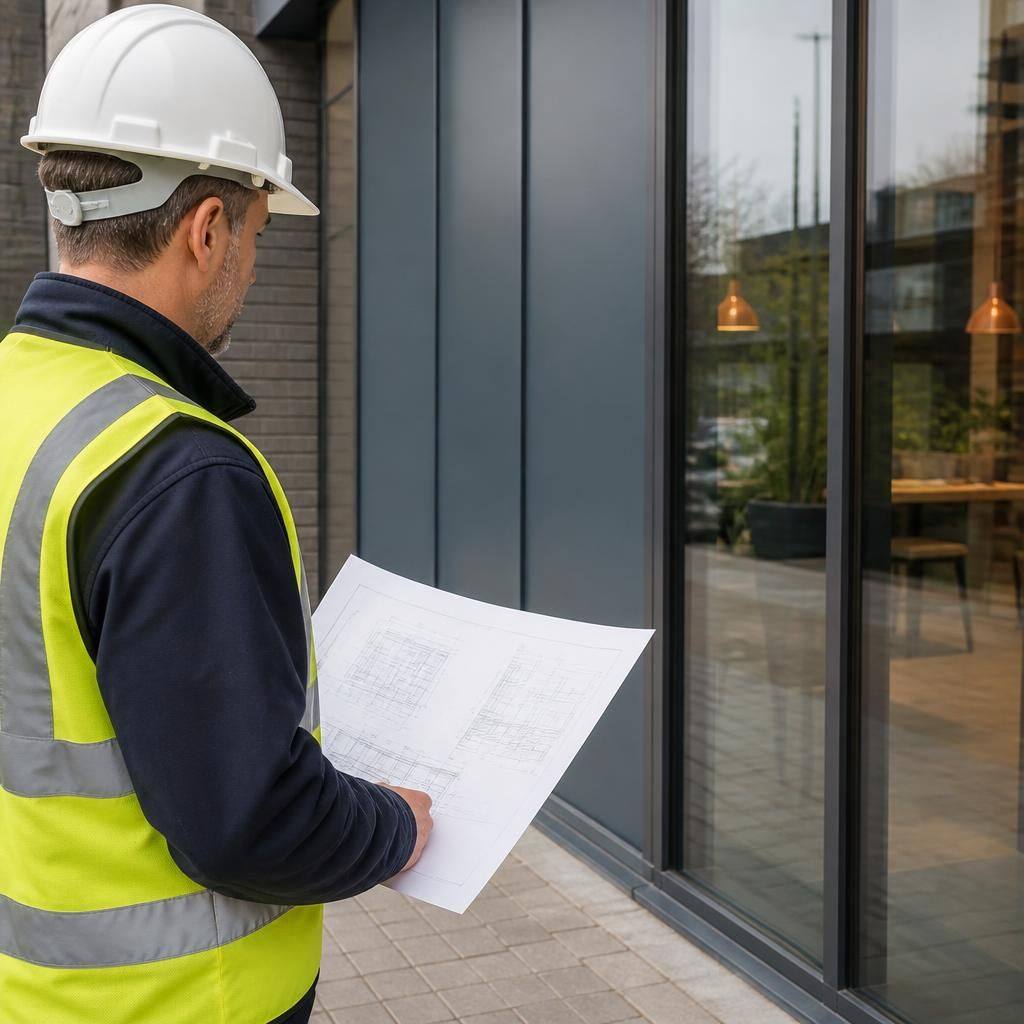
For external commercial glass replacement, weather conditions should be considered when the installation date is agreed. Wind and rain can affect safe handling, access equipment and the use of certain installation materials. The site contact should discuss any weather-related constraints with the glazing contractor in advance, allowing the planned sequence or temporary protection measures to be reviewed where necessary.