What should businesses check after commercial glass replacement?
After commercial glass replacement, businesses should check that the glass is secure, correctly aligned, free from damage and finished cleanly, with seals and surrounding frames intact. They should also confirm that the installation meets the agreed specification and that any relevant compliance or maintenance information has been provided.
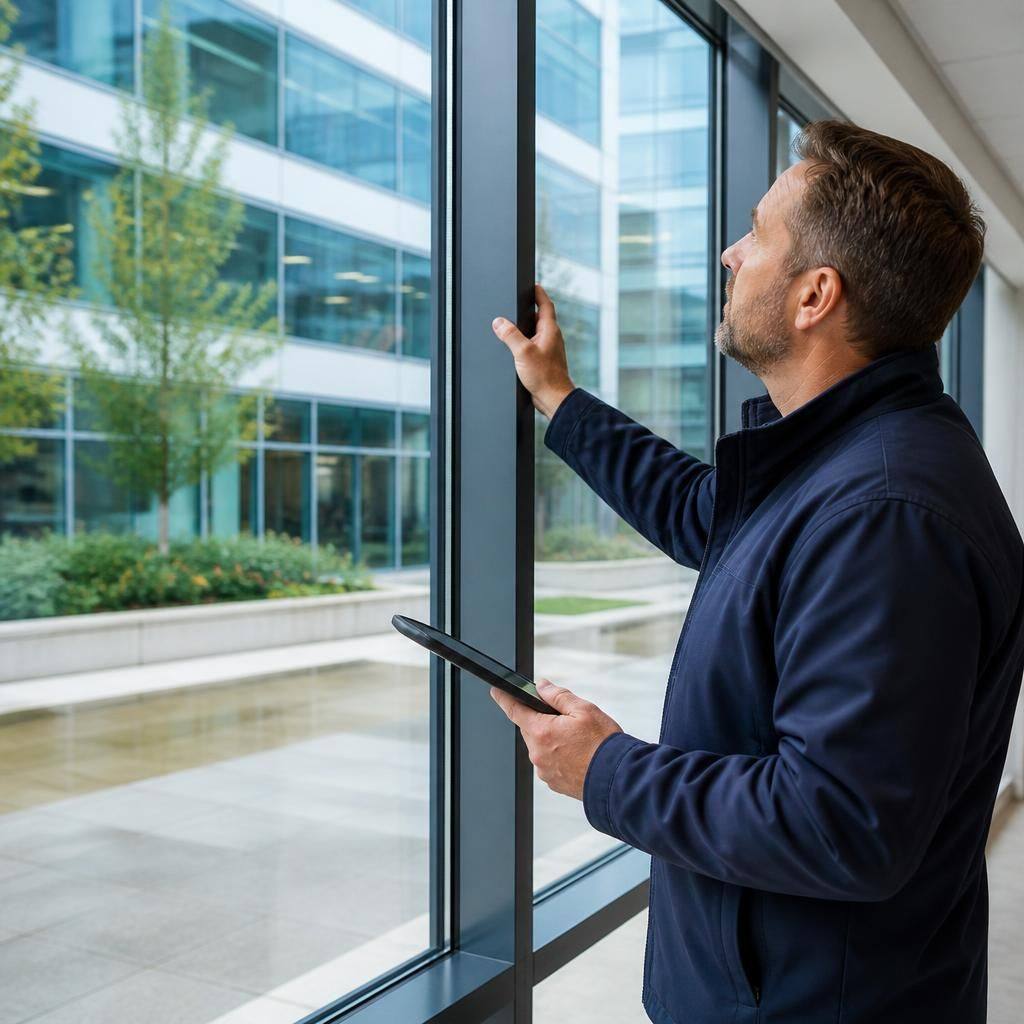
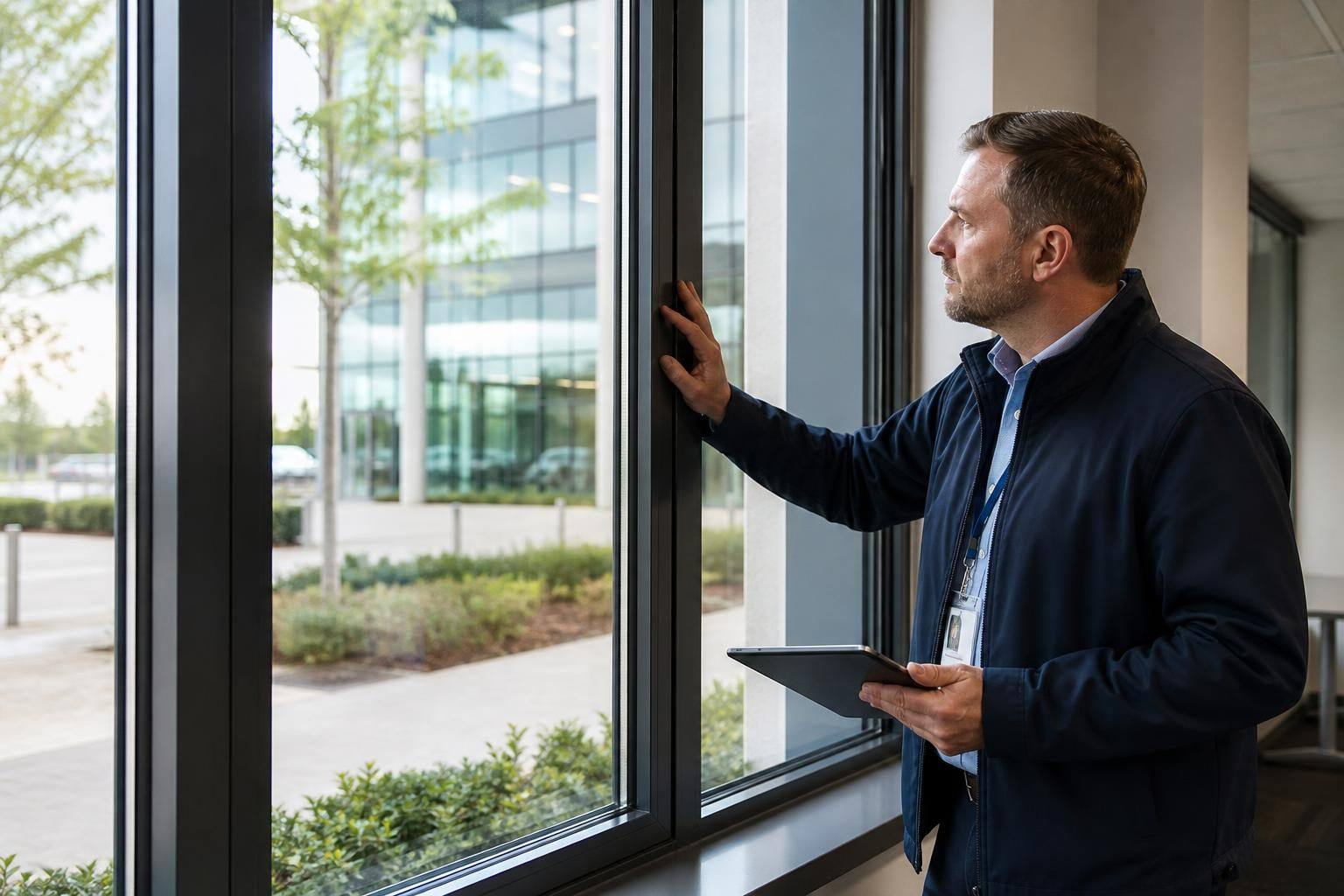
Once commercial glass replacement is complete, the business should carry out a structured handover inspection rather than relying on appearance alone. The review should cover usability, security, weather performance, surrounding building elements, site reinstatement and the information needed for future maintenance.
Test the installation in normal use. Where the replacement forms part of a door, opening window or other moving element, operate it several times to check that it opens, closes and latches smoothly. Look for excessive resistance, movement, rubbing or unusual noise. Door closers, handles, locks, restrictors and access-control components should also be checked as part of the completed installation. Any change in operation may indicate that the glass, frame or associated hardware needs further adjustment.
Check security and protection. Confirm that doors and windows can be secured properly and that locking points engage as intended. In retail, office and communal settings, inspect the installation for accessible gaps, loose hardware or damage that could create a security weakness. If the work involved safety-critical glazing, the business should also confirm that any required safety markings, manifestations or protective features are present and visible in the expected locations.
Inspect the junction with the building. Replacement work can affect more than the pane itself. Check the perimeter of the installation, adjoining cladding, trims, gaskets, beads, cills and internal finishes for movement, gaps or signs of disturbance. Where the glass forms part of a larger façade or shop front, inspect adjacent panels and interfaces for damage caused during access or removal. Any disturbed finishes should be recorded before the contractor leaves site.
Consider weather performance. After the first period of wet weather, inspect the internal side of the installation for water ingress, staining, dampness or draughts. External checks should look for gaps in the weather seal, displaced drainage paths or water collecting where it should discharge. These issues should be reported promptly, with photographs and the location of the affected pane or frame, so that investigation is focused and traceable.
Confirm the site has been left safe and usable. The work area should be clear of glass fragments, packaging, protective coverings and temporary barriers that are no longer needed. Check floors, shelving, counters, furniture and nearby equipment for dust or damage, particularly in occupied commercial premises. Any temporary boarding, warning notices or access restrictions should be removed only when the relevant area is safe for staff, visitors and contractors.
Review the handover information. The business should retain the quotation or work order, details of the glass and framing components used, completion records, care instructions and any photographs taken during the work. It is also sensible to record the date of completion, the location of the replacement and any agreed follow-up actions. Clear documentation helps facilities teams identify the installation later and supports an efficient response if a question arises during routine inspections.
A short snagging review with the glazing contractor is useful where several panes, elevations or access points were involved. List each outstanding item by location, describe the issue precisely and agree how it will be closed out. For larger premises, the responsible facilities manager should update the building’s asset or maintenance records and brief relevant staff on any changes to operation or access.
GlassPlus UK approaches commercial glazing repairs with attention to the practical requirements of occupied shops, offices and other commercial properties. A clear post-completion check gives the client a reliable record of the work and helps identify any issue before it affects day-to-day operation, security or the condition of the surrounding building.
Businesses should assess the replacement glass for visual consistency as well as physical condition. Viewed from inside and outside, the pane should sit comfortably with adjacent glazing, without unexpected differences in tint, reflection, transparency or apparent distortion. The edge should appear evenly seated within the frame, with no visible chips, scratches or marks left from handling. Viewing the installation in different lighting conditions can reveal differences that are not immediately apparent during handover. Any concern about appearance should be recorded against the affected pane and raised before the work is signed off.