
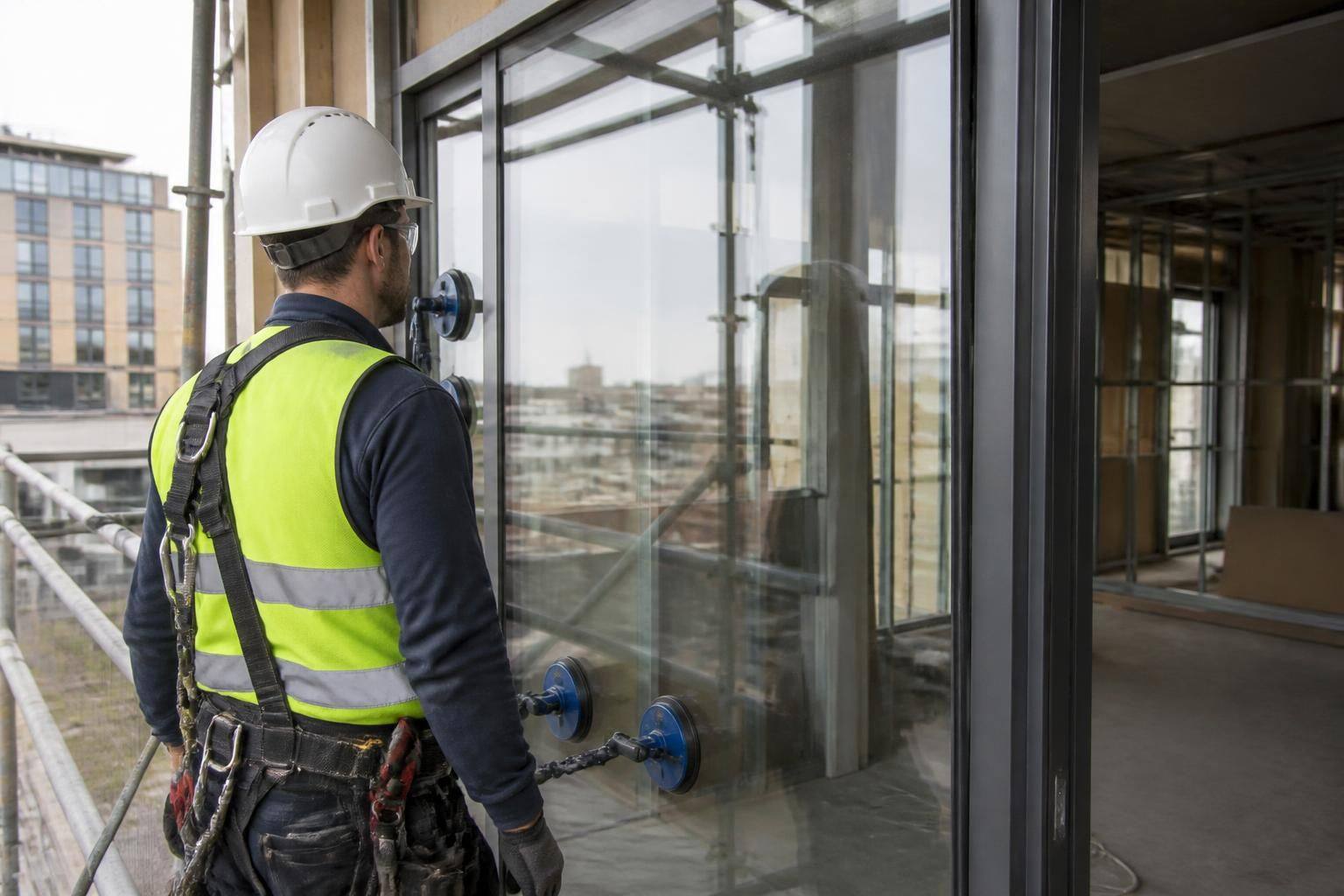
What safety precautions are needed before commercial glass replacement?
Before commercial glass replacement, the site should be assessed for hazards, the work area isolated and safe access arranged for contractors and building occupants. Suitable personal protective equipment, controlled glass handling and compliance with current building and safety regulations are also essential.
Before commercial glass replacement begins, the responsible contractor and site team should agree a documented plan covering the glazing specification, work sequence, access arrangements, emergency procedures and responsibilities. This preparation reduces the risk of injury, damage to the building and disruption to business operations.
Confirm the glass specification
The replacement should be identified before the existing pane is disturbed. This includes checking whether the glass is annealed, toughened, laminated, fire-resistant, acoustic, solar-control or part of an insulated sealed unit. The specification may also need to account for thickness, dimensions, edge detail, safety markings, coatings and the performance requirements of the opening. Using an unsuitable pane can create safety, thermal or compliance problems even where it appears to fit.
The surrounding frame, beads, gaskets, setting blocks and drainage paths should also be examined in advance. If any of these components are damaged, distorted or deteriorated, the planned work may need to include their repair or replacement. A competent glazier can identify these issues before ordering materials or starting removal.
Check permissions and site information
The building manager should confirm whether the work requires landlord approval, a permit to work, a planned shutdown or notification to other occupiers. Site rules should be shared with the glazing contractor, including delivery restrictions, loading arrangements, security procedures, restricted areas and any requirements for signing in or escorting visitors.
Where the glazing forms part of a fire compartment, escape route, entrance system or protected façade, the proposed replacement should be checked against the building’s fire strategy and other relevant design information. Any work affecting alarms, access control, automatic doors, ventilation or electrical equipment should be coordinated with the appropriate site specialists before work starts.
Prepare a written method of work
A method statement should set out how the glass will be delivered, stored, positioned, removed, installed and made secure. It should identify the tools and lifting equipment required, the people responsible for each stage and the point at which the opening will be left safe if the work has to stop. A separate contingency should cover cracked or unstable glass, unexpected frame damage, difficult removal and changing site conditions.
For larger panes, heavy units or glazing at height, the plan should specify suitable mechanical handling equipment and confirm that floors, platforms and lifting routes can support the intended operation. Equipment should be inspected before use, and operators should be suitably trained and authorised. Glass should not be carried through occupied areas or moved manually beyond what the planned handling method safely permits.
Coordinate with building occupants
Businesses should inform affected staff, visitors, tenants and neighbouring contractors about the planned work and any temporary restrictions. Particular care is needed where the glazing is beside reception areas, customer routes, production areas, stairways or emergency exits. Deliveries, removal of the old unit and installation should be arranged to avoid conflicting activities, congested routes and unnecessary exposure to the work.
Any sensitive operations, valuable stock or equipment near the opening should be protected or temporarily relocated. The site team should also identify who can authorise changes to the plan if hidden damage or an unforeseen hazard is found. Work should pause rather than continue on the assumption that the original arrangements remain suitable.
Review environmental and building conditions
External replacement work should be checked against wind, rain, temperature and other conditions that could affect safe handling, sealants, adhesives, access equipment or the stability of temporary protection. Internal conditions matter too: poor lighting, condensation, uneven floors and restricted circulation can make positioning and installation more difficult.
Nearby hazards should be identified before tools or materials arrive. These may include overhead obstructions, vehicle movements, fragile roof areas, exposed services, live electrical equipment and other construction activities. Where the work is close to asbestos-containing materials or suspected hazardous substances, the relevant building information and specialist controls should be obtained before disturbance takes place.
Plan the final checks
The pre-work plan should include how the completed installation will be inspected and how the area will be handed back. This should cover the security of the pane, condition of seals and gaskets, cleanliness, operation of adjacent doors or windows, removal of temporary protection and safe disposal of the damaged glass. Any defects or changes from the agreed specification should be recorded and resolved before the area is reopened.
GlassPlus UK applies practical commercial glazing experience to this preparation, helping businesses coordinate replacement work with the building, its occupants and its operational requirements. Its work is carried out with regard to current building and safety regulations, providing a structured basis for safe and properly specified commercial glass replacement.
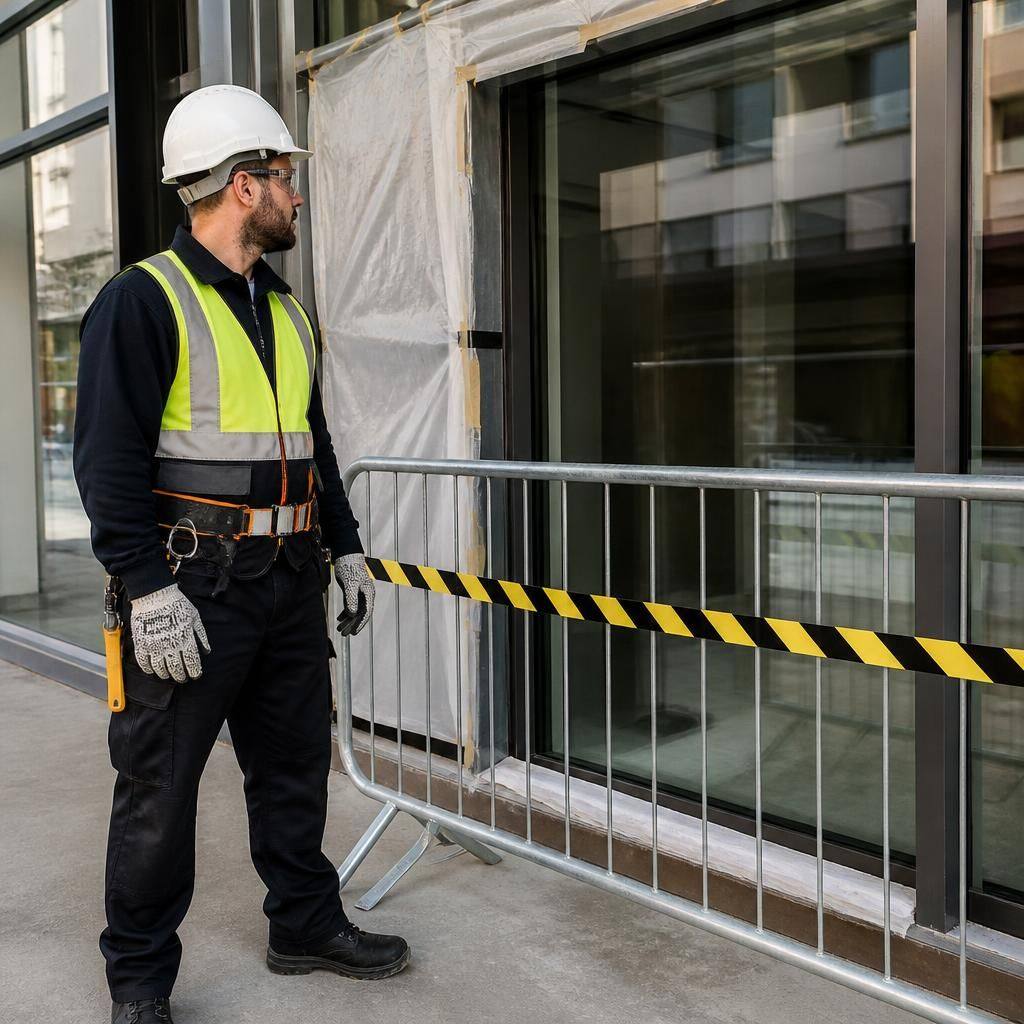
Personal protective equipment should be selected for the specific replacement task, rather than treated as a standard checklist. Cut-resistant gloves, eye protection and safety footwear help protect installers during removal and positioning, while additional protection may be necessary where there is a risk of falling fragments or contact with nearby equipment. PPE should be correctly fitted, inspected before use and kept in good condition. It supports safe working but does not replace proper control of the opening, careful handling and suitable exclusion arrangements.
Discuss Your Commercial Glass Replacement Safety Requirements
Businesses planning commercial glass replacement can contact GlassPlus UK to discuss site-specific safety requirements and the information needed to prepare the work. The team can help establish a suitable approach for the building and its operations before replacement is arranged.