
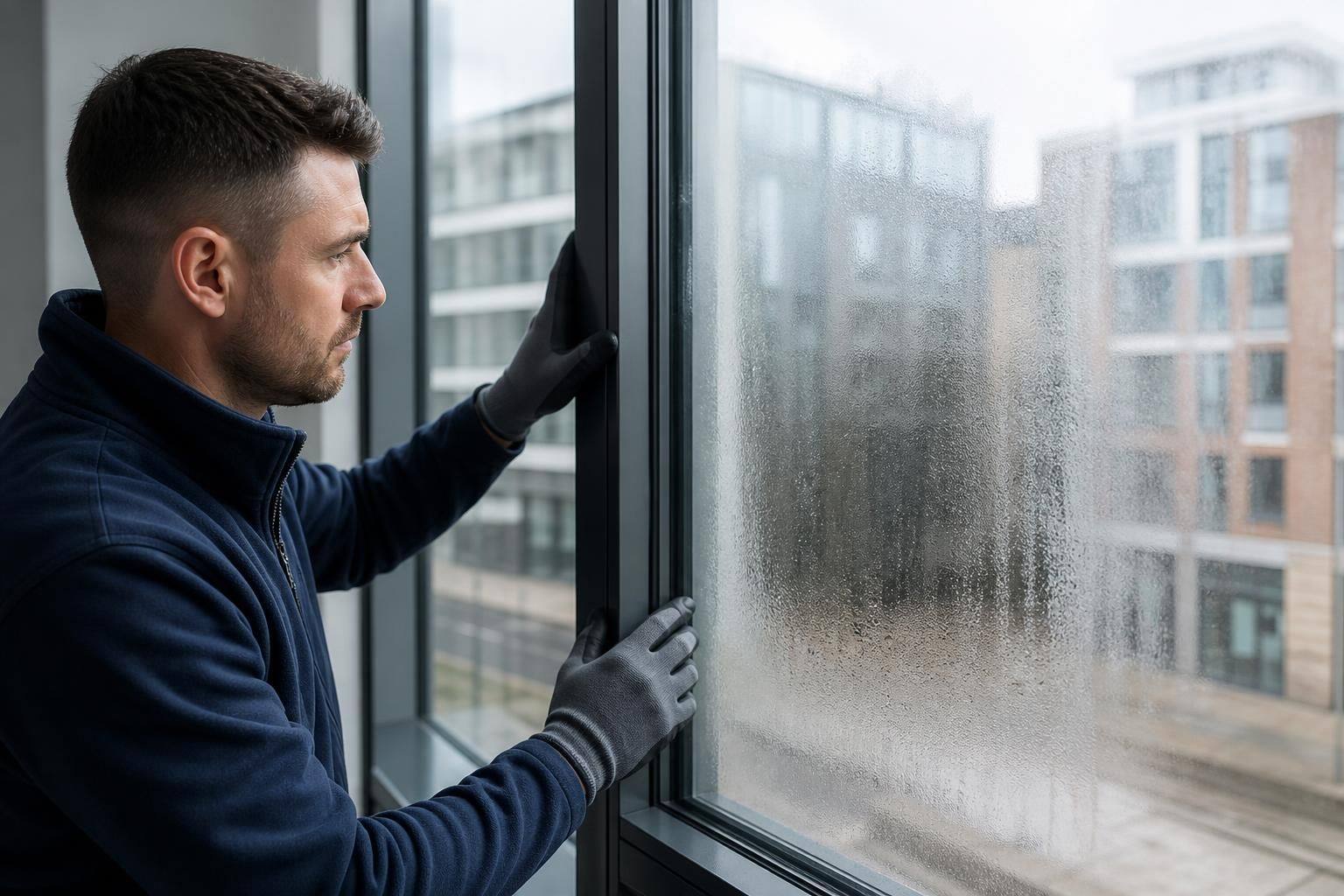
What causes misting in commercial double glazing repairs?
Misting occurs when the sealed unit’s edge seal fails, allowing moisture-laden air to enter the space between the panes. In commercial double glazing repairs, the affected unit is assessed for damage and condition before being repaired or replaced to restore clear, effective glazing.
Persistent misting inside commercial double glazing is generally a sign that the insulating unit is no longer performing as designed. The appearance, location and behaviour of the moisture help a glazier distinguish a failed sealed unit from ordinary condensation on the room-facing or external surface.
Several factors can contribute to the deterioration of a double-glazed unit:
- Ageing materials: seals and spacer components can gradually lose their effectiveness through normal exposure and use.
- Thermal movement: repeated heating and cooling causes the glass and frame materials to expand and contract, placing stress on the unit’s perimeter.
- Weather exposure: sunlight, rain, frost and variations in temperature can affect the seal over time, particularly on exposed elevations.
- Physical damage: impact, edge damage or movement within the frame may compromise the unit even where the main glass surfaces appear intact.
- Frame or drainage problems: defective drainage, frame movement or unsuitable previous installation work can allow conditions that accelerate deterioration.
Moisture between the panes is different from condensation on the internal face of the glass. Internal condensation is often linked to humidity and ventilation within the building, while external condensation can occur when the outer pane is colder than the surrounding air. Neither necessarily means that the sealed unit has failed. Misting that remains between the panes, returns after cleaning or develops as a cloudy film should be assessed professionally.
A commercial glazing assessment normally considers the extent of the misting, the condition of the glass, the frame, glazing beads, gaskets and drainage paths. The surrounding installation is important because replacing the glass alone may not address movement, water management or damage to the frame. The glazier will also check whether the unit is suitable for the existing opening and whether any additional safety or performance requirements apply.
In many cases, the practical repair is to remove the affected insulated glass unit and fit a correctly specified replacement within the existing frame. This can restore clear vision and help the window deliver the thermal and acoustic performance expected of double glazing. Where the frame, bead or gasket is also damaged, associated remedial work may be required. A replacement is normally more reliable than attempting to clear moisture from a unit whose insulating construction has been compromised.
The specification should be considered carefully in a commercial property. Glass type, thickness, dimensions, safety classification and edge details may all affect suitability. Areas close to doors, circulation routes or vulnerable locations may require safety glass, while larger panes and curtain walling may involve additional handling and access considerations. Work should be completed in accordance with the relevant building and safety requirements.
Early investigation can prevent a localised glazing defect from becoming a wider maintenance issue. Misting itself may obscure visibility and affect the appearance of a shop front, office or communal area. If moisture is accompanied by cracked glass, loose components, water ingress or noticeable frame movement, the glazing should be treated as a maintenance priority and kept clear of contact until it has been inspected.
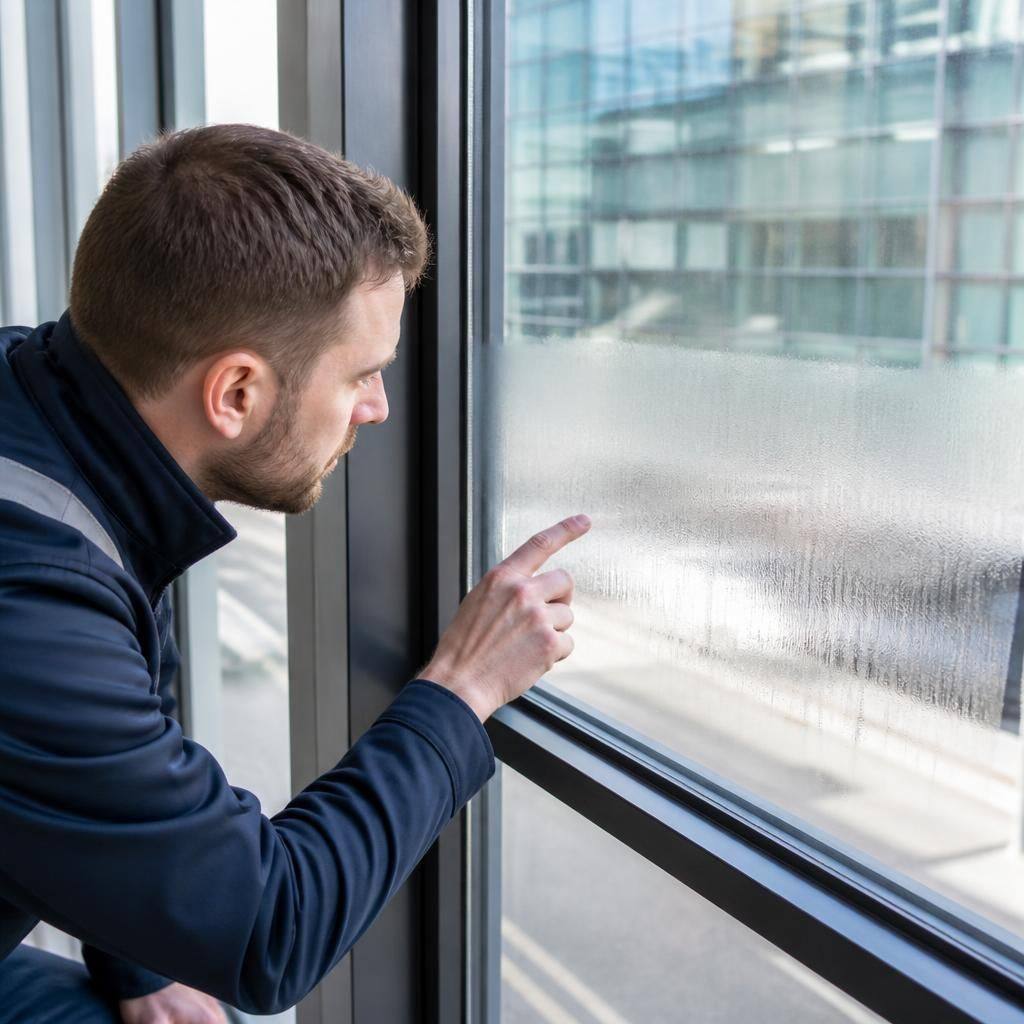
Misting within the sealed cavity cannot be removed by cleaning the accessible glass surfaces. The moisture is trapped between the panes, so wiping or polishing the window may improve its appearance briefly but will not restore the failed edge seal or the unit’s insulating function.
This is why a lasting solution starts with identifying the affected sealed unit and checking how it is held within the frame. The appropriate repair can then be selected without disturbing sound surrounding glazing unnecessarily.