
How is access arranged for commercial window frame repairs?
Access for commercial window frame repairs is arranged with the site contact, taking account of the repair location, safe working requirements and the property’s operating needs. This helps the glazing team plan the work appropriately before attending.
Access is arranged in consultation with the site contact before the repair visit. The agreed plan considers where the damaged frame is located, how the glazing team can reach it safely and what restrictions apply within the commercial property.
The process normally begins with practical information about the affected window, including its position within the building, the type of access available and any photographs or site details that can help clarify the work. Where the repair is more complex, further assessment may be needed to understand the frame configuration, surrounding finishes and any obstacles that could affect the work area.
The site contact should identify relevant arrangements in advance, such as:
- Reception, sign-in or security procedures
- Restricted areas requiring authorisation or an escort
- Parking, loading and access routes for glazing equipment
- Internal obstructions, furniture or stored materials near the repair
- Lift, stairway or corridor limitations
- Permit requirements or building management procedures
- Working restrictions in occupied offices, shops or shared premises
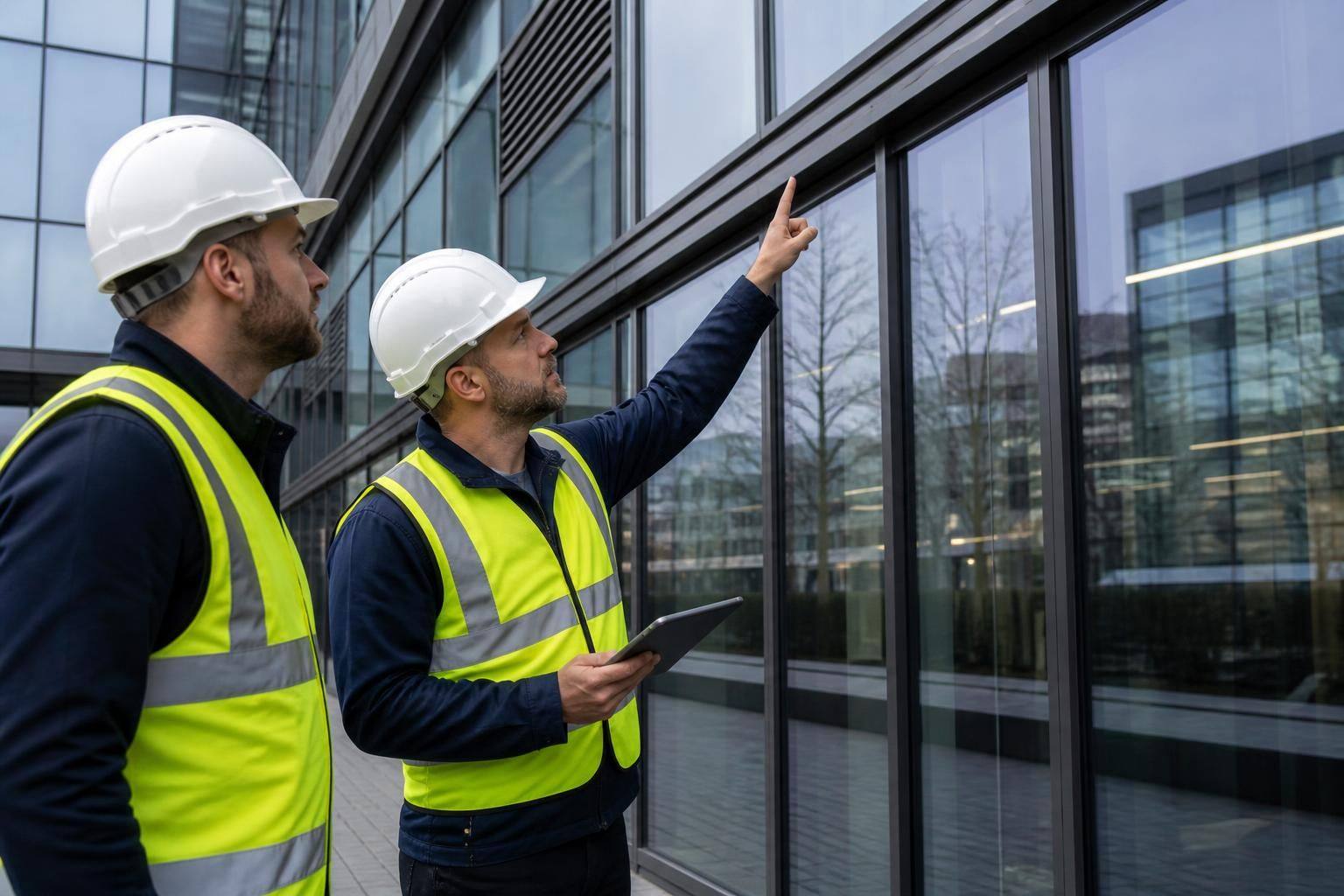
For repairs at height or in locations that are difficult to reach, the access method is reviewed as part of the planning process. This may involve considering suitable access equipment, the condition of the surrounding area and the space needed to carry out the work safely. The correct arrangement depends on the building and the position of the frame, so access requirements are confirmed rather than assumed.
Where a property remains operational, the work area can be coordinated with the site contact to limit disruption to staff, customers and other building users. The timing, route through the premises and any temporary restrictions should be agreed beforehand, particularly where the repair is close to an entrance, circulation route, retail display or occupied workspace.
The glazing team also needs the area around the frame to be reasonably clear. This provides room to inspect the damage, protect adjacent surfaces and handle tools and materials safely. If the repair involves removing or adjusting components, the site contact can help ensure that nearby fixtures, equipment and belongings are moved or protected before attendance.
For multi-tenant or managed properties, access may need to be coordinated with a facilities manager, landlord, managing agent or security team as well as the business occupying the affected space. Clear communication between those parties helps avoid delays caused by locked areas, unavailable keys or missing permissions.
Before work starts, the agreed access arrangements are checked against the actual site conditions. If the location differs from the information provided, the repair method may need to be reviewed so that the work remains safe and appropriate. This is particularly important where access is constrained or where other building activities are taking place.
Providing accurate site information at the enquiry stage, nominating a contact who can meet the team and confirming any building-specific procedures all help create a straightforward repair visit. GlassPlus UK can then plan the work around the property’s practical requirements while maintaining appropriate standards for safe commercial glazing repairs.

For repairs involving restricted areas or work at height, the site contact should provide the property’s relevant safety information before attendance. This may include site rules, induction requirements and any controls governing access equipment or exclusion zones. Reviewing these details helps GlassPlus UK assess whether the proposed access arrangement is suitable for the building and the repair location.
If the available route or working position does not support safe access, the arrangement may need to be reconsidered before the repair proceeds. This avoids relying on improvised solutions and helps ensure that the repair is planned in line with the property’s operational and safety requirements.