
What timescales should businesses discuss for commercial window glass repairs?
Commercial window glass repair timescales depend on the extent of damage, the required glass specification, site access and whether replacement glass is needed. Businesses should discuss the required completion date and any operational constraints with GlassPlus UK so the appropriate repair or replacement programme can be assessed.
Businesses should allow time for an initial assessment, safe preparation, any required glass sourcing or manufacture, and the final repair or replacement. A minor repair using readily available materials may be completed more quickly than work involving specialist glass, bespoke dimensions or wider damage to the frame. The correct programme can only be confirmed once the glazing has been inspected and the specification is understood.
The main timescale stages are usually:
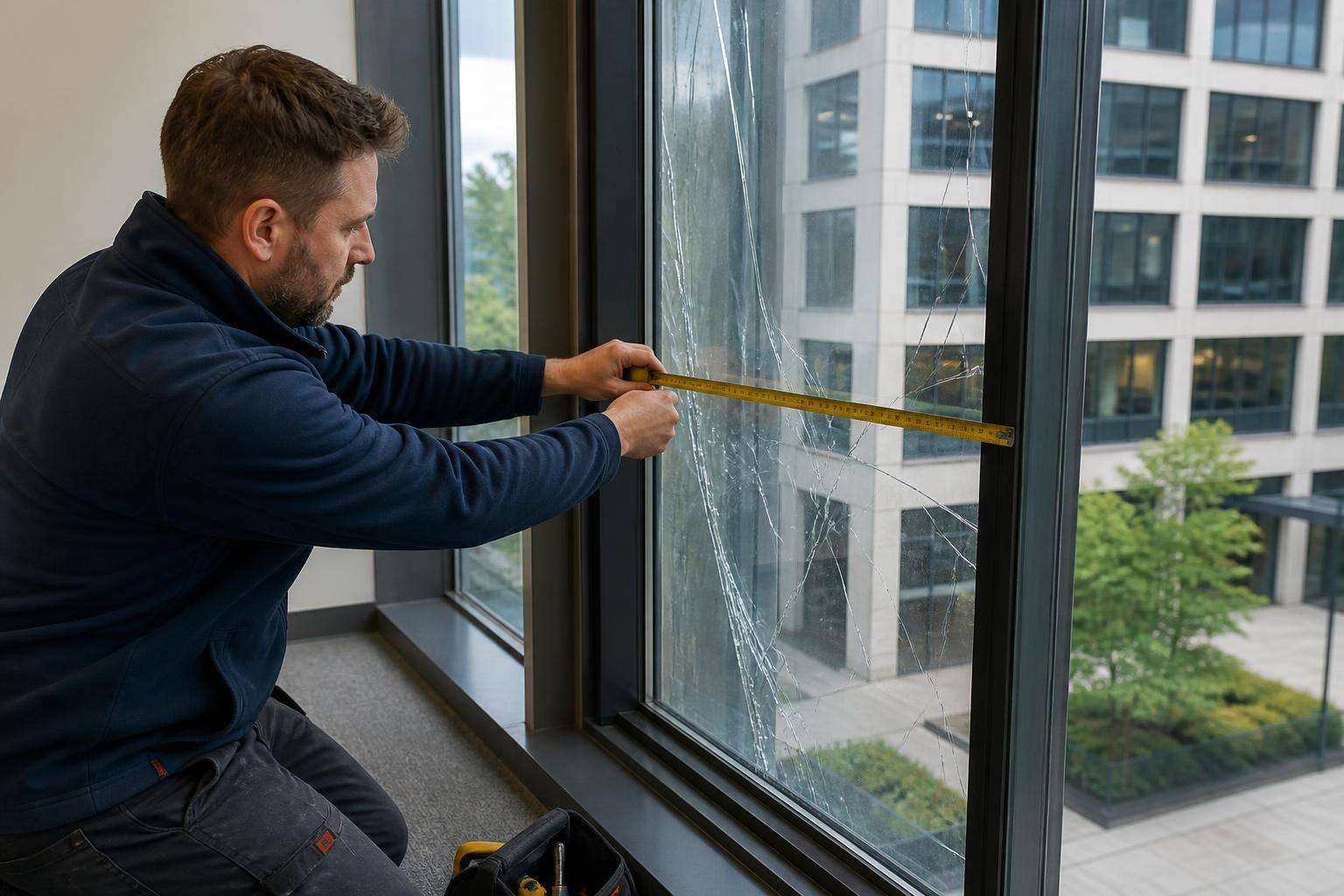
- Initial discussion and assessment: The business should provide photographs, dimensions, details of the damage and any relevant site restrictions. A site assessment may then be needed to establish the condition of the glass, frame, seals and surrounding structure.
- Specification and quotation: The quotation should identify whether the proposed work is a repair or replacement, the glass type, finish, dimensions, access requirements and any associated making-good. This gives the customer a clearer basis for comparing programmes rather than relying on an estimated completion date alone.
- Ordering and preparation: Where replacement glass is required, the programme may include confirming measurements, checking compatibility and arranging manufacture or supply. Bespoke units, safety glass, laminated glass and specialist finishes can require more planning than standard materials.
- Installation or repair: The work can be scheduled once the necessary materials, equipment and access arrangements are in place. The condition of the opening may affect whether additional preparation or remedial work is needed before the glazing can be installed.
- Completion checks: The finished work should be checked for correct fitting, operation where relevant, weather sealing and a suitable finish. Commercial properties may also require the completed work to be recorded for facilities management or building compliance purposes.
Damage that affects safety should be raised promptly. Cracked, shattered or unstable glass can present a risk to employees, visitors, adjoining tenants and members of the public. The immediate priority may be to make the area safe, restrict access or apply a temporary measure while the permanent solution is arranged. A temporary action should not be treated as confirmation that the final repair can be completed on the same visit.
Businesses should also distinguish between a target date and a confirmed appointment. A target date may depend on the survey findings, material availability and approval of the quotation. A confirmed appointment should set out what work is included, what the customer must provide and whether the programme covers only the glazing or also access equipment, frame repairs and internal or external making-good.
Access can materially affect the planned duration. Clear working space, security procedures, delivery restrictions, tenant coordination and the need for lifting equipment should be considered before the date is agreed. In an occupied shop, office or managed building, the work may need to be coordinated with trading, staff movement, customer access or other contractors. Providing this information at the outset helps GlassPlus UK develop a more realistic programme.
For larger commercial premises, a phased approach may be appropriate where several windows, a shop front or sections of curtain walling are affected. This can help the building manager coordinate occupants and maintain essential operations, although the sequence should be agreed after the condition and scope of the work have been established.
GlassPlus UK advises businesses to request a written quotation and programme that clearly records the proposed repair method, specification, assumptions, exclusions and any factors that could alter the completion date. Its work is carried out in accordance with current building and safety regulations, and its experience of commercial glazing helps it assess the practical requirements of work in shops, offices and other business premises. Enquiries can be made Monday to Friday from 7.30am to 4.30pm.
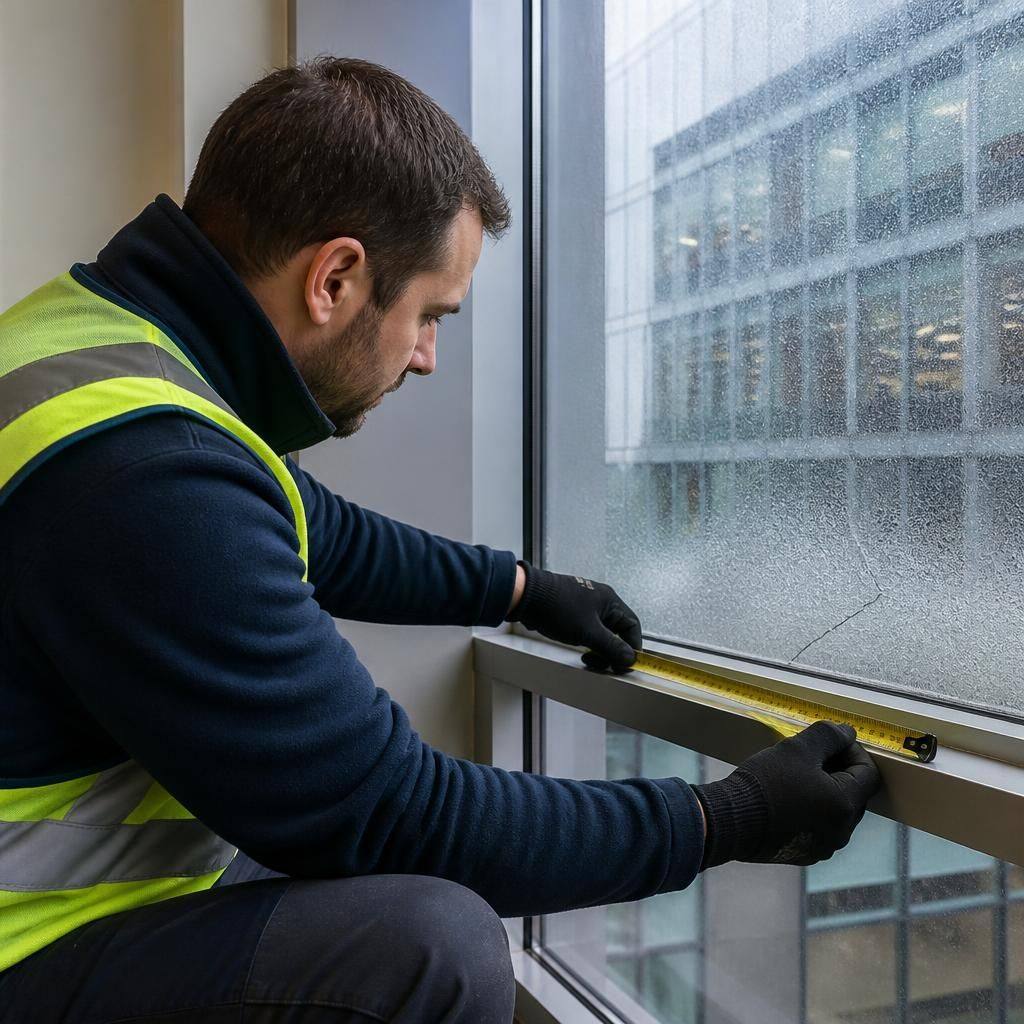
Commercial glazing timescales can also depend on how quickly the required decisions are made. Where a property involves a landlord, managing agent, insurer or facilities team, the business should establish who can approve the specification, quotation and any changes to the agreed scope. Confirming these responsibilities early helps prevent uncertainty when the survey identifies additional work.
A clear record of decisions gives everyone involved the same understanding of the proposed repair, the work included and the factors that may affect completion. This is particularly useful when comparing glazing contractors, as it allows businesses to assess the reliability of the proposed programme rather than focusing only on the earliest suggested date.