How can businesses minimise disruption during commercial window maintenance?
Businesses can minimise disruption during commercial window maintenance by planning access carefully, coordinating work around site operations and communicating clearly with occupants and contractors. A structured approach helps maintenance proceed safely while keeping the effect on day-to-day business activity to a practical minimum.
Businesses can minimise disruption during commercial window maintenance by reducing the amount of work taking place in occupied areas, preparing the site properly and using a method suited to the glazing system. The objective is not simply to complete the maintenance quickly, but to control noise, dust, restricted access and safety risks throughout the work.
Start with a clear scope of work. A detailed inspection should identify which windows, seals, frames, hardware or associated components require attention. Separating essential maintenance from lower-priority items allows the work to be organised in a logical sequence and avoids unnecessary disturbance to areas that do not require intervention. It also helps the responsible facilities or property manager understand what the work involves before contractors attend.
Use phased working where appropriate. Dividing a larger building into manageable sections can keep more of the premises operational while individual areas are being serviced. This is particularly useful in offices, retail premises and managed commercial buildings where closing an entire floor or frontage would have a wider effect on occupants and visitors. The sequence should take account of entrances, busy circulation routes, customer-facing areas and any rooms that require uninterrupted use.
Choose access arrangements carefully. The most suitable method depends on the building, the position of the glazing and the nature of the maintenance. Internal access may affect desks, displays or equipment, while external access may require controlled working zones at ground level. A competent glazing contractor can assess these constraints and identify how access equipment, barriers and protective coverings can be used without creating avoidable obstruction.
- Keep work areas clearly separated from staff, visitors and tenants.
- Protect floors, furniture, merchandise and nearby equipment before work begins.
- Keep tools and materials contained rather than allowing them to spread into operational areas.
- Remove waste and clean the immediate area as each phase is completed.
- Maintain safe routes to entrances, exits and essential facilities wherever possible.
Consider noise, dust and vibration. Some maintenance tasks are relatively contained, while others may involve removing seals, adjusting framing components or carrying out associated repairs. The method statement should consider the likely disturbance and identify suitable controls, such as localised protection, dust suppression and the use of appropriate equipment. Sensitive areas, including meeting rooms, reception spaces and trading floors, may need particular attention.
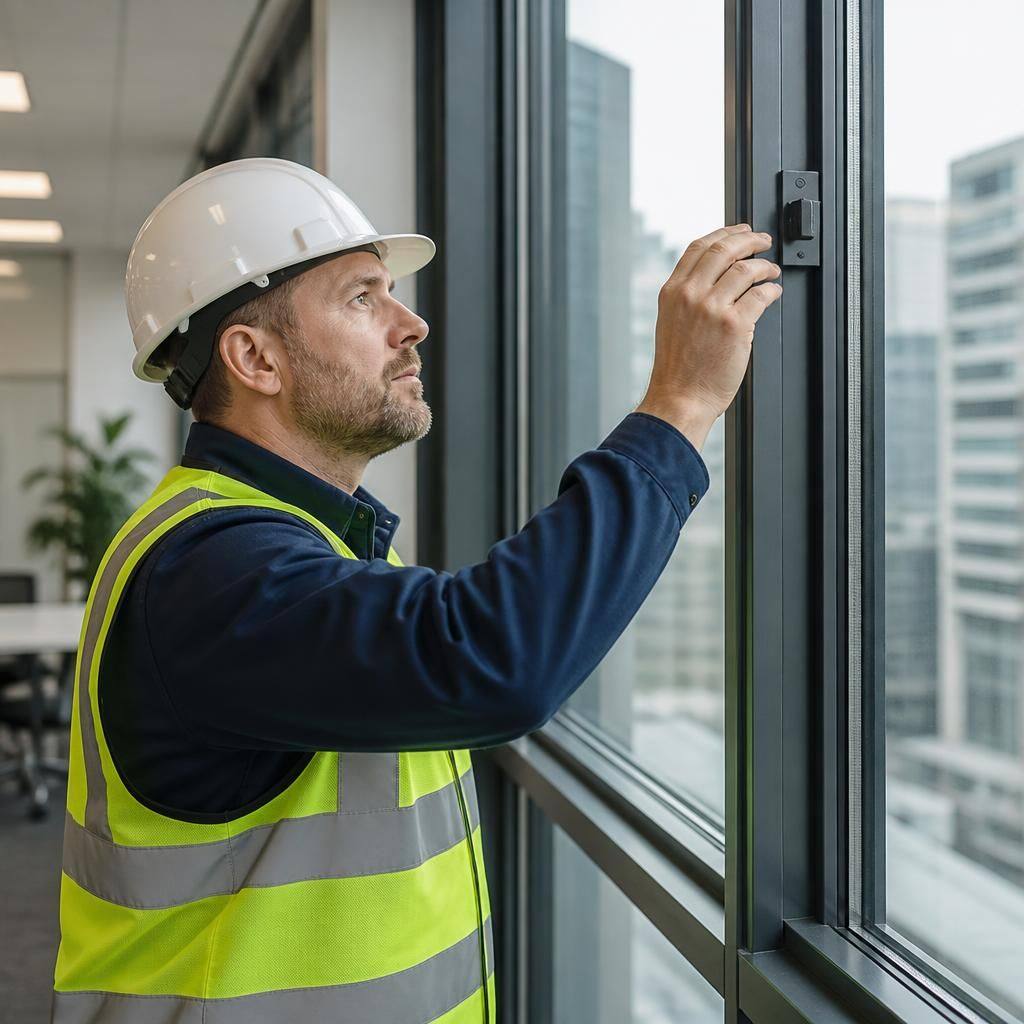
Prepare for access restrictions and safety controls. Commercial glazing work must be carried out with appropriate regard for falling-object risks, fragile glass, working at height and the movement of people below or beside the work area. Temporary barriers, warning signs and controlled access arrangements help protect building users while maintenance is in progress. Work should follow a suitable risk assessment and comply with current building and safety regulations.
Make the final checks part of the process. Once a section has been maintained, the glazing, hardware and surrounding area should be checked before it is returned to normal use. This can include confirming that opening lights operate correctly, seals and fixings are secure, protective measures have been removed and no debris remains. Recording the work completed also gives the property manager a useful maintenance history and can help identify future requirements.
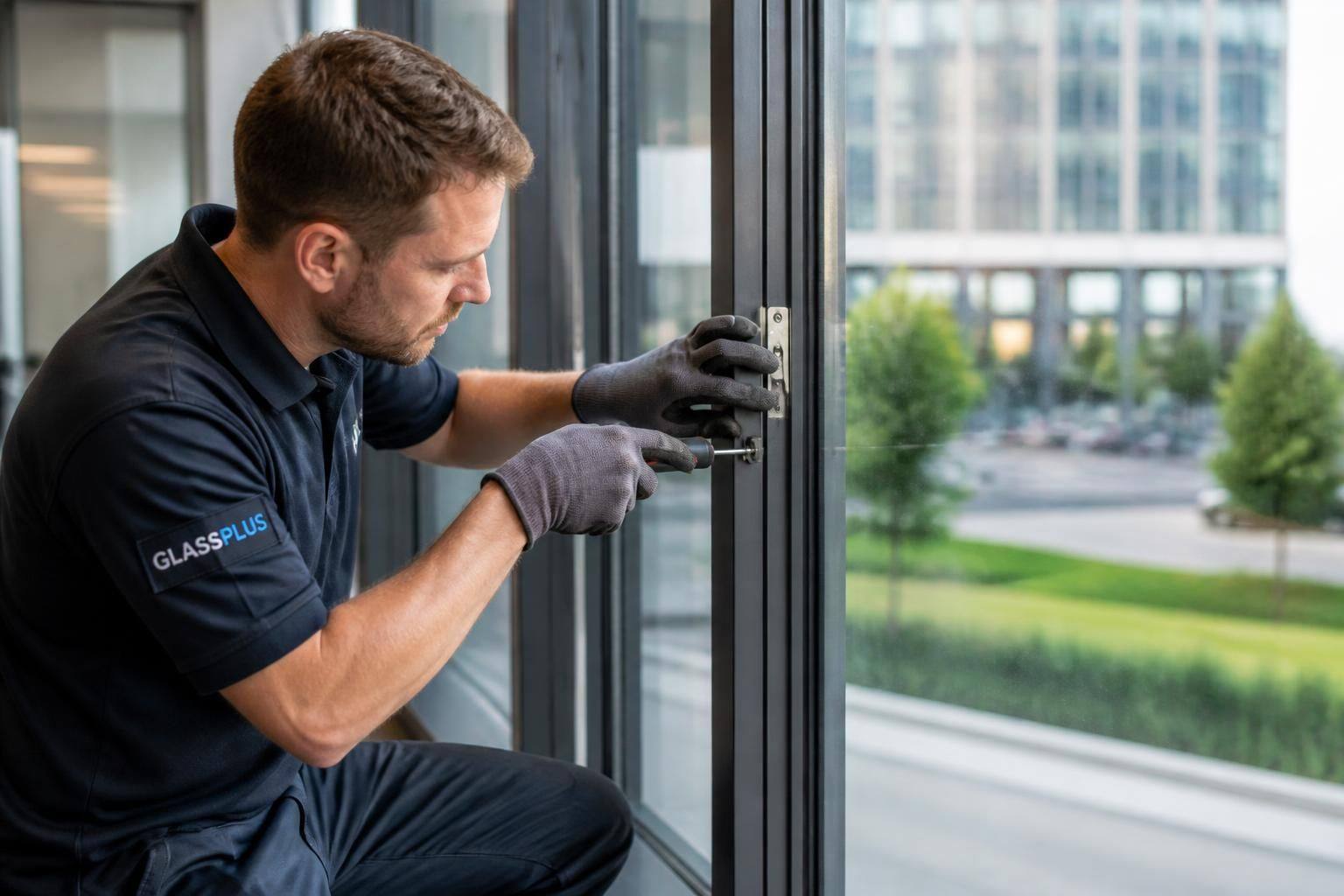
GlassPlus UK advises commercial clients to treat disruption control as part of the maintenance specification rather than an afterthought. A well-defined scope, suitable access method, controlled work area and orderly handover help preserve normal building operations while allowing necessary glazing maintenance to be carried out safely and correctly.
Allow for completion and testing time when planning the maintenance programme. Some glazing tasks may require sealants or other materials to settle before the area can be used normally, while adjusted windows and hardware should be checked to confirm correct operation. Including these requirements in the programme helps avoid reopening an area prematurely and then restricting access again.
External work may also be affected by weather conditions, particularly where access equipment or weather-sensitive materials are involved. The contractor and site representative should agree how such changes will be managed, keeping affected areas clearly identified until the work has been properly completed and checked.