
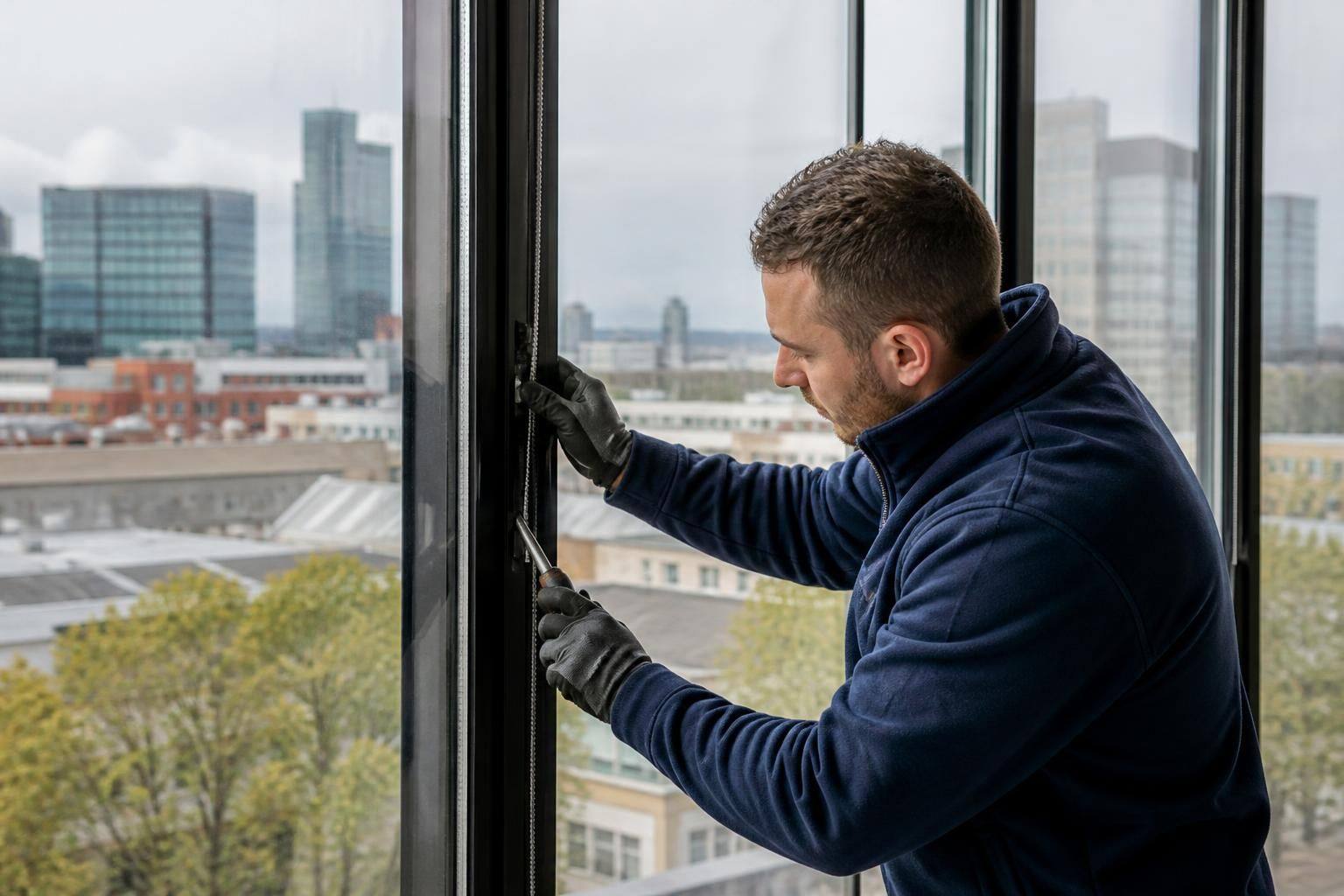
How long does commercial window maintenance typically take?
Commercial window maintenance typically takes from a short visit for routine checks and minor adjustments to longer work for larger or more complex glazing systems. The duration depends on the number of windows, their condition, access arrangements and whether any repairs are identified during the inspection.
For a straightforward commercial window maintenance visit, the work can often be completed during one planned attendance. Larger properties, more involved glazing systems or maintenance that identifies a repair may require additional time or a further visit. The final duration is normally confirmed once the scope, access arrangements and condition of the installation have been reviewed.
A typical maintenance visit may include the following stages:
- Pre-visit planning: The contractor reviews the areas requiring attention, considers site access and identifies any requirements for working safely around staff, visitors and building occupants.
- Inspection and testing: Windows, frames, seals, hinges, handles, restrictors and other operational components are checked. On curtain walling and larger commercial systems, attention may also be given to joints, pressure plates, gaskets and visible signs of water ingress.
- Routine maintenance: Where appropriate, the work may include cleaning relevant components, lubricating moving parts, tightening fixings, adjusting opening mechanisms and carrying out minor remedial tasks.
- Further works: If a defect requires replacement parts, specialist access equipment or new glazing, the work may need to be arranged separately rather than completed during the inspection visit.
- Completion review: The affected areas are checked after maintenance, and any recommended follow-up work is recorded so the property manager has a clear understanding of the next steps.
The size and layout of a commercial property can have a significant effect on the programme. A small office with readily accessible windows is generally simpler to maintain than a multi-floor building, a busy shop front or a property with restricted access. Work may take longer where furniture, stock, tenant activities or security arrangements limit access to the glazing.
Access equipment is another important consideration. Ground-floor windows may be reached directly, while upper-level windows or sections of curtain walling may require specialist equipment and additional safety planning. The time needed to arrange and use that equipment should be included in the maintenance programme, particularly where several elevations are involved.
Maintenance can also take longer when defects are discovered during the visit. A stiff opening light, failed seal or damaged component may be dealt with on site if suitable materials are available. Broken or misted glazing, damaged hardware and more complex curtain walling defects may require assessment, accurate measurements and separately sourced replacement components before the work can be completed.
For occupied commercial premises, the work is usually planned around the building’s day-to-day operation. A clear schedule can identify which rooms, floors or trading areas are affected and whether access needs to be provided in stages. This helps the responsible facilities or property manager coordinate with occupants and maintain a safe working environment without treating the whole building as unavailable.
Businesses should allow time for any necessary risk assessments, permits, security procedures and coordination with other contractors. These requirements do not necessarily increase the physical maintenance work, but they can affect when each part of the programme can begin and how efficiently different areas can be attended.
The most reliable way to establish a maintenance timescale is to provide details of the property, glazing system, known defects and access conditions before an inspection. A professional assessment can then separate routine maintenance from repair or replacement work, identify any compliance considerations and produce a practical programme for the building.
The quality of the information available before a visit can influence how accurately the maintenance duration is assessed. An up-to-date window schedule, marked-up drawings, previous inspection records and details of known faults help the glazing contractor understand the installation before attending.
This information can also support better preparation where particular components, access methods or safety controls may be required. As a result, the visit can be planned around the actual condition and extent of the glazing rather than relying on a broad estimate. Where records are incomplete, the initial inspection may need to establish the window types, locations and defects before a full maintenance programme can be confirmed.

Discuss your commercial window maintenance requirements
Businesses can contact GlassPlus UK to discuss their commercial window maintenance requirements and the information needed to assess the appropriate next steps. Providing relevant property and glazing details will help support a clear, practical recommendation.