
How are commercial window repair timescales established?
Commercial window repair timescales are established after assessing the damage, the window system and the work required. Access arrangements, the availability of suitable materials and any additional issues identified during inspection can also affect the planned timeframe.
Commercial window repair timescales are usually set by separating the work into inspection, preparation and installation stages. This gives the contractor a more realistic programme than estimating from the visible breakage alone. A straightforward repair may involve limited preparation, while damage affecting the frame, seals, fittings or surrounding finishes requires a wider assessment before the work can be scheduled.
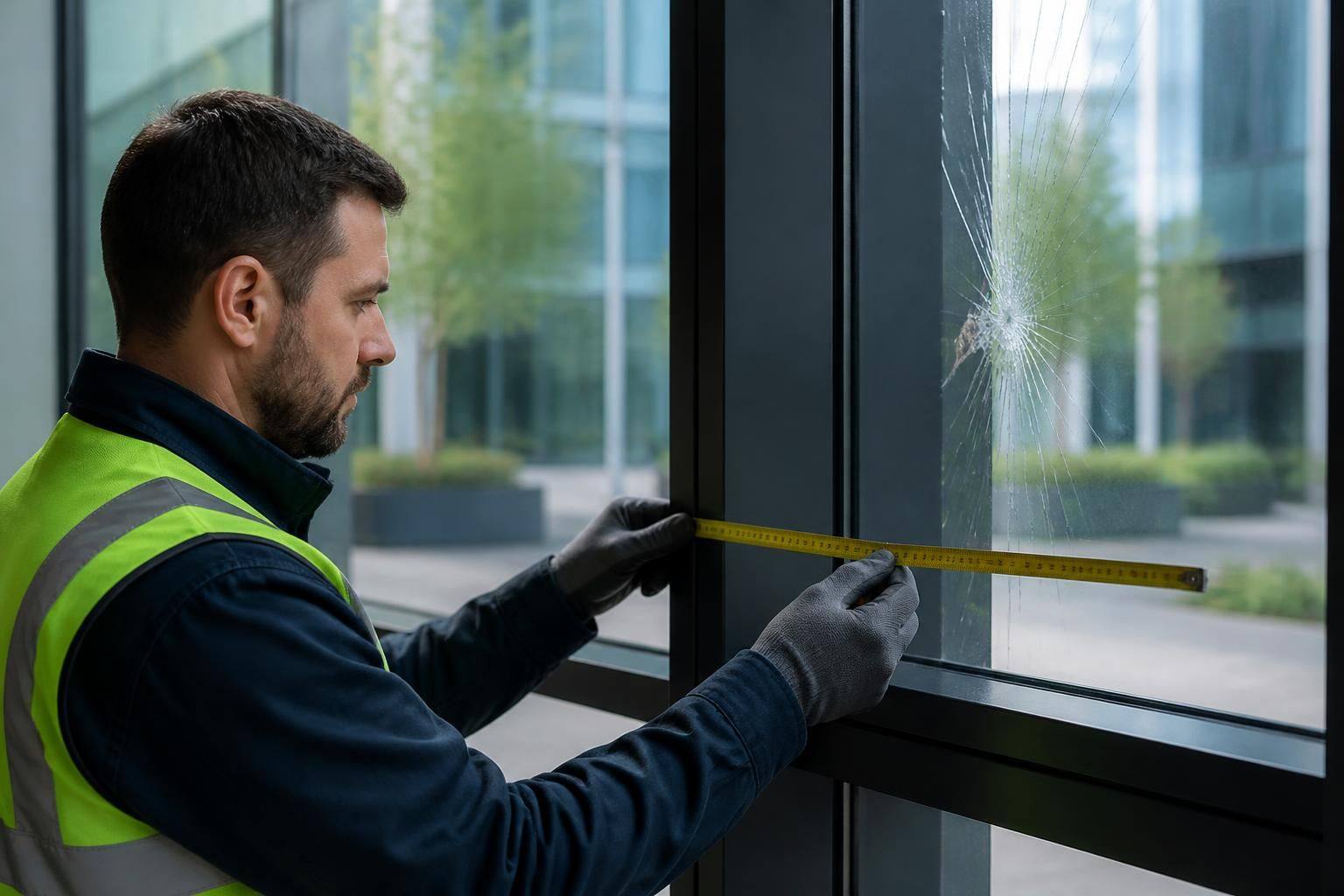
The first stage is to establish what has happened and whether the window remains safe to use. The inspection may consider the size and position of the damage, the condition of the frame, the operation of opening sections and any signs of movement or water ingress. If the glazing is cracked, unstable or allowing access to the building, temporary safety measures may need to be arranged before permanent work proceeds.
Information about the existing window system also helps determine the programme. The repairer may need to identify:
- the type and thickness of the glass;
- whether the pane is single, laminated, toughened or part of an insulated unit;
- the dimensions and edge details of the replacement;
- the frame material and glazing method;
- the condition of beads, gaskets, sealants and fixings; and
- whether specialist access equipment is needed.
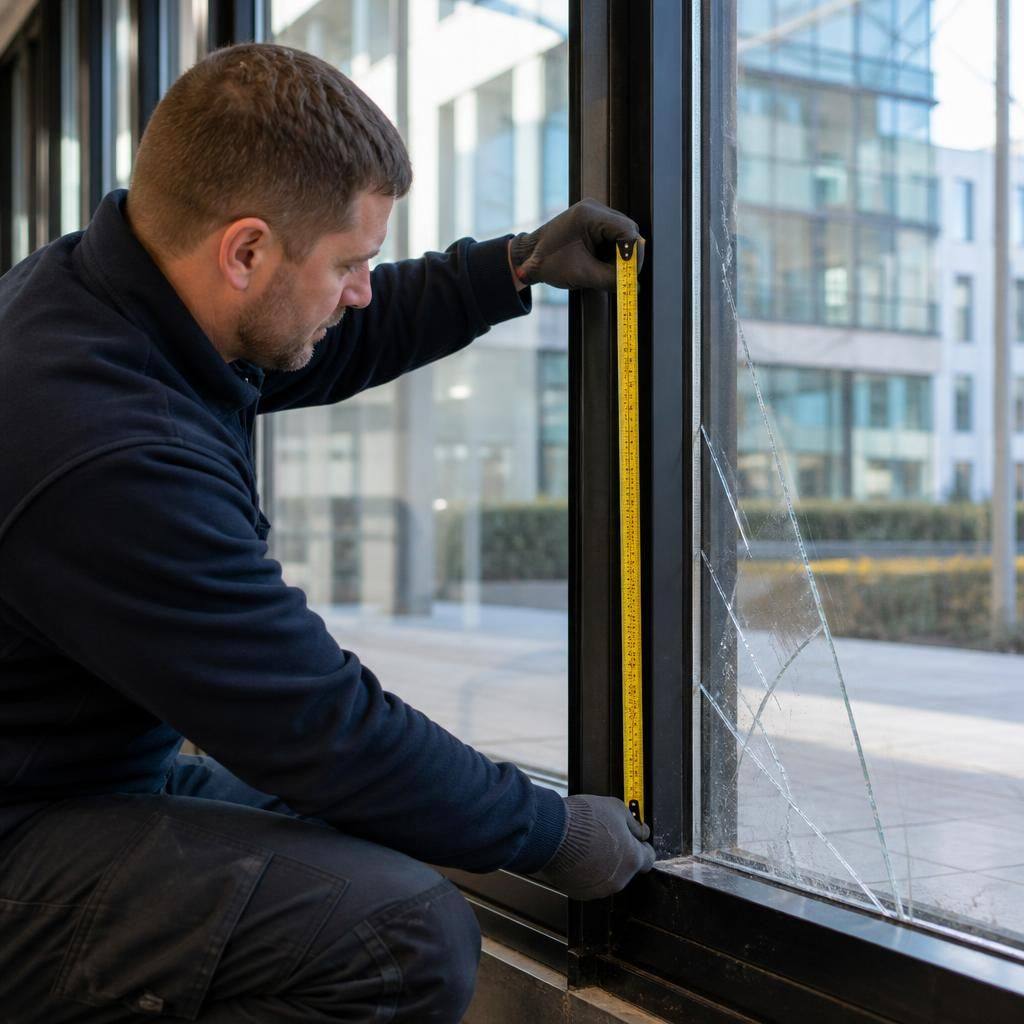
Where suitable replacement glass is readily available and the existing frame is serviceable, the preparation period can be relatively limited. Bespoke sizes, specialist safety glass, insulated units or less common commercial systems may require additional coordination before an installation date can be confirmed. Measurements must be checked carefully because an incorrect unit can affect fit, performance and the safety of the completed repair.
Access is another important part of the programme. The contractor may need to coordinate with a building manager, occupier or facilities team to arrange entry, isolate an area, move stock or furniture, protect internal finishes and manage work at height. Busy reception areas, retail displays, restricted loading arrangements and shared commercial premises can all affect how the work is sequenced. Where a mobile access platform, scaffold or other equipment is required, its availability and the site conditions must also be considered.
The intended repair method affects the time allowed on site. Replacing a pane within an undamaged frame is different from dismantling part of a curtain walling system, renewing failed seals, repairing a frame or replacing damaged hardware. If the inspection identifies movement, distortion or deterioration around the opening, the underlying issue may need to be addressed before new glass is fitted. This prevents a replacement pane being installed into a condition that could cause further failure.
Some commercial buildings also require a method statement, risk assessment, permit or coordination with other contractors. Work may need to be planned around trading, deliveries, security arrangements or the building’s own maintenance procedures. These administrative and operational requirements do not necessarily increase the physical repair time, but they can affect when the work can take place.
A sensible programme therefore distinguishes between the time needed to obtain materials, the time required to prepare the site and the duration of the physical repair. The latter may be relatively short, but it should not be treated as the whole timescale. Delivery checks, safe handling, removal of damaged glass, installation, sealing, curing and final inspection may all form part of the planned sequence.
During the work, concealed damage can alter the original assessment. Problems behind beads, within seals or at fixing points may only become visible once the damaged pane has been removed. In that situation, the repairer should explain the finding, confirm what further work is necessary and revise the programme before proceeding with additional work. This is more dependable than allowing an assumed completion time to dictate a repair that does not resolve the underlying defect.
Before completion, the glazing should be checked for correct fit, secure retention, clean seals and appropriate operation of any opening section or associated hardware. The surrounding area should also be reviewed for damage caused by the incident or the repair process. These checks form part of establishing a practical completion point and help confirm that the work has been carried out in accordance with the applicable building and safety requirements.
For this reason, GlassPlus UK treats timescales as a matter of technical assessment and site coordination rather than a fixed duration applied to every commercial window. Clear information about the damage, photographs where available, window dimensions, access restrictions and the building’s operating arrangements can help the contractor develop a more accurate repair programme.
Before a repair programme is finalised, the contractor and the responsible building contact should agree what the work will include and how completion will be confirmed. This can cover protection of nearby areas, removal of waste, reinstatement of finishes and checks by the facilities team. Recording these requirements at the outset helps prevent uncertainty about whether the repair is complete and makes any necessary change to the planned sequence easier to manage.
Discuss Your Commercial Window Repair Timescales
Businesses can contact GlassPlus UK to discuss the circumstances of a damaged commercial window and the information needed to assess the likely repair programme. This provides a practical starting point for planning the work around the building’s operational requirements.