How can businesses secure a damaged commercial window before repairs?
Businesses should keep staff and visitors away from the damaged area, avoid touching loose glass and, where necessary, restrict access until the window can be assessed. A temporary barrier or suitable boarding may help protect people and the property, but any securing measures should avoid placing further stress on the frame or remaining glass.
A damaged commercial window should be secured by controlling the surrounding area, preventing the defect from worsening and arranging a suitable temporary measure until a competent glazier can inspect it. The right approach depends on whether the glass is cracked, shattered, dislodged or still held within its frame, as well as the window’s position and the risk it presents to the building.
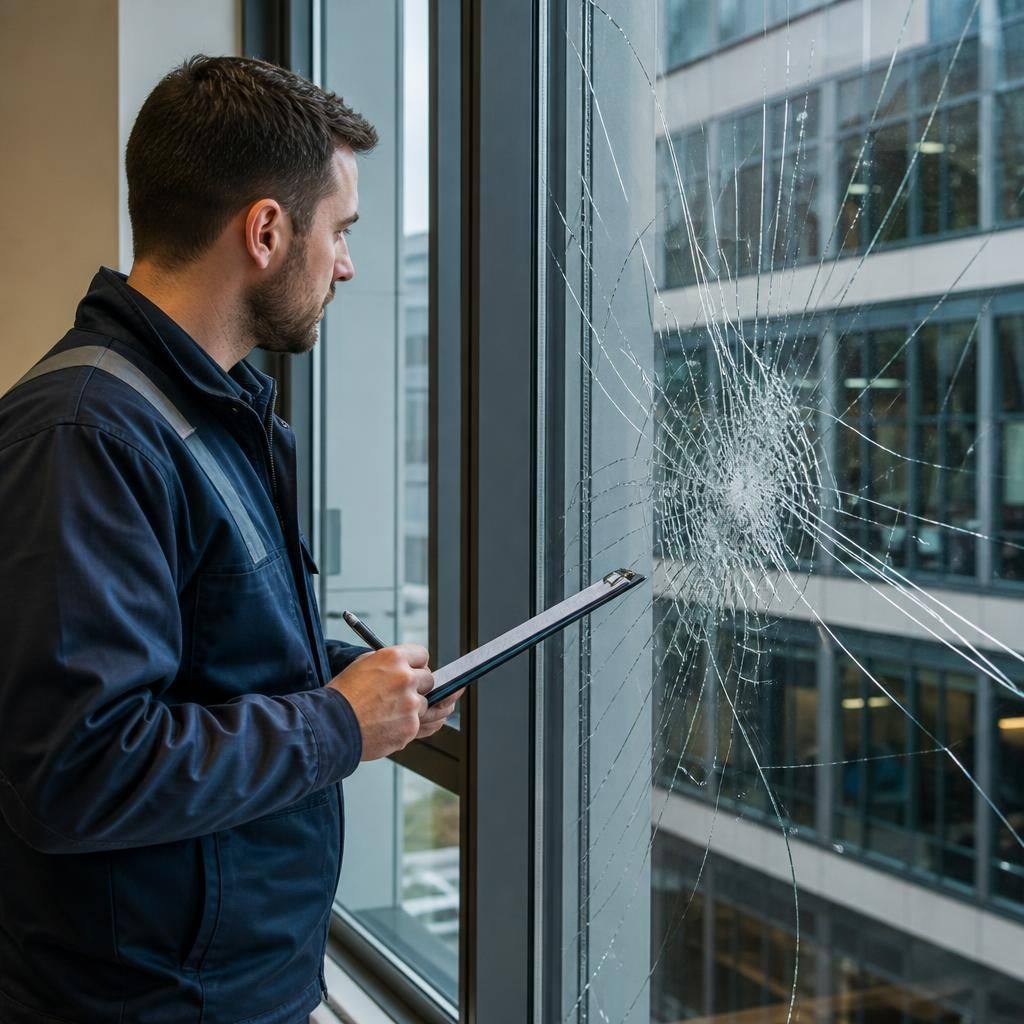
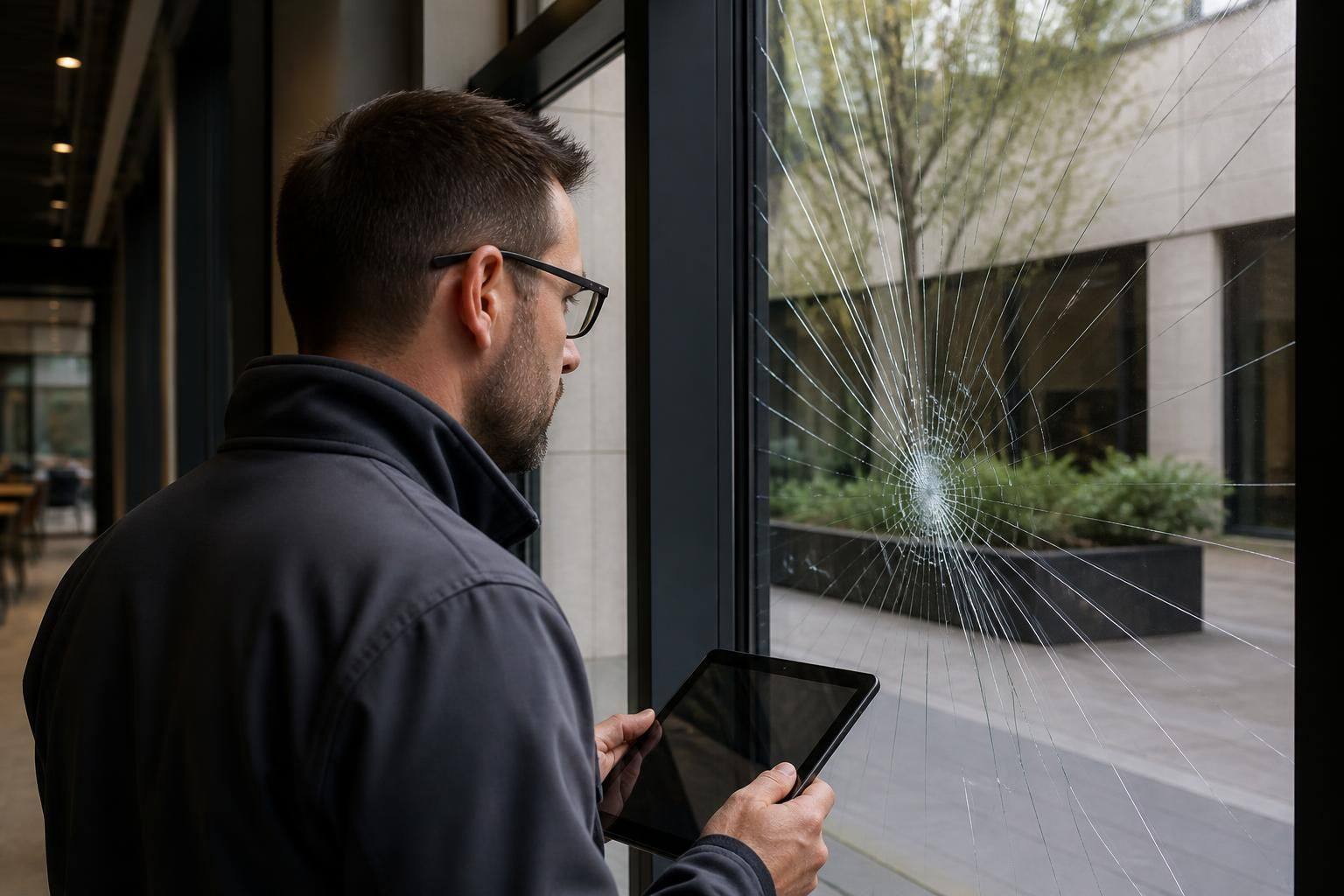
The responsible person on site should first record the condition from a safe position. Useful details include the location of the window, the type of visible damage, whether fragments are present, and whether the frame, seals, handles or surrounding wall appear affected. Photographs taken without approaching the damaged glazing can help a specialist understand the situation and prepare for the assessment. The area should also be checked for related signs such as draughts, water entry or movement around the frame.
Access arrangements should take account of everyone who may pass near the window. This includes employees, visitors, contractors and members of the public, particularly where the glazing is beside an entrance, walkway, reception area or busy working space. The controlled area should remain in place until the condition has been inspected and the temporary protection has been removed or replaced with a permanent repair.
Where the damage affects an external window, the business should consider the immediate effect on the building rather than attempting an improvised repair. Openings may allow rain, wind or debris to enter, while a damaged shop front or office window may also affect the security of the premises. A temporary covering or boarding solution may be appropriate in some situations, but it should be selected and fitted so that it does not bear unnecessarily on unstable glass, distort the frame or conceal further damage.
Any temporary protection should be treated as a holding measure, not as evidence that the window is safe for normal use. It should be checked for stability and monitored for changes, especially after poor weather, impact or activity close to the opening. Staff should be told not to lean equipment against it, operate nearby window hardware or use the affected opening until a specialist has confirmed what can safely be done.
Businesses should avoid trying to make the window secure by removing panes, pressing cracks together, applying force to the frame or using unsuitable adhesive or tape. These actions can increase the risk of breakage, make the eventual repair more difficult and obscure evidence of damage. Clean-up should also be approached with care, as small fragments may remain in rebates, seals or adjacent surfaces even when the main breakage is no longer visible.
When arranging an inspection, the business should provide the site address, the window’s location within the property, the apparent cause of the damage if known, the size and position of the affected area, and any restrictions on access. It is also helpful to explain whether the window forms part of a curtain walling system, shop front or other commercial window installation. This allows the glazing specialist to consider the glass, frame and fixing arrangement together rather than treating the pane in isolation.
The inspection should establish whether the existing frame remains suitable, whether surrounding components have moved, and whether the glass can be repaired or requires replacement. A specialist may also need to consider access equipment, the effect on neighbouring panes and the requirements of the wider commercial glazing system. Temporary securing measures should then be reviewed as part of the repair plan.
For commercial premises, the condition and actions taken should be recorded internally. A simple incident note can identify when the damage was discovered, who controlled the area, what temporary protection was used and whether any further change was observed. This supports communication between facilities staff, landlords, insurers and contractors, while helping the repair work proceed on the basis of accurate information.
Glass Plus UK assesses damaged commercial windows with attention to the glazing, frame and surrounding installation. The completed repair or replacement should be suitable for the building and carried out in accordance with current building and safety regulations. A careful temporary arrangement, followed by a proper specialist assessment, helps protect people and property while preserving the information needed to determine the correct repair.
Where damage affects the security of the premises, the business should separate protection of its contents from securing the window itself. Sensitive stock, equipment or documents can be moved away from the affected area, while the responsible facilities or security contact is informed. Any alarm, access-control or CCTV arrangements covering the opening should also be reviewed so that the temporary condition is understood and recorded.
Temporary security measures should be attached only to sound surrounding structures and should not rely on a cracked frame, loose pane or unstable glazing. The landlord, insurer or managing agent may need to be notified before a temporary arrangement is altered. This keeps the premises protected without making the eventual commercial window repair more complicated.