What happens if hidden damage is found during commercial window repairs?
If hidden damage is found during commercial window repairs, GlassPlus UK will assess its extent before continuing and explain whether a targeted repair or further replacement work is appropriate. Any additional work should be agreed with the client so the repair remains safe, compliant and suitable for the existing window system.
When hidden damage is found during commercial window repairs, the work should pause at the affected area while the condition is assessed and the implications are explained to the client. The repair can then be revised to include only the additional work necessary to restore the window safely and appropriately.
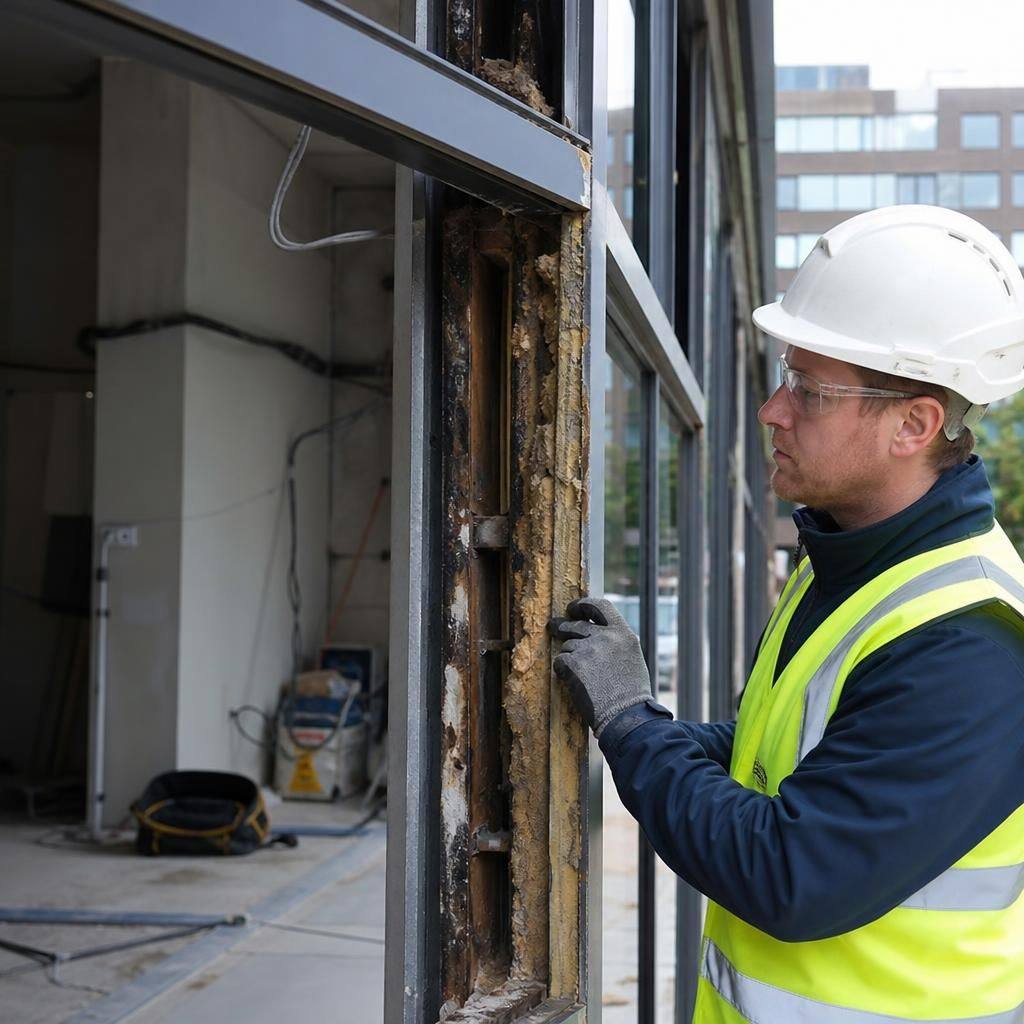
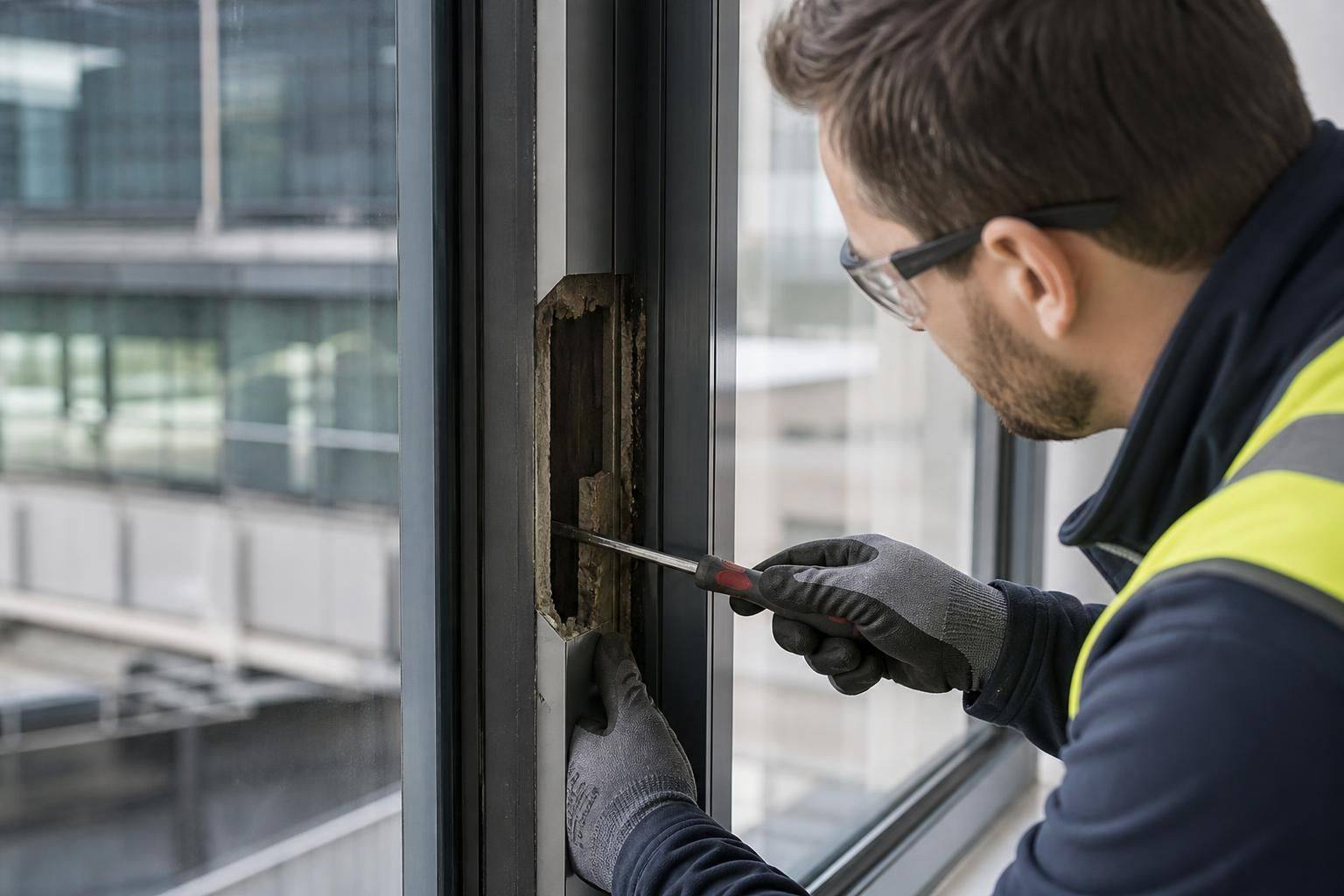
Damage is not always visible during an initial inspection. It may become apparent when a pane, gasket, bead or other component is removed. Common examples include concealed corrosion, cracked or distorted frame sections, damaged fixing points, failed seals, weakened glazing supports and deterioration caused by previous water ingress. Damage may also extend beyond the originally reported pane or window, particularly where movement or impact has affected adjoining components.
The significance of the finding depends on its location and condition. Minor deterioration may be suitable for a local repair or replacement of a single component. Damage affecting the frame, drainage path, glazing support or fixing arrangement may require more extensive work. If the surrounding structure cannot securely support replacement glass, installing a new pane without addressing the underlying defect would not be an appropriate long-term solution.
A suitable assessment normally considers:
- the type, position and apparent extent of the concealed damage;
- whether the damage affects the stability, weather resistance or operation of the window;
- whether surrounding seals, beads, gaskets, fixings or frame sections remain serviceable;
- whether the defect appears to have resulted from impact, movement, corrosion, water ingress or earlier repair work; and
- whether the proposed repair remains compatible with the existing commercial window system.
Following the assessment, GlassPlus UK can explain the available course of action in practical terms. Depending on the findings, this may involve continuing with the original repair, carrying out a localised frame or component repair, replacing additional damaged elements, or recommending replacement of a wider section of the window. The appropriate option is determined by the condition of the installation rather than by the visible glass damage alone.
Where the newly discovered defect changes the scope, materials or anticipated work involved, the revised requirement should be recorded and agreed with the client before non-essential additional work proceeds. This gives the business a clear understanding of what has been found, why the original scope is no longer sufficient and what the revised repair is intended to achieve. It also helps prevent unsuitable work being carried out simply to complete the initial instruction.
In some cases, the safest decision is to leave the affected area untouched until suitable replacement components or further technical information are available. This is particularly relevant where removing more of the installation could expose a larger defect or where the window forms part of a wider curtain walling or shop front system. The repair plan should take account of the surrounding glazing, frame interfaces and the way the window performs as part of the building envelope.
Any revised work should be checked against the relevant design and installation requirements, including current building and safety regulations where applicable. The completed repair should provide secure support for the glass, maintain suitable sealing and drainage, and allow the repaired window to operate as intended. Where hidden damage has raised concerns about adjacent areas, those areas may also need inspection before the work is considered complete.
Clear communication is important throughout the process. A professional repair assessment should distinguish between confirmed damage and areas that could not be inspected without further dismantling. It should also explain the consequences of declining recommended additional work, particularly if the original repair would not address a defect affecting the security, performance or durability of the window.
Once the agreed work has been carried out, the repaired area can be inspected for secure fixing, correct alignment, effective sealing and a suitable finish. Any operational checks should be completed where the repair involves an opening window, frame component or hardware. This approach ensures that hidden damage is dealt with as part of a controlled repair decision rather than being concealed by the installation of replacement glass.
Hidden damage can affect more than the repair itself. If further dismantling is needed, the work area may require temporary isolation, protection for nearby finishes and careful coordination with the building’s occupants or facilities team. This is particularly important in shops and offices where the window forms part of a busy or publicly accessible area.
GlassPlus UK can identify these practical requirements as part of the revised repair plan, so the business understands how the affected area will be managed while the underlying defect is addressed. This helps maintain a controlled working environment and reduces the risk of disturbance to adjoining glazing, fittings or internal finishes.