
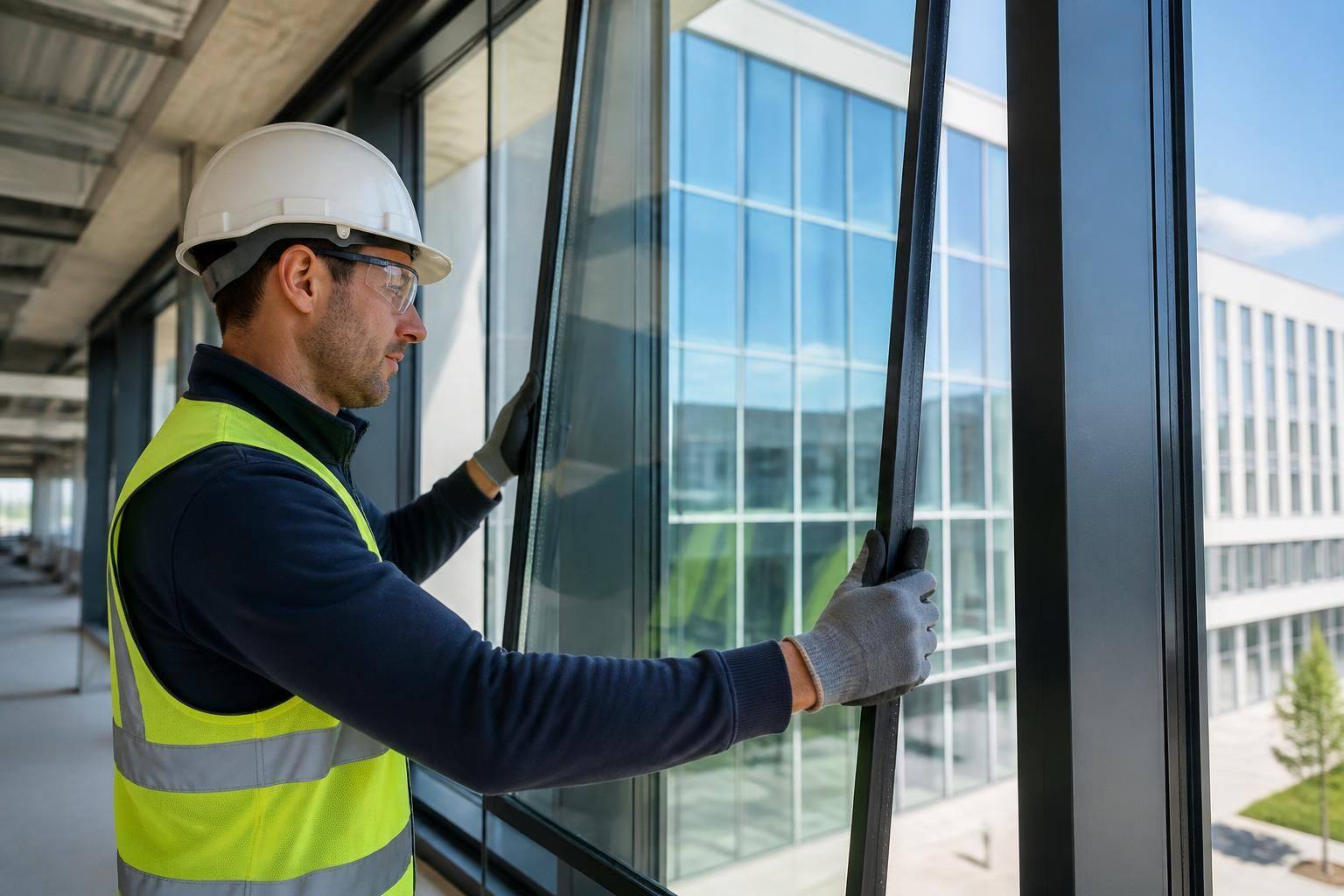
What glazing performance should businesses specify for commercial window installation?
Businesses should specify commercial window glazing that balances thermal efficiency with appropriate safety, security and solar control performance. GlassPlus UK can advise on suitable glazing specifications for the building’s use, helping ensure the installation meets practical requirements and current building and safety regulations.
Businesses should specify glazing as a complete performance package rather than choosing glass on appearance or basic insulation alone. The specification should reflect the building’s use, location, exposure, occupancy and security requirements, while ensuring that the glass, frame and installation details work together as intended.
Thermal performance is usually a primary consideration. The specification should identify the required thermal insulation of the window or curtain walling system, not just the glass in isolation. The frame, spacers, seals and junctions with the surrounding structure can all affect the finished result. A suitable specification can help limit heat loss, reduce cold internal surfaces and support more consistent conditions within offices, retail units and other commercial premises.
Solar control should be considered alongside insulation. Glazing on exposed elevations or large areas of curtain walling may admit significant solar heat and light. The design should therefore balance solar gain, glare and daylight. Depending on the building’s use, the specification may need to address:
- how much daylight should enter the space;
- the level of solar heat passing through the glass;
- glare affecting screens, displays or working areas; and
- the different performance requirements of each elevation.
Overly reflective or heavily tinted glass can affect the appearance of a commercial frontage and reduce useful daylight. These visual considerations should be reviewed with the performance requirements before the final glass is selected.
Safety performance is essential where glazing could be struck, broken or encountered by building users. The specification may require safety glass in doors, sidelights, screens, low-level areas and other locations where impact is foreseeable. Toughened glass and laminated glass provide different forms of protection, so the appropriate option depends on the location, pane size, framing arrangement and consequences of breakage. Manifestation and other visibility measures may also be relevant where transparent glass could be difficult to see.
Security performance should be matched to the risks associated with the premises. A shop front, office entrance and vulnerable ground-floor window may not require identical protection. The specification should consider resistance to forced entry, the strength of the glass, the frame and the fixing details together. Laminated construction may be appropriate in some situations because the interlayer can help retain broken fragments, but the complete assembly still needs to be suitable for the intended security requirement.
Acoustic performance can be important for premises close to busy roads, transport routes, commercial activity or other sources of external noise. The required level depends on the building’s surroundings and how the space is used. Offices, meeting rooms and customer-facing areas may have different priorities. The glass make-up, air gaps, frame design and perimeter seals all influence the result, so acoustic requirements should be discussed as part of the overall window or curtain walling specification.
Weather and air-tightness also deserve close attention. Commercial glazing must cope with wind exposure and driving rain while maintaining effective seals at the glass, frame and building interface. Poorly considered junctions can undermine the performance of otherwise suitable glass. The specification should therefore cover drainage, gaskets, sealants, movement allowances and the condition of the surrounding structure, particularly where glazing is being installed into an existing building.
For replacement work, the existing opening and frame should be assessed before performance is promised. The available depth, drainage paths, fixing points and condition of the substrate may limit which glass or system can be used. A heavier or thicker pane can also affect hinges, beads, setting blocks and other components. Confirming compatibility at the survey stage helps avoid selecting a product that cannot be safely or correctly installed.
The specification should also address fire and regulatory considerations where they apply to the building design. Glazing near escape routes, compartment lines or protected areas may have requirements beyond ordinary window performance. These matters should be reviewed with the project’s responsible professionals so that the proposed system is appropriate for its position and intended use.
For a useful comparison between quotations, businesses should ask suppliers to identify the proposed glass build-up, frame system, safety characteristics, thermal and solar performance, acoustic properties where relevant, and any assumptions about the existing structure. It is also sensible to check how the glass will be supported, sealed and finished, as installation quality is part of the performance of the completed window.
GlassPlus UK brings more than 30 years of industry experience to commercial glazing work. Its team can review the practical requirements of a project and help businesses distinguish between a specification that looks suitable on paper and one that is appropriate for the building, its users and its existing construction.
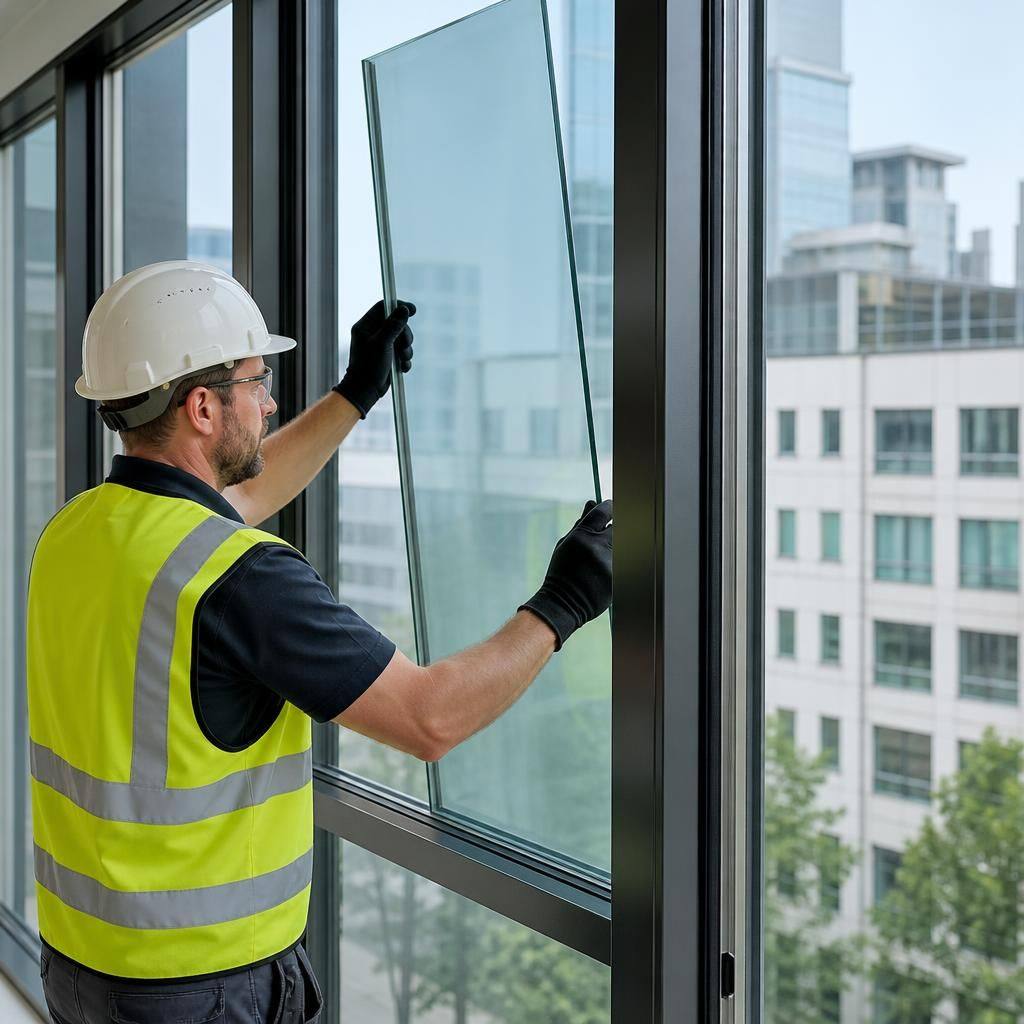
Durability and maintenance should also form part of the glazing specification. Commercial windows are exposed to regular cleaning, frequent use and routine building maintenance, so the selected glass and framing system should be practical to inspect, clean and maintain without creating avoidable disruption to the premises.
Businesses comparing installation proposals should check what maintenance access is required, how damaged panes can be replaced and whether the proposed finish is suitable for the building’s cleaning arrangements. GlassPlus UK can help assess these practical considerations alongside the required glazing performance, supporting a specification that remains suitable for day-to-day commercial use.