
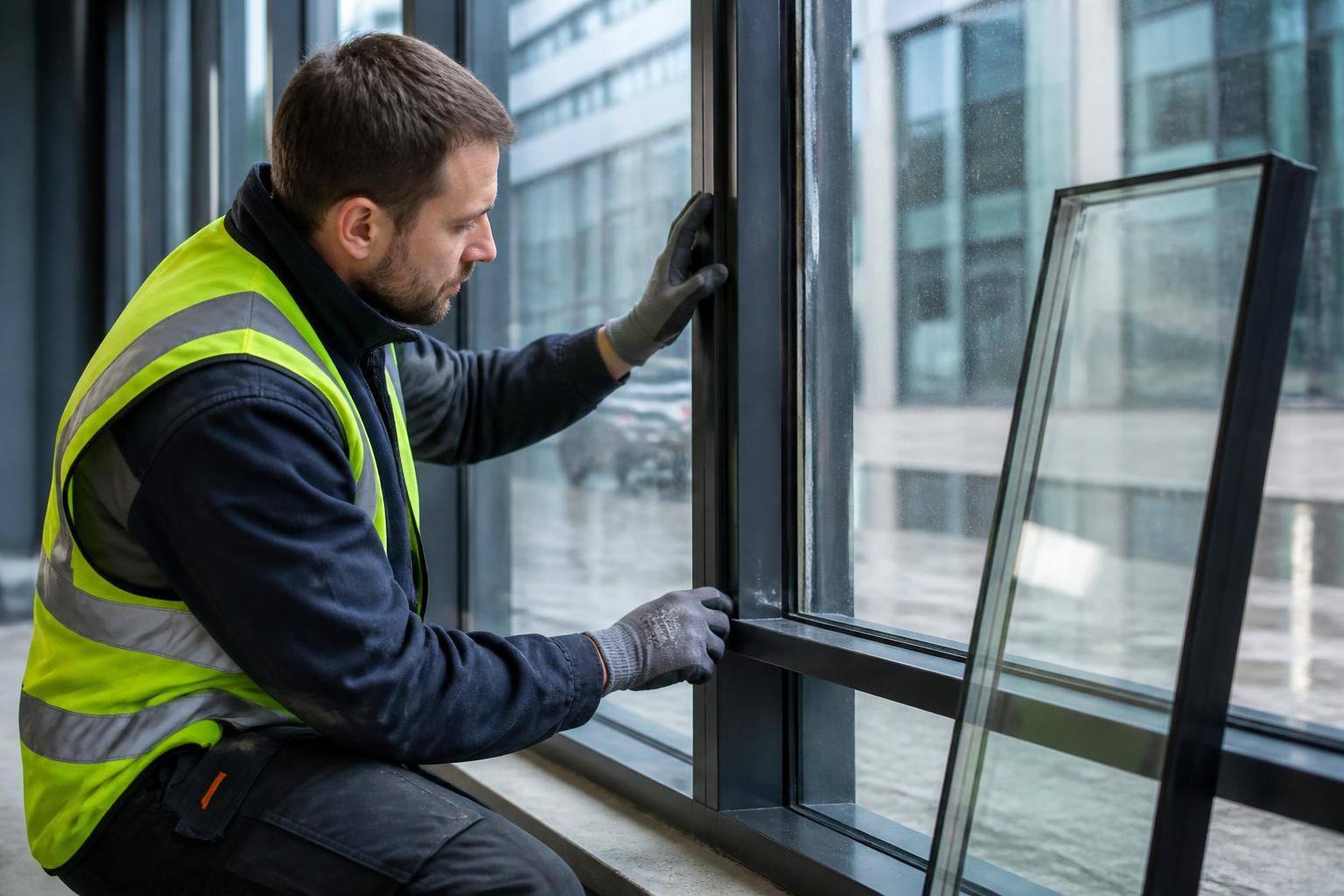
When is replacement glazing preferable to repairing existing commercial windows?
Replacement glazing is preferable when damage is extensive, the glass unit has failed, or the surrounding frame no longer provides reliable security, weather resistance or performance. Repair remains suitable for isolated, superficial damage, but a professional assessment can determine which option is more practical and compliant for the commercial property.
Replacement glazing is preferable when repairing the existing glass would provide only a temporary remedy, fail to address an underlying defect or leave the window below the standard required for the building. It is often the more practical option where the sealed unit has deteriorated, the glazing specification is no longer suitable, or repeated repairs are becoming difficult to justify.
Replacement is commonly considered in the following circumstances:
- Condensation within a sealed unit: Moisture between panes usually indicates that the unit’s seal has failed. Cleaning or treating the surface will not restore the insulating cavity, so replacing the sealed unit is normally the appropriate solution.
- Glass that no longer meets the building’s needs: A replacement can provide a more suitable safety, security, solar-control, acoustic or thermal specification where the existing glass is inadequate for the property’s use.
- Recurring damage or failed repairs: If cracks, chips, seal failures or other defects continue to affect the same installation, replacing the glazing may offer a more dependable long-term approach than repeated local repairs.
- Changes to the use of the premises: A shop, office or other commercial space may require different levels of safety, privacy, sound reduction or heat control following refurbishment, a change of occupancy or alterations to the internal layout.
- Obsolete or difficult-to-match glazing: Older panes and sealed units may no longer be readily available in their original form. A carefully specified replacement can restore the opening while taking account of current requirements and the appearance of adjacent glazing.
- Damage affecting presentation: In customer-facing premises, visible scratches, discolouration, mismatched panes or persistent marking can undermine the appearance of the building. Replacement can provide a more consistent finish where polishing or minor repair would not achieve an acceptable result.
Replacement glazing does not necessarily mean replacing the complete window. Where the frame, beads, seals and fixing points remain sound, a new pane or sealed unit may be installed within the existing system. This can retain more of the original structure and may reduce the work involved. A full window replacement becomes more relevant when the frame is distorted, corroded, poorly fitted or incompatible with the proposed glass.
The condition of the surrounding installation therefore matters as much as the visible pane. A survey should consider the frame material, drainage, gaskets, beads, edge clearances, fixing arrangement and the way the window interfaces with adjacent construction. It should also identify whether the proposed glass is suitable for the size, position and use of the opening. This helps avoid selecting a replacement based only on appearance or thickness.
Businesses should also weigh the operational consequences. Repair may be appropriate where the defect is isolated and the existing specification remains suitable. Replacement is usually easier to justify where it resolves several concerns at once, such as a failed sealed unit combined with poor comfort, inconsistent appearance or an impending refurbishment. The decision should account for access, protection of internal areas, coordination with occupants and the need to maintain safe working conditions around the opening.
Compliance is another important consideration. Replacement glazing should be specified and installed in line with applicable building and safety regulations, including requirements relating to safety glass where relevant. The completed work should be recorded clearly, particularly when it forms part of a wider refurbishment or facilities-management programme.
GlassPlus UK can assess whether an existing commercial window is suitable for repair, glazing-only replacement or more extensive renewal. With over 30 years of industry experience, the company provides practical advice based on the condition of the installation, the property’s use and the performance required from the finished work.
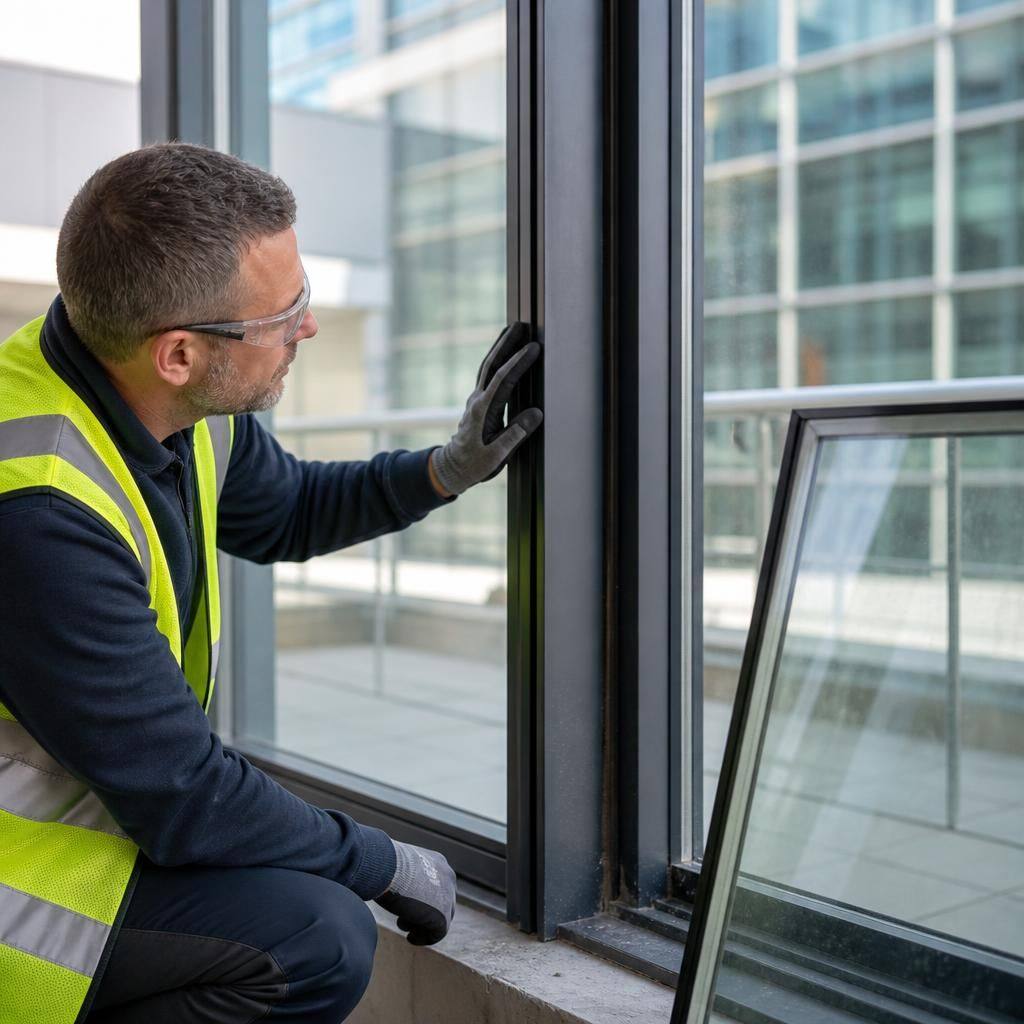
Replacement glazing is often the stronger choice when the existing installation cannot be brought back to a dependable condition through local work. A new sealed unit or pane can provide a controlled, consistent solution where the original component is no longer suitable for the opening or cannot be restored without compromising the finished installation.
This approach also gives the business a clearer basis for future maintenance. The replacement specification, installation details and relevant compliance information can be recorded as part of the property’s facilities-management documentation, helping those responsible for the building understand what has been installed and why. GlassPlus UK can advise whether replacement offers a more appropriate long-term solution than continued repair.