How long does curtain wall replacement take?
Curtain wall replacement can take from several days to several weeks, depending on the size of the installation, the replacement specification, access arrangements and the extent of associated works. A site assessment allows GlassPlus UK to provide a realistic programme for the specific commercial building.
The programme for curtain wall replacement is confirmed after a detailed survey, because the work is governed by the building’s construction, the extent of the affected areas and the specification required for the new installation. A small number of accessible replacement units will be planned differently from work involving multiple elevations, structural interfaces or occupied commercial space.
Several stages contribute to the overall programme:
- Survey and specification: The existing curtain walling is inspected to identify damaged panels, glazing units, framing, seals, flashings and any associated defects. Measurements, profiles, glass types and interfaces with the surrounding structure must be verified before materials are ordered.
- Design and approvals: Where the replacement affects the wider curtain wall system, the proposed solution may need technical review and approval by the relevant parties. Glass performance, safety requirements, weathering and compatibility with the existing installation are considered at this stage.
- Material procurement: Lead times depend on the required glass specification, framing sections, finishes and whether matching components can be sourced. Bespoke or non-standard items generally require more planning than readily available replacement components.
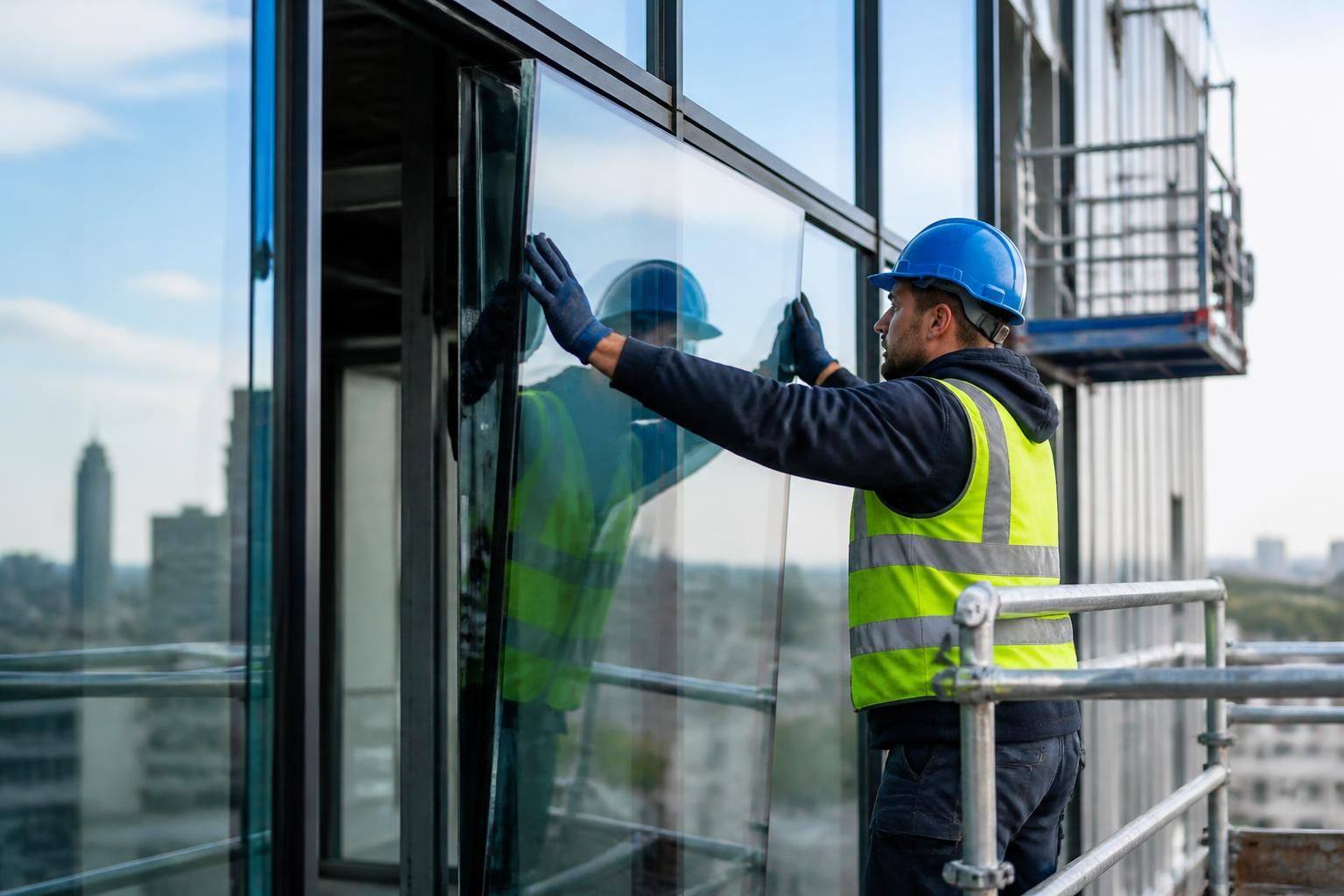
- Access planning: The installation method may involve internal access, a mobile access platform, scaffolding or other specialist equipment. Site restrictions, pedestrian routes, neighbouring premises and loading arrangements can affect how efficiently the work is sequenced.
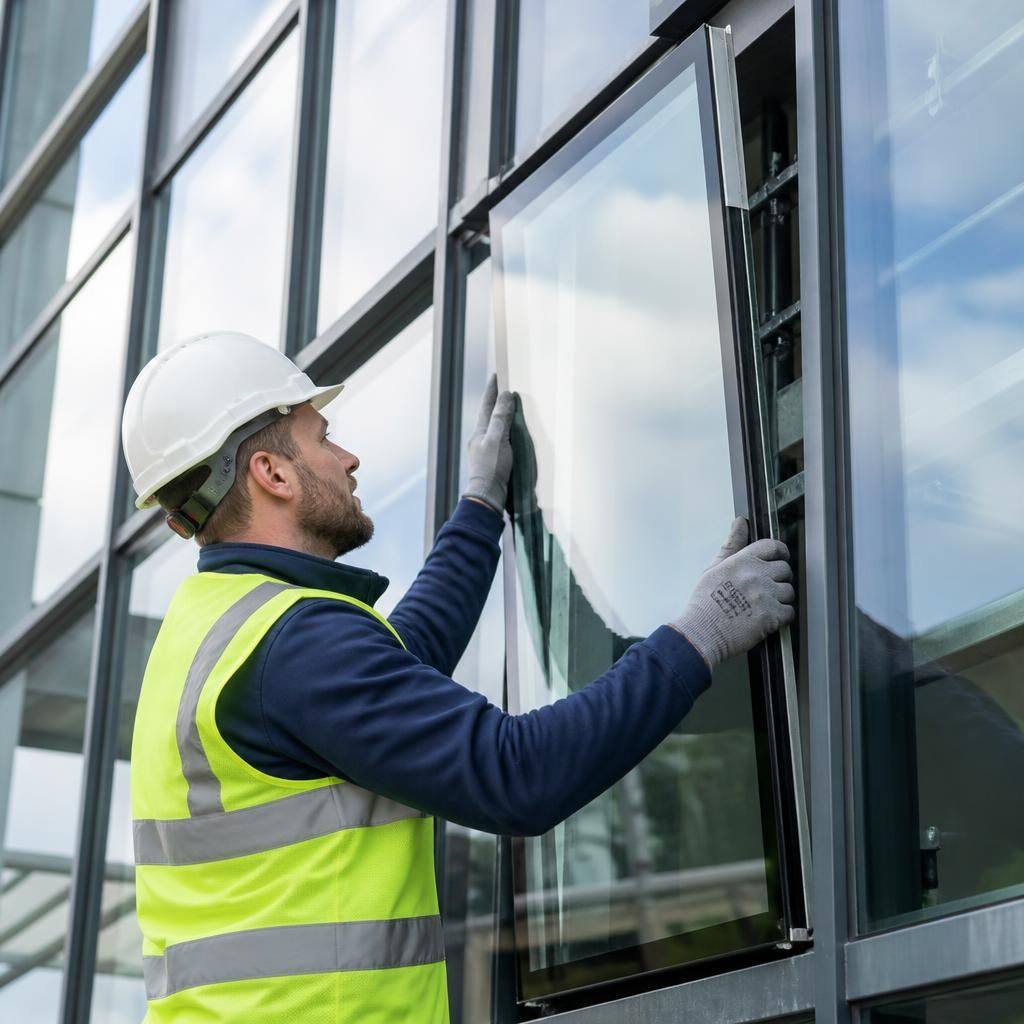
- Removal and installation: Existing glass and damaged framing are removed carefully to protect adjacent panels and the building envelope. New components are then installed, aligned, secured and sealed in accordance with the agreed specification.
- Inspection and completion: The finished work is checked for alignment, security, seals, drainage paths and visual consistency. Any necessary making-good work and documentation are then completed before the installation is handed back.
Occupied buildings can require a more controlled sequence. Work may need to be divided into manageable areas, with temporary protection, segregation and coordination with the building manager or principal contractor. Retail premises may also need the programme to take account of customer routes, displays and trading requirements, while offices may require attention to staff access and internal finishes.
Weather can influence external glazing operations, particularly where safe access, sealant application or protection of the building interior is affected. Existing conditions discovered during removal can also alter the planned sequence. Rotten substrates, concealed damage, incompatible previous repairs or movement at the surrounding structure may require additional assessment before replacement proceeds.
GlassPlus UK bases its programme on the findings of the site assessment rather than applying a standard duration to every project. This approach helps identify procurement requirements, access constraints and coordination issues at an early stage, allowing the quotation and proposed sequence to reflect the actual commercial building. With over 30 years of industry experience, the company provides glazing repairs and replacement work with regard to current building and safety regulations.
For a reliable programme, the enquiry should include available drawings, photographs, the affected elevations, access information and any restrictions imposed by the building’s occupier or managing agent. GlassPlus UK can then establish the likely work sequence and explain which factors may influence the completion date.
When comparing curtain wall replacement quotations, the stated duration should be considered alongside what the programme includes. A realistic completion period should distinguish between preparation, material procurement, installation, inspection and any associated making-good work, rather than presenting installation alone as the full timescale.
GlassPlus UK explains the proposed sequence following assessment of the building and its replacement requirements. This gives commercial clients a clearer basis for planning internal coordination, contractor access and handover, while allowing potential constraints to be identified before work begins.