
How does GlassPlus UK verify the quality of curtain walling repairs?
GlassPlus UK verifies curtain walling repairs through careful inspection of the workmanship, materials and finished installation against the agreed requirements. Checks also consider relevant building and safety regulations, helping ensure the repaired façade is safe, reliable and suitable for the property.
GlassPlus UK verifies the quality of curtain walling repairs through a staged review of the repair requirements, the surrounding façade and the completed work. This approach helps identify issues that may not be apparent from a simple visual inspection and provides a practical basis for assessing whether the repair is ready for handover.
The process begins with checking the agreed scope against the condition of the curtain walling. The team considers the location and extent of the defect, the likely cause of the damage and any adjoining components that could affect the repair. This is important where glazing, seals, framing, pressure plates or drainage paths meet, as a fault at one interface can affect the performance of another.
Materials and replacement components are checked for suitability before installation. The review considers whether the selected glass, seals, gaskets, fixings and associated materials are appropriate for the existing system and compatible with the retained façade. Matching the repair to the original construction helps preserve the appearance and function of the curtain wall rather than creating an isolated patch that may introduce further problems.
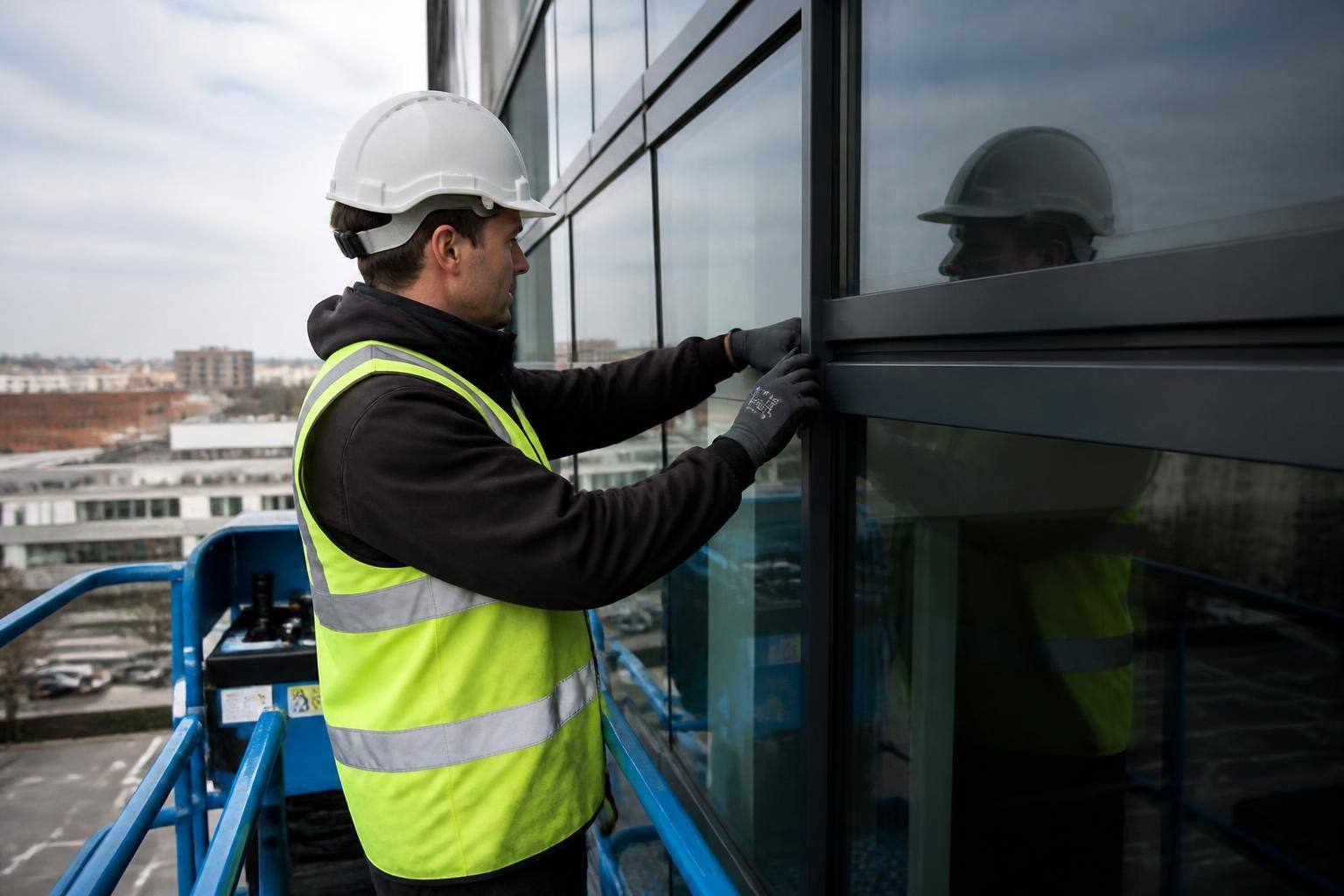
During installation, workmanship is assessed against the agreed method and the requirements of the system. Checks may include the seating and alignment of replacement glass, the continuity of seals, the security of fixings and the condition of adjacent areas. Particular attention is given to visible gaps, uneven joints, damage to retained components and any signs that the repaired section has not been properly integrated with the surrounding façade.
Once the repair is complete, the finished area is reviewed as part of the wider elevation. This includes checking the appearance from suitable viewpoints, the condition of sealant and trims, the operation of any affected opening elements and the removal of installation debris. Where the nature of the repair calls for it, further checks can be used to assess resistance to water ingress, air leakage or movement. The appropriate checks depend on the curtain walling system and the work carried out.
Quality verification also includes confirming that safety requirements have been addressed. Glass and framing must be left secure, accessible work areas must be made safe and the completed repair must not create a new hazard for building users or maintenance teams. The work is considered alongside current building and safety regulations, rather than assessed on appearance alone.
For a business comparing repair proposals, useful evidence includes a clear description of the defect, the proposed materials, the inspection points and the basis for accepting the finished work. GlassPlus UK’s established commercial glazing experience supports a methodical assessment, with attention to both the immediate repair and its relationship with the existing building envelope. This gives property managers and facilities teams a clearer basis for approving the work and planning any further maintenance.
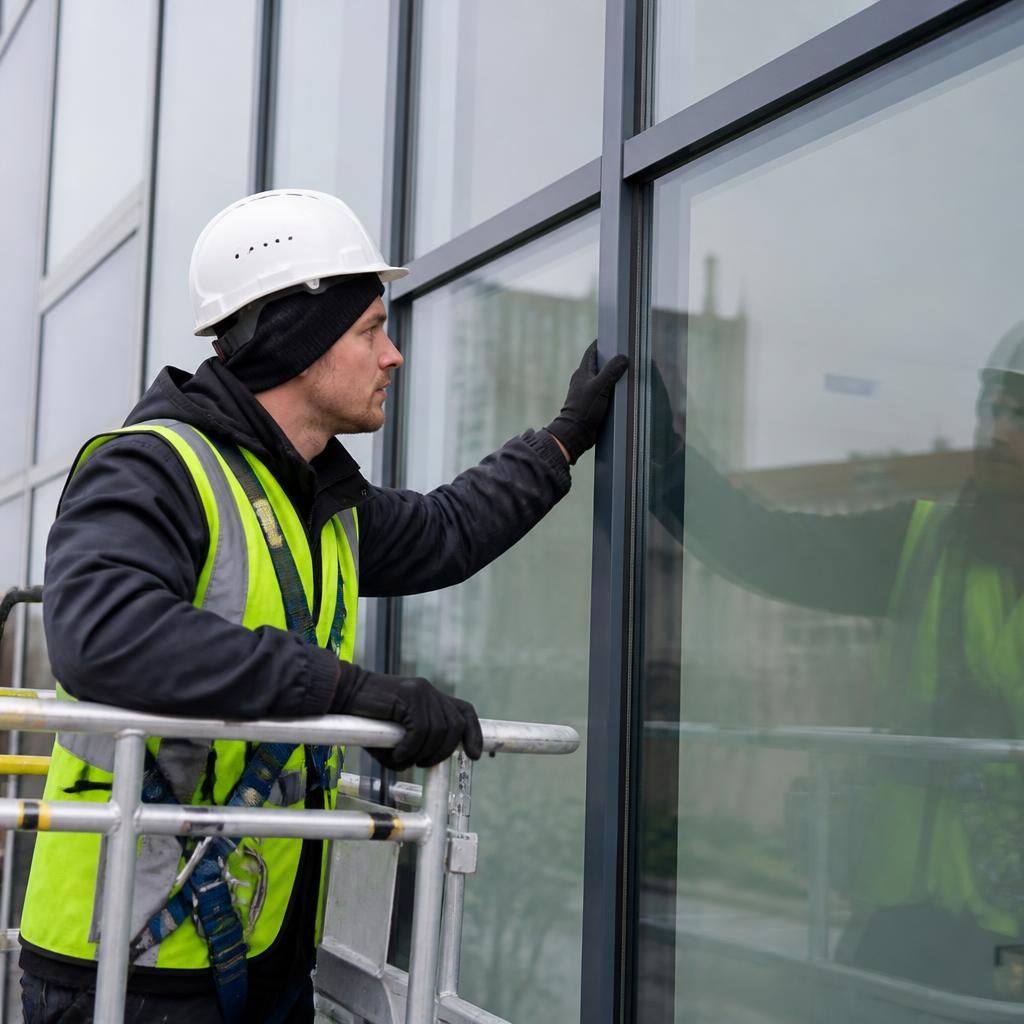
Quality verification also depends on understanding how the repaired section should perform within the building’s façade, rather than judging the finish in isolation. GlassPlus UK draws on more than 30 years of industry experience to assess whether the completed repair is consistent with the surrounding curtain walling and appropriate for the demands placed on that elevation.
This gives commercial property managers a more meaningful basis for comparison. A sound proposal should explain how the repair will be judged, which aspects require particular attention and how any limitations will be identified before approval. GlassPlus UK’s approach keeps those considerations focused on the condition and performance of the actual façade.