Which curtain walling defects require specialist repair?
Specialist repair is required where curtain walling has cracked or failed glass, damaged framing, leaking joints, failed seals, corrosion, or movement affecting the façade’s performance. These defects require careful assessment to determine whether targeted repair can restore safety, weather resistance and compliance, or whether replacement is necessary.
Specialist repair is required when a curtain walling defect may affect the building’s safety, weather resistance, structural performance or compliance. Cracked glazing, movement in the framing, persistent water ingress, failed seals and corrosion should not be treated as routine maintenance, particularly where the defect is recurring or located in an inaccessible area.
Glazing defects need specialist attention when a pane is cracked, shattered, misted between layers or no longer properly supported. The cause may be impact, thermal stress, frame movement or failure of the surrounding components. A repair must consider the type and thickness of the glass, the way it is retained and the performance requirements of the façade. Replacing the visible pane without addressing the underlying cause can leave the defect liable to return.
Frame and panel movement is a more serious indication that the curtain walling requires technical assessment. Distorted mullions or transoms, displaced pressure plates, open joints and uneven sightlines may indicate movement within the system or a problem with fixings. These issues can place additional stress on glazing and seals. Specialist repair helps establish whether the affected section can be stabilised, adjusted or partially replaced without compromising adjoining areas.
Water ingress also warrants investigation rather than simple surface sealing. Leaks may result from damaged gaskets, blocked drainage paths, failed perimeter seals or incorrectly formed joints. Water can travel behind the visible entry point, making the source difficult to identify. A suitable repair therefore involves examining the relevant interfaces and drainage arrangements before defective materials are renewed.
Seal failure is particularly important where it allows air or moisture through the façade. Deteriorated gaskets may shrink, split or lose contact with the glass, while perimeter sealant can harden, pull away or become damaged during other works. The correct repair depends on the location and function of the seal. It may require careful removal of failed material, preparation of the joint and application of a compatible replacement system.
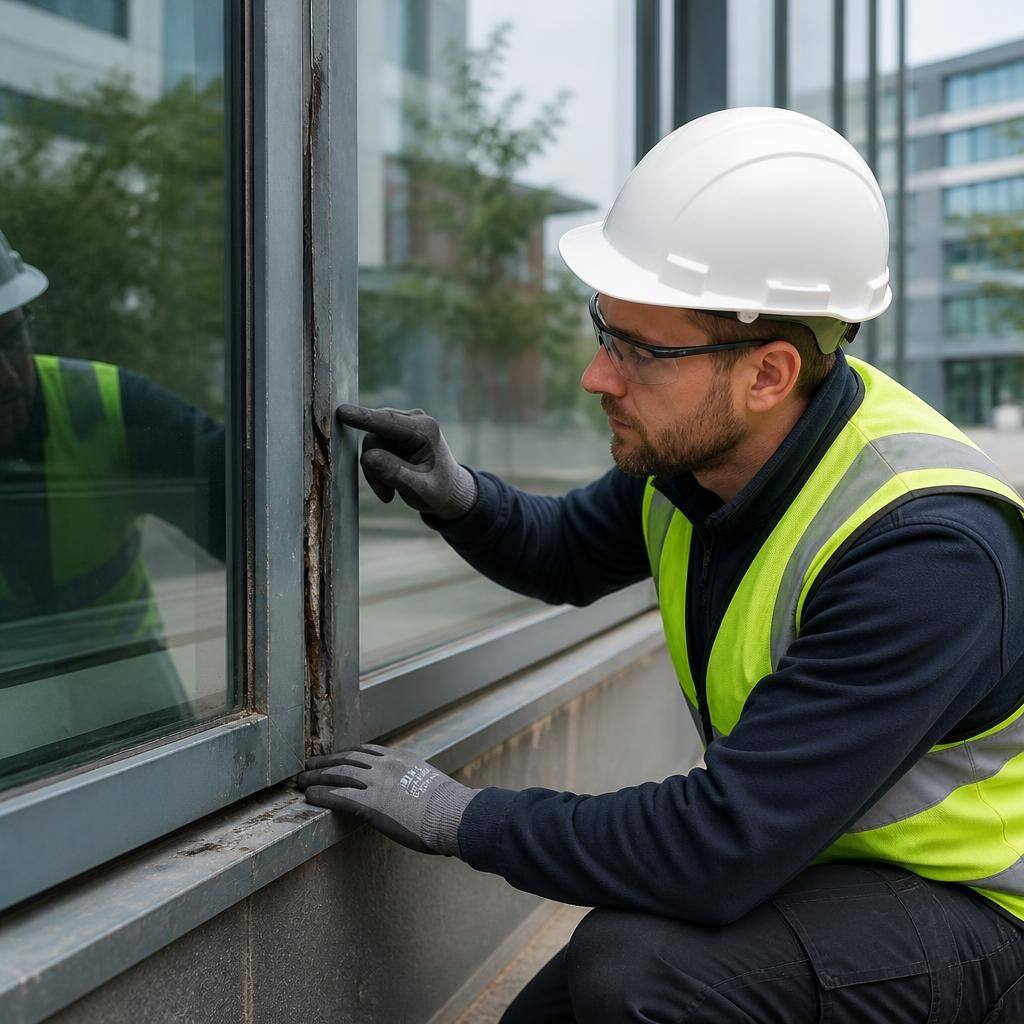
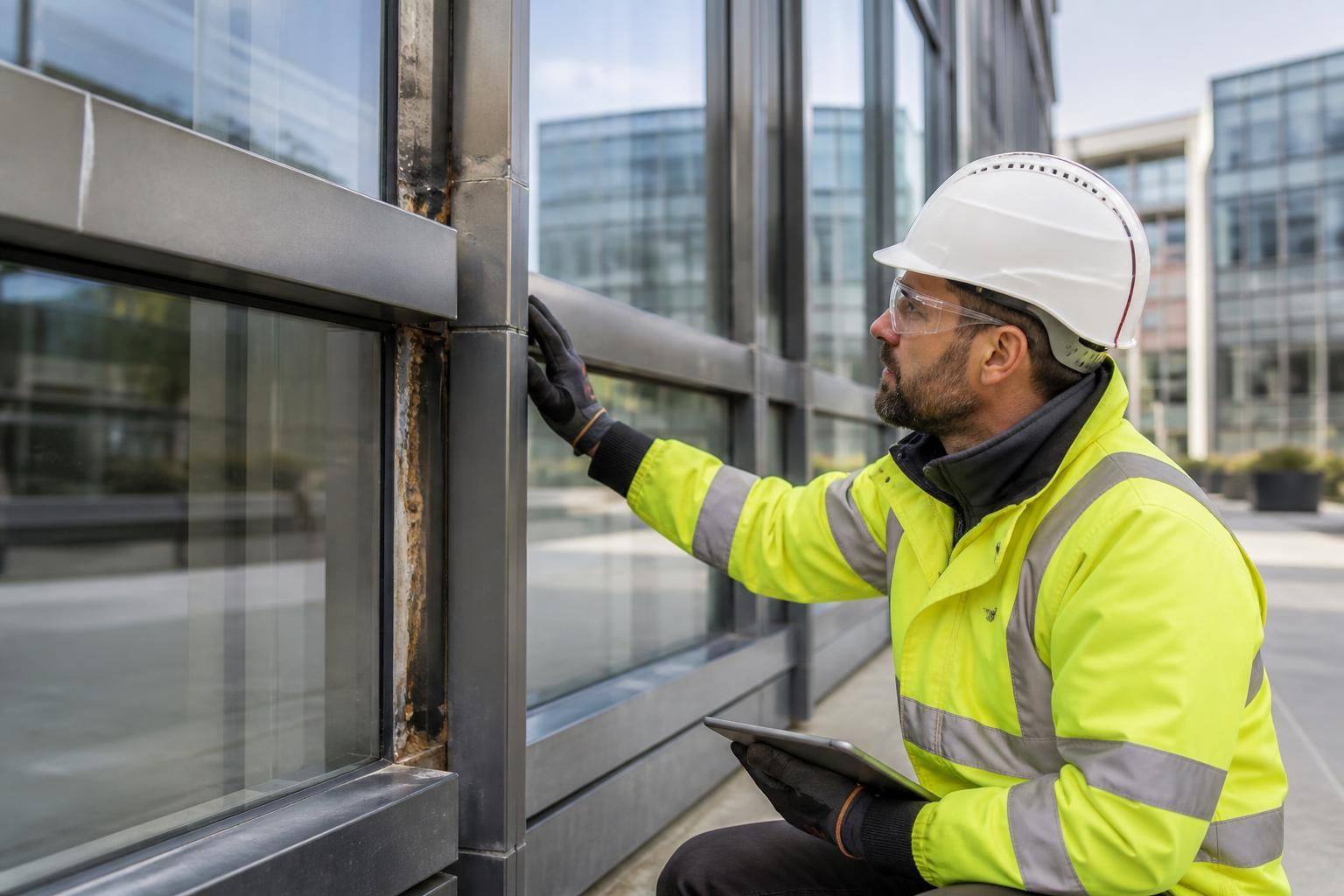
Corrosion and deterioration of metalwork should be assessed promptly. Surface corrosion may be limited, but corrosion around fixings, joints or drainage points can affect the condition of connected components. Repairs need to distinguish between cosmetic deterioration and damage that has reduced the performance of the framing. Cleaning or coating alone may be unsuitable if the affected metalwork or fixings have already lost integrity.
Specialist repair is also appropriate where a defect has followed an earlier intervention, where several symptoms appear together or where the affected curtain wall forms part of an occupied commercial building. In these circumstances, the work must be planned around safe access, protection of internal areas and the need to limit disruption to building users. The visible defect may represent only one part of a wider failure, so an isolated patch repair should not be recommended without considering the surrounding construction.
A competent assessment normally considers:
- the position, extent and likely cause of the defect;
- the condition of adjacent glass, framing, gaskets, seals and fixings;
- whether water, air or movement is affecting the façade’s performance;
- the access and safety controls needed to inspect and repair the area;
- the compatibility of proposed materials with the existing curtain walling; and
- whether targeted repair is suitable or whether replacement of a larger section should be considered.
Not every visible imperfection requires the same response. Minor cosmetic marks may be dealt with differently from a defect that affects containment, weathering or structural support. However, uncertainty itself is a reason to seek a specialist opinion where glazing is cracked, framing has moved, joints are leaking or metalwork is deteriorating.
GlassPlus UK assesses curtain walling defects in the context of the complete façade rather than treating each symptom in isolation. Its commercial glazing experience supports a repair approach focused on restoring the affected area while considering current building and safety regulations. Where repair cannot provide a suitable result, the assessment can identify the reasons and clarify whether replacement is the more appropriate course.
Defects at interfaces between glass, framing and adjoining building materials are particularly likely to require specialist repair. These locations can conceal the source of a failure, while movement between connected components may continue to place stress on the repaired area. A suitable repair should therefore address the interface itself, not simply improve its appearance.
When comparing repair proposals, businesses should look for a clear explanation of the affected components, the proposed method and the checks that will confirm the work is suitable. GlassPlus UK considers the relationship between curtain walling elements before recommending targeted repair, helping ensure that the proposed work is appropriate for the façade and consistent with current building and safety regulations.