
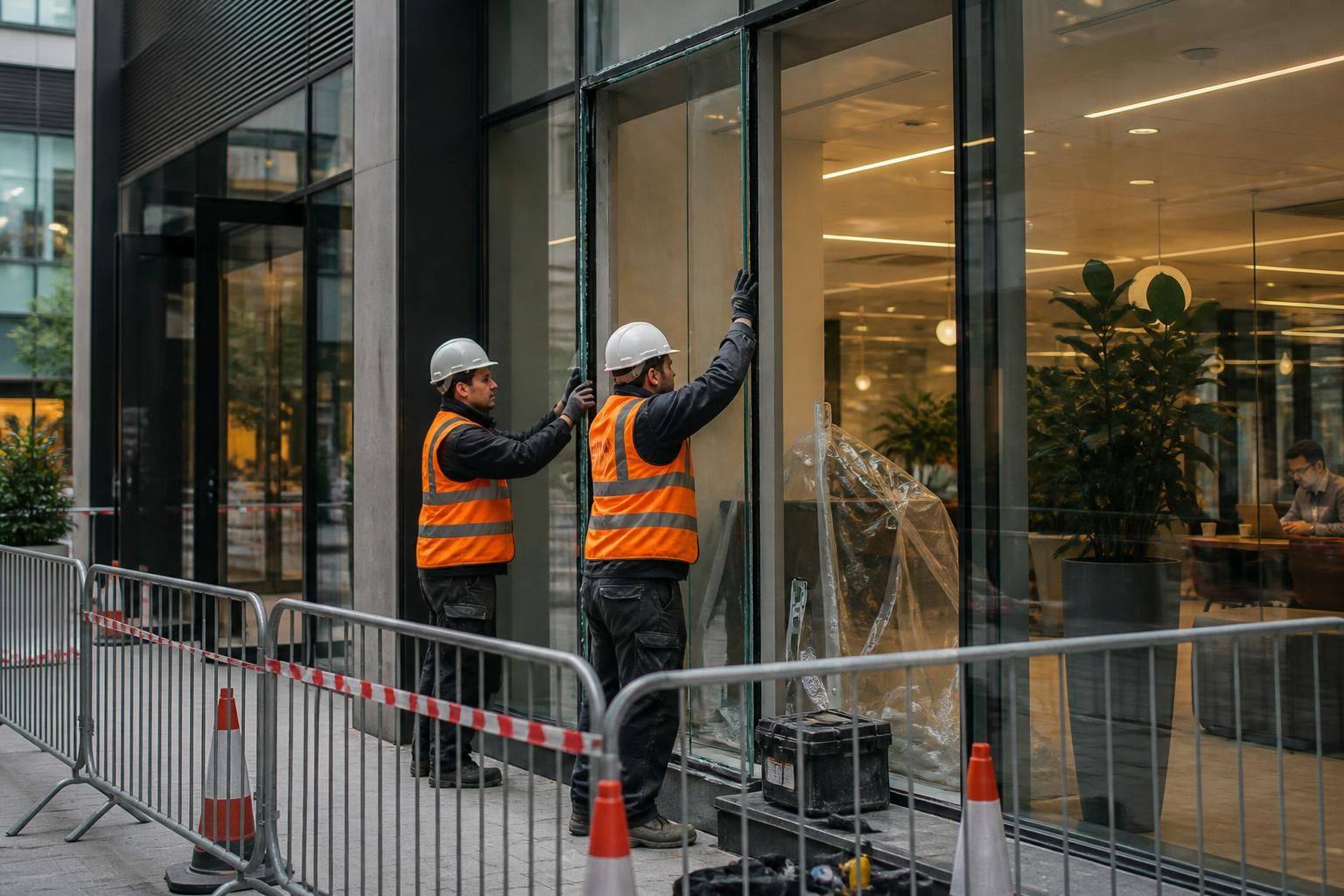
Are emergency commercial glazing repairs suitable for occupied commercial premises?
Yes. Emergency commercial glazing repairs can be suitable for occupied premises when the work is properly assessed, controlled and coordinated to protect staff, visitors, contents and ongoing business operations.
Suitability depends on the condition of the glazing, the level of risk and how the repair can be separated from normal business activity. In many cases, work can proceed while a commercial premises remains occupied, provided that access, movement and exposure to the damaged area are properly controlled.
The first consideration is the immediate risk. Broken glass, cracked panes, damaged doors and displaced curtain walling can present different hazards. The condition of the glazing, the possibility of further breakage, the location of fragments and the effect of weather exposure all need to be considered before work begins. A damaged entrance, reception area or shop front may require tighter controls than glazing in a restricted office area.
GlassPlus UK can assess the affected area and establish whether repair, replacement or a temporary protective solution is the most appropriate next step. The decision should take account of the type of glass, the framing system, the size and position of the pane, and whether the damage has affected the security or stability of the surrounding installation.
Occupied-site work normally requires a controlled working zone. This may involve barriers, warning notices and a clearly defined route around the repair area. Staff, visitors, customers and contractors should not be able to enter the work zone unintentionally. Where the damaged glazing is near a doorway or a busy circulation route, the business may need to manage access temporarily or use an alternative entrance while the work is carried out.
Good coordination is particularly important in retail premises, offices, schools, managed buildings and other sites where people continue to move through the property. The glazing contractor should understand the building’s access arrangements, any site-specific safety procedures and the times when disruption is least difficult to manage. A nominated contact on site can help with access, permits, security arrangements and communication with occupants.
Safety must take priority over convenience. Work should not proceed in an occupied area if the risk cannot be controlled adequately. In those circumstances, the affected space may need to be cleared, isolated or managed in stages. This is not necessarily a reason to close the whole premises; it may be possible to restrict only the relevant room, entrance, corridor or frontage while other parts of the business continue operating.
There may also be practical reasons to defer the permanent replacement until the correct specification is confirmed. Matching existing glass can involve checking thickness, appearance, performance and compatibility with the frame. If the required unit is not immediately available, a suitable interim arrangement may be considered, with the limitations explained clearly to the responsible person. The permanent work should then be planned around the building’s operational requirements without treating a temporary measure as a completed repair.
Commercial responsibilities should be considered alongside the physical repair. The business may need to protect stock, equipment, confidential areas and personal data from unauthorised access while the glazing is open or damaged. If the affected installation forms part of the building envelope, weather protection and internal finishes may also need attention. Fire safety, escape routes and accessibility must not be compromised by barriers, stored materials or changes to normal circulation.
Before authorising the work, a business should ask for a clear explanation of:
- the immediate hazard and the proposed method of controlling it;
- which areas, entrances or routes will be affected;
- whether staff, visitors or customers can remain on site during each stage;
- what temporary protection is proposed if the permanent glass is not fitted immediately;
- the glass and framing specification to be used for the replacement; and
- what checks and handover information will be provided when the work is complete.
Once the repair or replacement is finished, the work should be checked for secure fixing, correct operation, safe edges, clean surrounding areas and suitable reinstatement of access routes. Any temporary barriers or protective materials should be removed only when the area is safe for normal use. Keeping photographs, quotations, correspondence and completion details gives the business a useful record for property management, insurers and future maintenance.
GlassPlus UK brings more than 30 years of industry experience to commercial glazing work and carries out work in line with current building and safety regulations. Its experience with shop fronts, commercial windows and curtain walling enables it to consider both the immediate safety issue and the operational needs of an occupied building. For a business comparing repair options, the key question is not simply whether the premises can remain open, but whether the proposed method provides proper control of risk, disruption and compliance throughout the work.
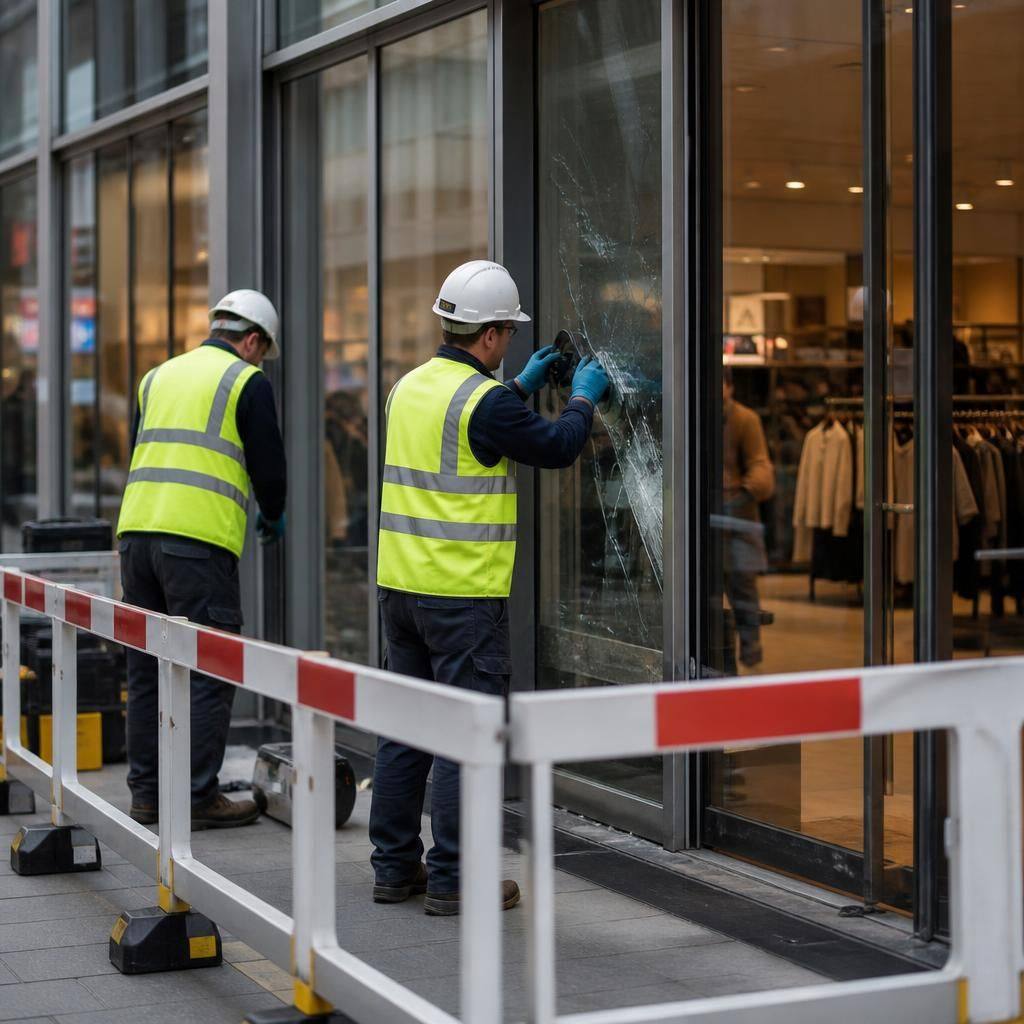
The repair method can make a significant difference to whether an occupied premises remains practical to use. Where the installation and site conditions allow, work may be planned to limit access through the building, reduce movement of materials indoors and keep the affected activity separate from staff and visitors. In other cases, safe access to the glazing may require a temporary change to how part of the premises is used.
GlassPlus UK can consider the position of the damaged pane, the available working access and the removal and installation method before work is authorised. This helps the responsible person compare the likely effect on daily operations rather than treating every damaged unit in the same way. The selected approach should be explained clearly, including any restrictions that will remain until the glazing has been secured and checked.