
How is damaged commercial glass made safe before permanent repair?
GlassPlus UK makes damaged commercial glass safe by assessing the break, controlling access to the affected area and dealing carefully with loose or hazardous fragments. The opening can then be secured with suitable temporary protection while a permanent repair or replacement is arranged.
Damaged commercial glass is made safe through a controlled assessment, careful removal of immediate hazards and the installation of suitable temporary protection. The priority is to prevent injury, restrict access and protect the building until the correct permanent repair or replacement can be completed.
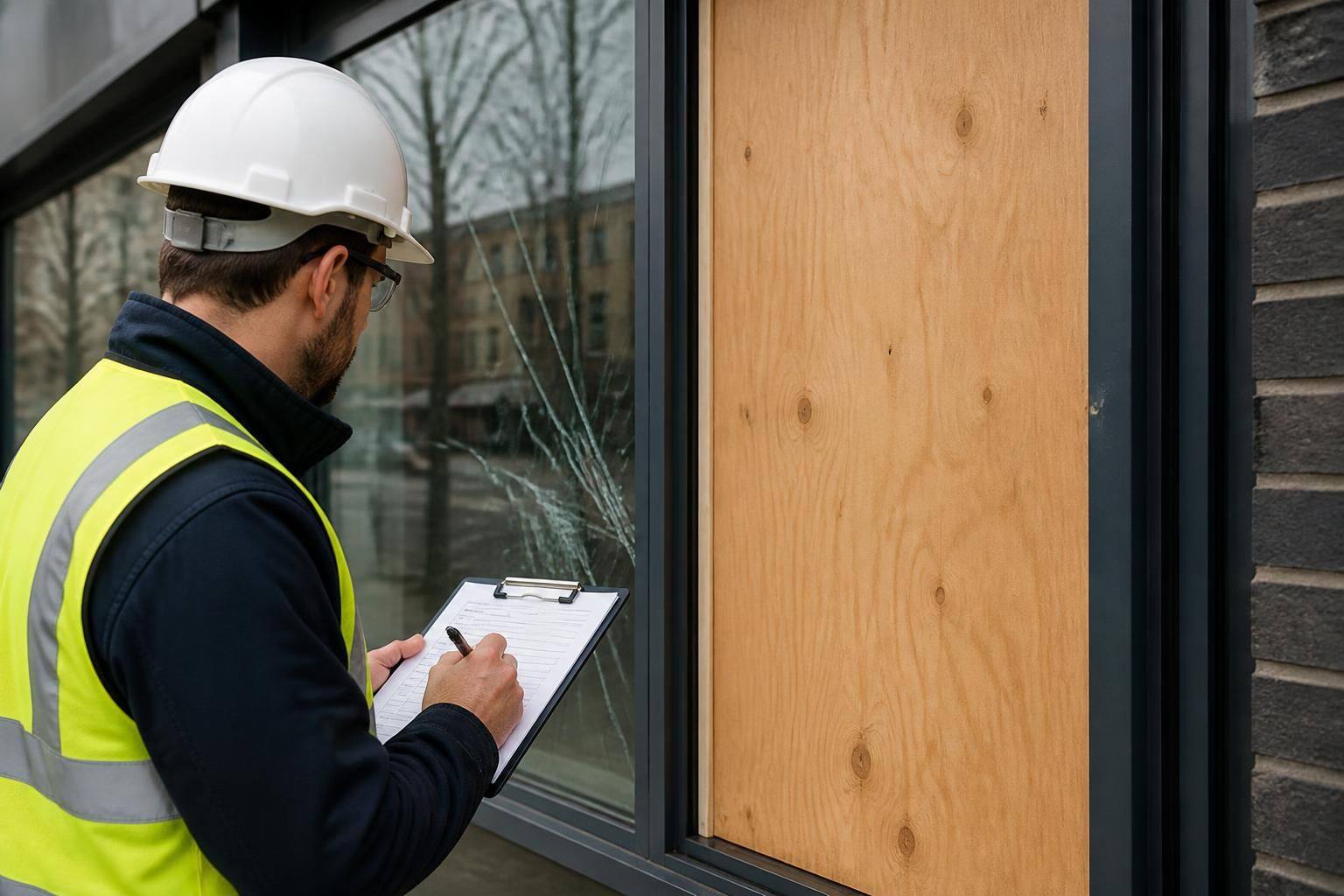
The first step is to assess the condition of the glass and the surrounding installation. This includes looking at the type and extent of the damage, checking whether fragments are loose, and examining the frame, seals, hinges or other adjoining components for signs of movement or impact. The cause of the damage may also be relevant, particularly where a shop front, commercial window or curtain walling panel has been struck.
The affected area should be kept clear while this assessment takes place. Staff, customers, contractors and members of the public may need to be directed away from the glass, with access controlled around the immediate risk. Suitable warning signs or barriers can help prevent accidental contact, especially where the damaged pane is beside an entrance, walkway or working area.
Loose shards and fragments are dealt with carefully using appropriate protective equipment and safe handling methods. Damaged glass should not be touched, swept up casually or removed by untrained personnel, as fragments may be sharp and some panes can fail further when disturbed. The surrounding area is checked for less obvious pieces so that the immediate hazard is reduced as far as practicable.
Once the area has been controlled, the opening may be secured with temporary protection. The appropriate method depends on the size and position of the opening, the condition of the frame and the level of security, weather and access protection required. Temporary boarding or another suitable covering can help prevent unauthorised entry and reduce exposure to wind and rain while the permanent work is planned.
Temporary protection is not treated as the final repair. It is a short-term safety measure that allows the property to remain controlled while the correct replacement glass, dimensions, specification and installation method are confirmed. The permanent solution may involve replacing an individual pane, repairing associated framing or addressing damage to a shop front or curtain walling system.
Before permanent work proceeds, the glazing requirements need to be established accurately. The replacement must be suitable for its position and use, including relevant considerations such as safety, thickness, performance and compatibility with the existing frame. The installation should also take account of current building and safety regulations, rather than treating the replacement as a simple like-for-like piece of glass.
- The damaged area is assessed and access is controlled.
- Loose or hazardous fragments are handled and removed safely where appropriate.
- The frame and adjoining components are checked for related damage.
- The opening is secured with suitable temporary protection.
- The permanent repair or replacement is specified and arranged on the basis of the site conditions.
A safe temporary arrangement should therefore do more than cover a broken opening. It should address the immediate risk, protect the building and provide a sound basis for completing the correct permanent glazing work. GlassPlus UK applies more than 30 years of industry experience to commercial glazing repairs, with work carried out in line with current building and safety regulations.
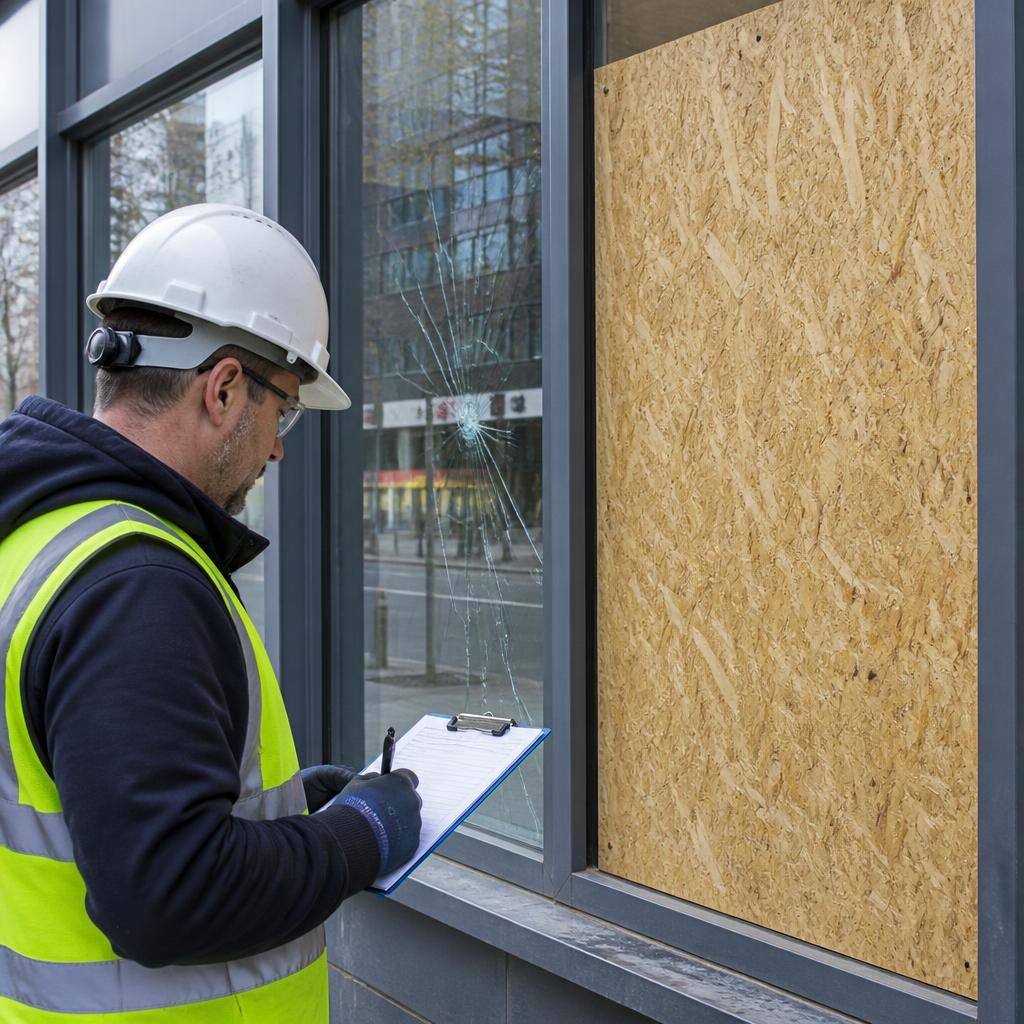
Recording the condition of the opening is an important part of making the area safe before permanent work begins. Notes, photographs and accurate measurements can preserve information about the damage, the surrounding frame and any access restrictions while the temporary arrangement is in place. This gives the repair team a clear reference when confirming the replacement and helps prevent assumptions being made from the temporary covering alone.