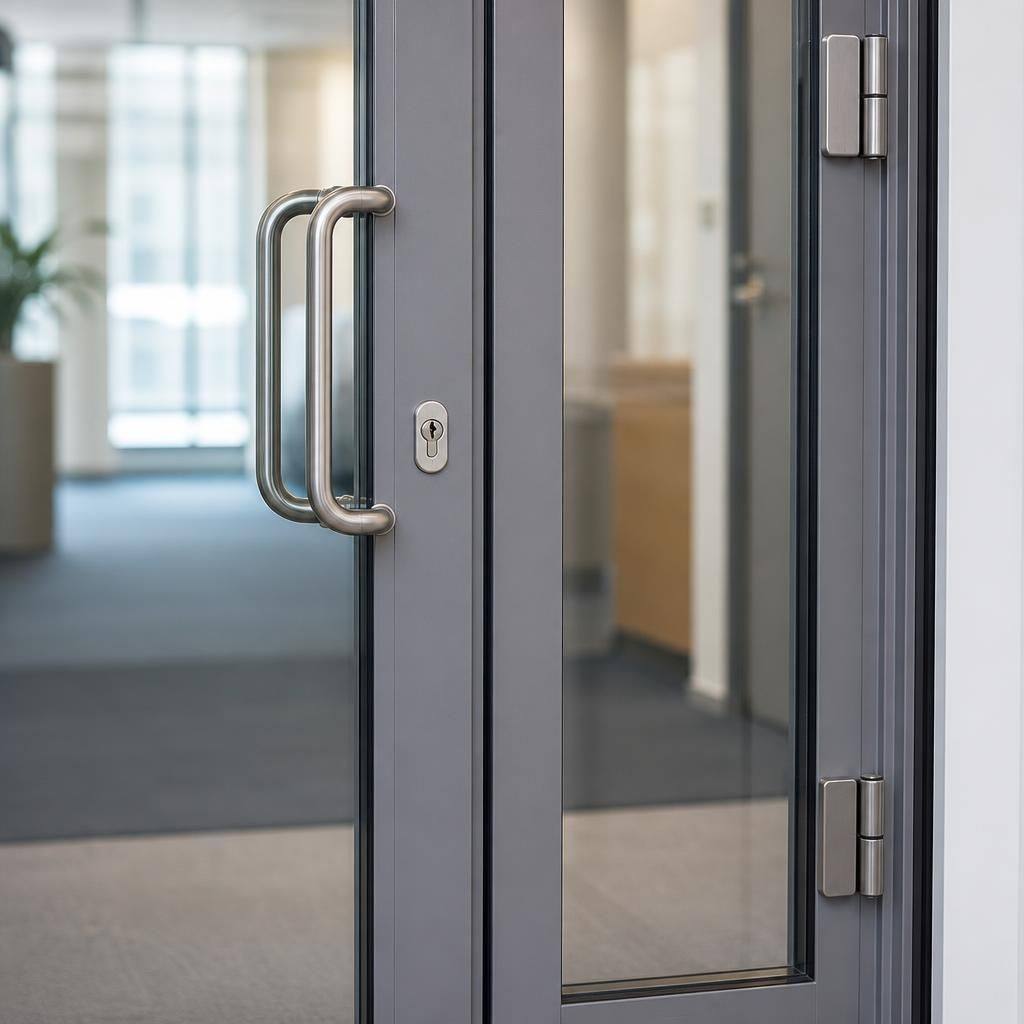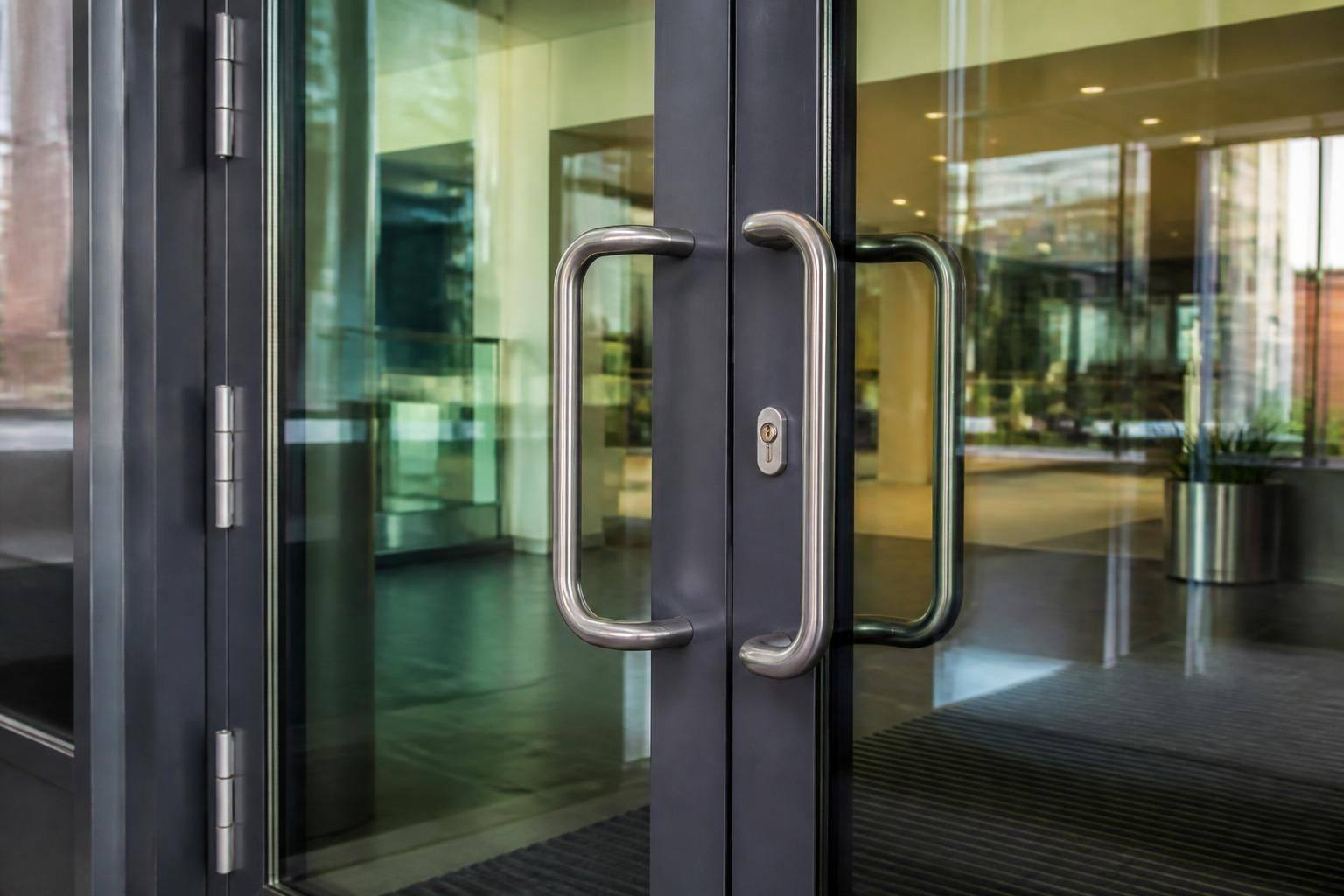
Can emergency glass door repairs preserve existing door hardware?
Yes, emergency glass door repairs can often preserve existing handles, hinges, locks and other hardware when these components remain undamaged and suitable for reuse. GlassPlus UK will assess the hardware during the repair process and take care to avoid unnecessary replacement while ensuring the repaired door remains safe and compliant.
Preserving existing door hardware is often possible, but it depends on the condition of the components and the way the door has been damaged. Handles, locks, hinges, patch fittings, floor springs and closers may be retained if they are structurally sound, correctly aligned and compatible with the replacement glass.
During an assessment, GlassPlus UK considers whether the impact has affected the hardware itself or only the glass. A broken pane may leave the fittings intact, whereas movement in the door, damage around a fixing point or distortion to the frame can place additional stress on hinges, locks or fittings. Hardware that is bent, loose, cracked or no longer operating correctly may need further attention before the door can be returned to safe use.
The type and specification of the replacement glass are also important. Toughened or laminated safety glass must be selected to suit the door design, its dimensions and the way it is supported. The thickness and weight of the new pane can affect hinge loading and the operation of door closers or floor springs. Existing fittings therefore need to be checked against the replacement specification rather than assumed to be suitable simply because they were present before the damage.
Careful removal of damaged glass helps reduce the risk of harming reusable components. The repair team can inspect fittings as access becomes available, protect undamaged hardware during the work and check that fixings remain secure. Where a fitting passes through the glass, the aperture and surrounding area require particular attention because damage or incorrect positioning could affect both the fitting and the replacement pane.
Once the glass has been replaced, the door should be checked for correct movement and closure. This includes confirming that:
- the door opens and closes without excessive resistance;
- hinges, pivots or floor springs operate in the intended way;
- the lock, latch or access-control fitting engages properly;
- handles and other visible fittings are secure; and
- the glass and hardware work together without placing undue pressure on the pane.
If the hardware is no longer suitable, replacement may be the safer option. Reusing a damaged fitting can lead to poor door operation, further glass stress or security concerns. GlassPlus UK’s approach is to distinguish between components that can reasonably be retained and those that require repair or replacement, while ensuring the completed work meets current building and safety requirements.
Businesses can help the assessment by explaining how the damage occurred and identifying any changes noticed in the door before the incident. Photographs of the door, its fittings and the surrounding frame may also help with initial planning, although an on-site inspection is needed to confirm whether existing hardware can be preserved.
Where existing hardware is to be retained, its position and adjustment settings can be recorded before the damaged glass is removed. This is particularly useful for doors with access-control fittings, as accurate refitting helps maintain the intended relationship between the handle, lock and door leaf.
Recording the arrangement also gives the repair team a clear reference if fittings need to be temporarily removed during the work. Once refitted, the hardware can be assessed in its original position rather than adjusted unnecessarily.