What details should businesses provide when requesting emergency glass door repairs?
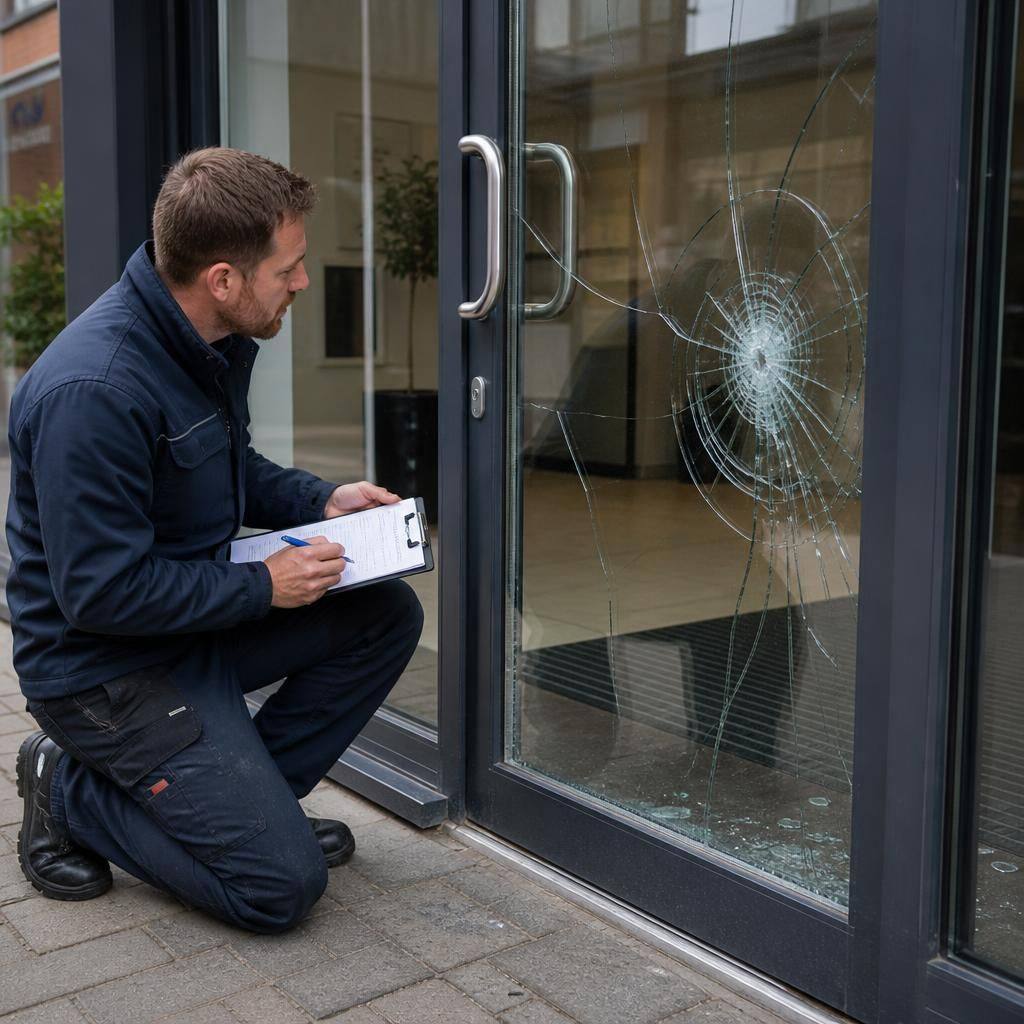
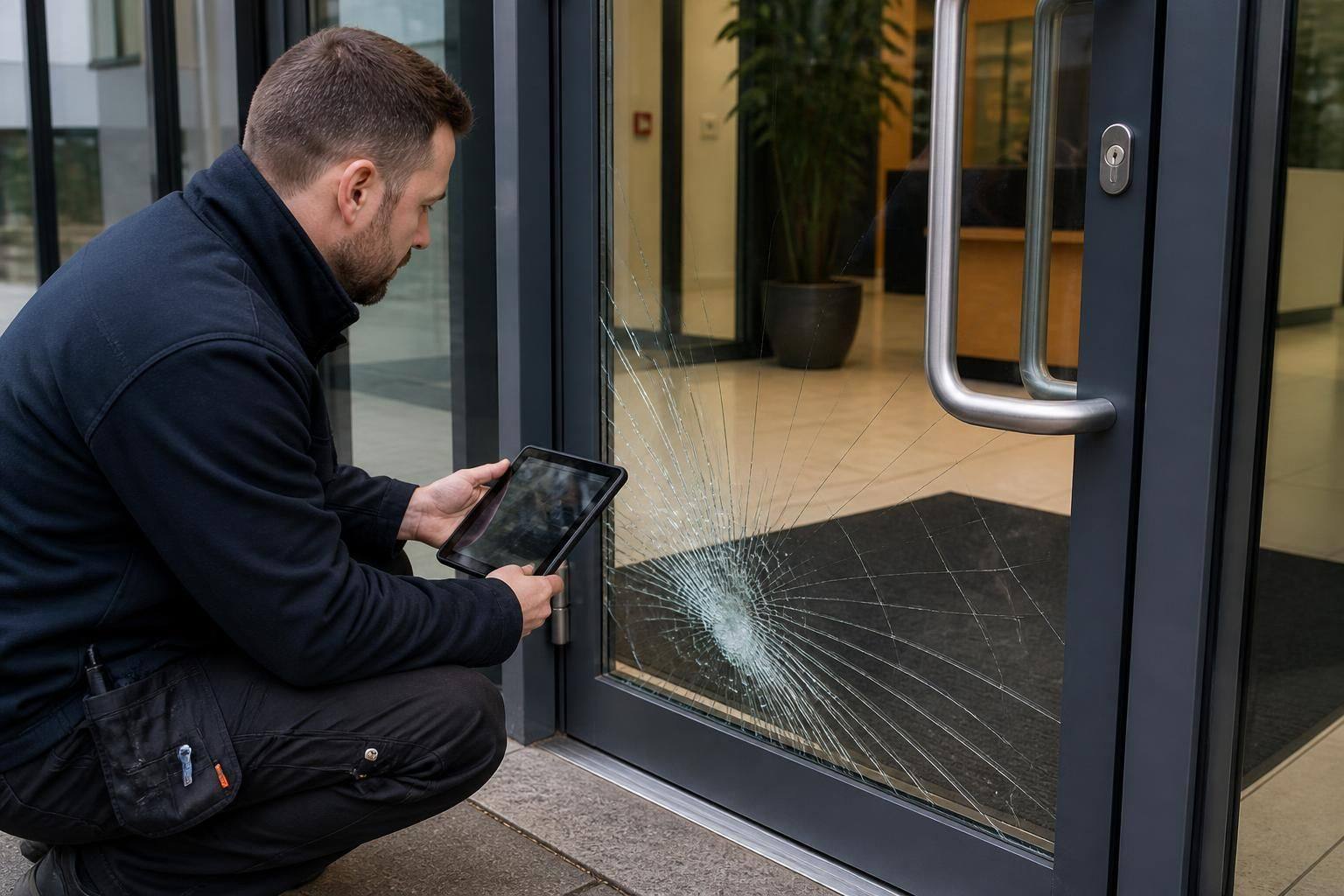
Businesses should provide the property address, a contact name and telephone number, the door’s location within the premises, and a clear description of the damage. If available, photographs, approximate glass dimensions, the door type and details of any immediate access or security concerns can help GlassPlus UK understand the repair requirement before attending.
In addition to the basic location and damage information, businesses should provide any details that help GlassPlus UK understand the door’s specification, the circumstances of the incident and the practical requirements for carrying out the work. Complete information supports a more informed assessment and helps identify any approvals or safety measures needed before the repair proceeds.
Useful additional details include:
- The type of premises and entrance: State whether the door forms part of a shop front, office entrance, communal area or another commercial setting. It is also helpful to explain whether the entrance is used by staff, customers, contractors or the public.
- The circumstances of the damage: Explain, where known, whether the glass was struck, cracked without an obvious impact, damaged during an attempted break-in or affected by a problem with the door. The approximate time of the incident can help establish whether the damage may have developed further.
- The condition of the door assembly: Confirm whether the door still opens, closes and latches correctly. Businesses should mention any stiff movement, sagging, unusual noise or visible damage to the frame, hinges, locks, door closers, handles or other attached components. Glass damage can sometimes be linked to stress or movement elsewhere in the assembly.
- Known glass or performance requirements: If records are available, provide information about whether the glass is toughened, laminated, fire-resistant, security-rated or part of a double-glazed unit. Details such as safety manifestation, privacy requirements, acoustic needs or a requirement to retain a particular appearance may also affect the specification of a replacement.
- Existing records: Previous invoices, glazing schedules, door specifications, maintenance records or details from the building manager can help clarify the original installation. These records are particularly useful where the glass type or door hardware is not marked clearly.
- Site and approval arrangements: Identify the person responsible for authorising the work and explain whether landlord, managing-agent, security or facilities approval is required. If the property has a reception process, loading restrictions, controlled entry or a permit system, this should be stated before an attendance is arranged.
- Commercial administration: Provide the company name for the quotation or invoice, the relevant purchase-order procedure and any reference that must appear on the paperwork. This can prevent avoidable delays after the technical requirements have been established.
Businesses should not attempt to remove broken glass or force a damaged door to operate. If the entrance cannot be secured safely, the enquiry should clearly explain the immediate condition of the area so that the repair requirement can be considered in the correct order. Loose fragments, exposed edges and damaged hardware should be kept away from staff and visitors until the situation has been assessed.
Where the information is uncertain, it is better to say so than to guess the glass specification. GlassPlus UK can use the available details, site findings and relevant records to establish what repair or replacement is appropriate. The completed work must be suitable for the door and consistent with current building and safety regulations, rather than being based solely on appearance.
Businesses do not need to identify the technical cause of the failure before making an enquiry. A plain description of what can be seen and how the door is behaving is more useful than an uncertain diagnosis. For example, the enquiry can state whether the damage is limited to one area, whether it is spreading, and whether the door appears stable when viewed without being operated.
This helps GlassPlus UK distinguish observed facts from assumptions and consider the appropriate next steps. Any uncertainty should be recorded clearly, so the assessment is based on the condition of the door rather than an incorrect description of the glass or its construction.