
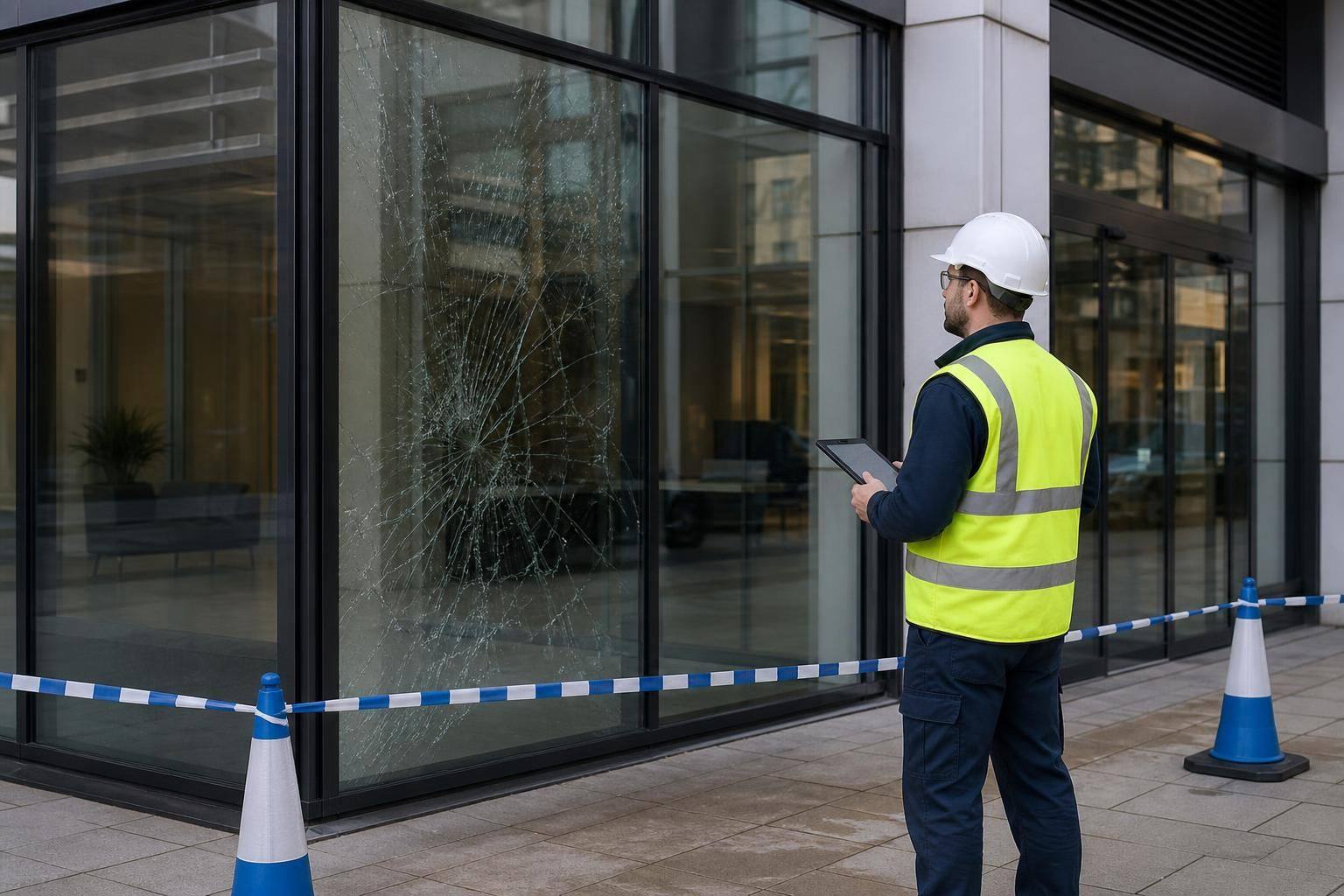
Can emergency commercial glazing repairs be completed without closing the premises?
In many cases, emergency commercial glazing repairs can be completed while the premises remains open, provided the damaged area can be safely isolated from staff and visitors. GlassPlus UK will assess the condition and access requirements before recommending a repair approach, although serious damage may require temporary restrictions or closure of the affected area.
Yes, many commercial glazing repairs can be carried out without closing the whole premises. The practical decision depends on the location and extent of the damage, the type of glazing involved, safe access to the work area, and whether staff, customers or members of the public can be kept away from the repair zone.
GlassPlus UK approaches the work by separating the affected area from the rest of the building wherever reasonably practicable. This may involve temporary barriers, controlled access routes, warning signs or adjustments to the way people move through the premises. The aim is to allow normal business activity to continue in unaffected areas while the glazing contractor works within a clearly defined zone.
Several factors influence whether this arrangement is suitable:
- Position of the damage: Glazing at a shop entrance, reception area, escape route or heavily used corridor presents greater operational and safety considerations than damage in a restricted office or secondary elevation.
- Condition of the glass and frame: Loose fragments, unstable panes, damaged beads or movement within the frame may require the area to remain unused until it has been made safe.
- Access requirements: Internal access, external access equipment and the need to move materials through the building must be considered before work begins.
- Type of repair: Some work can be completed with limited disruption, while larger replacement panes, curtain walling repairs or work at height may require more space and tighter controls.
- Building operations: The presence of customers, staff, deliveries, machinery or sensitive equipment can affect when and how the repair is carried out.
Where broken glass is present, the first priority is to prevent contact with sharp edges and to control access. A temporary measure may be used to secure the opening or stabilise the area before the permanent repair is completed. This can help protect the building and its occupants, but it should not be treated as a substitute for a full repair where the glazing system remains damaged.
Work planning also considers disruption from handling glass, removing damaged components and installing replacement materials. GlassPlus UK can establish suitable working boundaries and discuss practical arrangements with the responsible person on site. For example, a reception point may be relocated temporarily, a section of a shop floor may be cordoned off, or access may be managed through an alternative route where one is available.
A full closure may still be necessary when the damage affects the structural integrity or weather protection of the building, compromises a required escape route, creates a continuing risk to people, or cannot be isolated effectively. Closure may also be appropriate where the repair requires extensive access equipment or where the building layout leaves no safe separation between the work and occupied areas. In these circumstances, restricting only part of the premises may be possible, but that decision must follow an on-site assessment.
Repairs are planned with relevant building and safety requirements in mind. The responsible person for the premises should provide information about access arrangements, site restrictions, vulnerable occupants, security requirements and any building procedures that contractors must follow. Clear communication helps the repair proceed safely while limiting avoidable interruption to business operations.
GlassPlus UK advises that businesses do not move damaged glass, attempt to remove loose components or allow staff to work close to an unsafe area. Instead, the affected location should be kept clear until it has been assessed and suitable controls are in place. With appropriate planning, isolation and supervision, a commercial glazing repair can often be completed while the unaffected parts of the premises continue operating.
A staged repair plan can help keep unaffected parts of a commercial premises in use. GlassPlus UK can agree the sequence of work with the responsible person on site, dealing with the affected section in a controlled phase before checking that it is safe for normal use again.
This approach also allows practical details such as material movement, temporary protection and the final inspection to be organised in advance. It does not remove the need for restrictions where the glazing remains unsafe, but it can prevent a local repair from disrupting the whole building unnecessarily.

Discuss a repair plan for your premises
Businesses can contact GlassPlus UK to discuss the site conditions, access arrangements and working sequence before deciding how the repair should proceed. A clear repair plan helps the responsible person understand the practical requirements and any restrictions that may be needed.