What affects the timescale for emergency commercial glazing repairs?
The timescale for emergency commercial glazing repairs depends on the severity and location of the damage, site access, the required repair method and the availability of suitable replacement glass. A clear initial assessment helps determine the safest and most efficient way to complete the work.
Emergency commercial glazing repair timescales are determined by the work required to make the area safe, restore the glazing system and meet the property’s specification. Some incidents may involve securing the opening or carrying out a straightforward replacement, while others require a more involved assessment before permanent work can proceed.
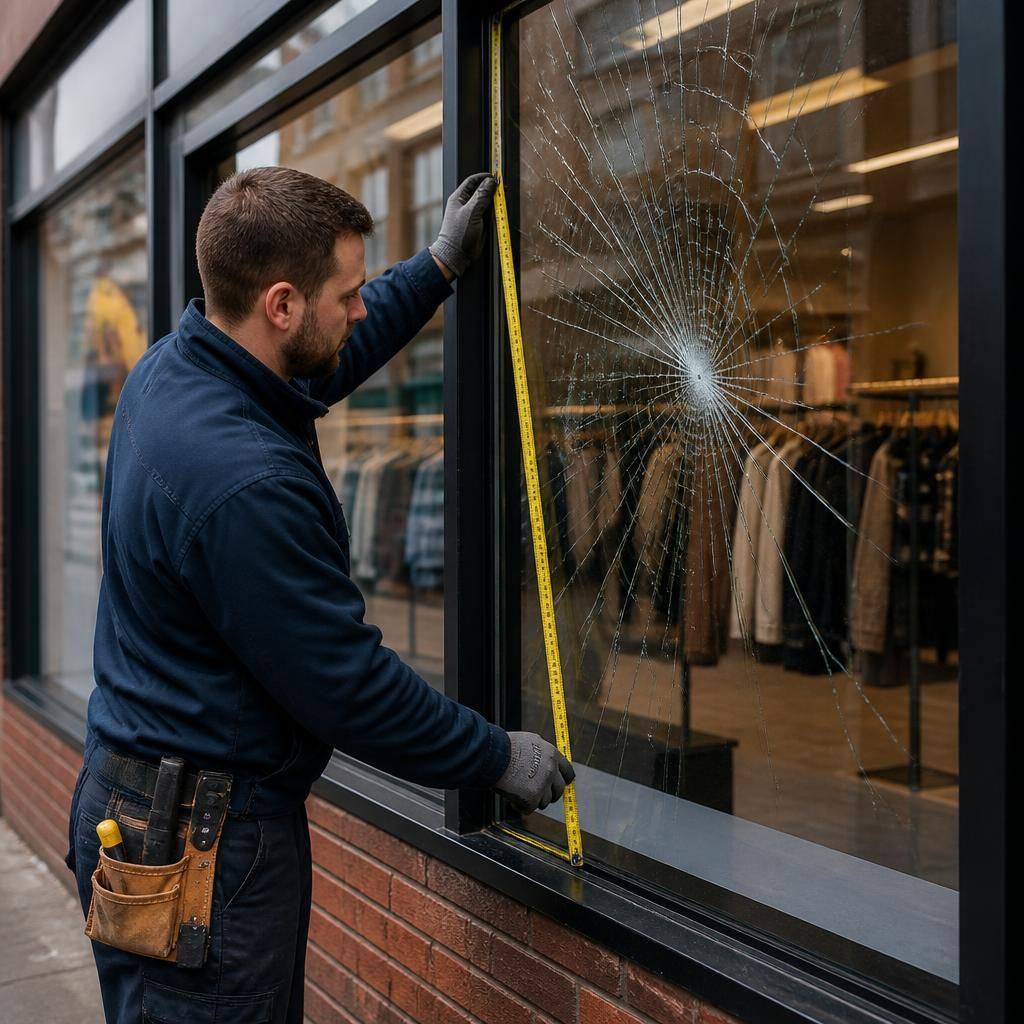
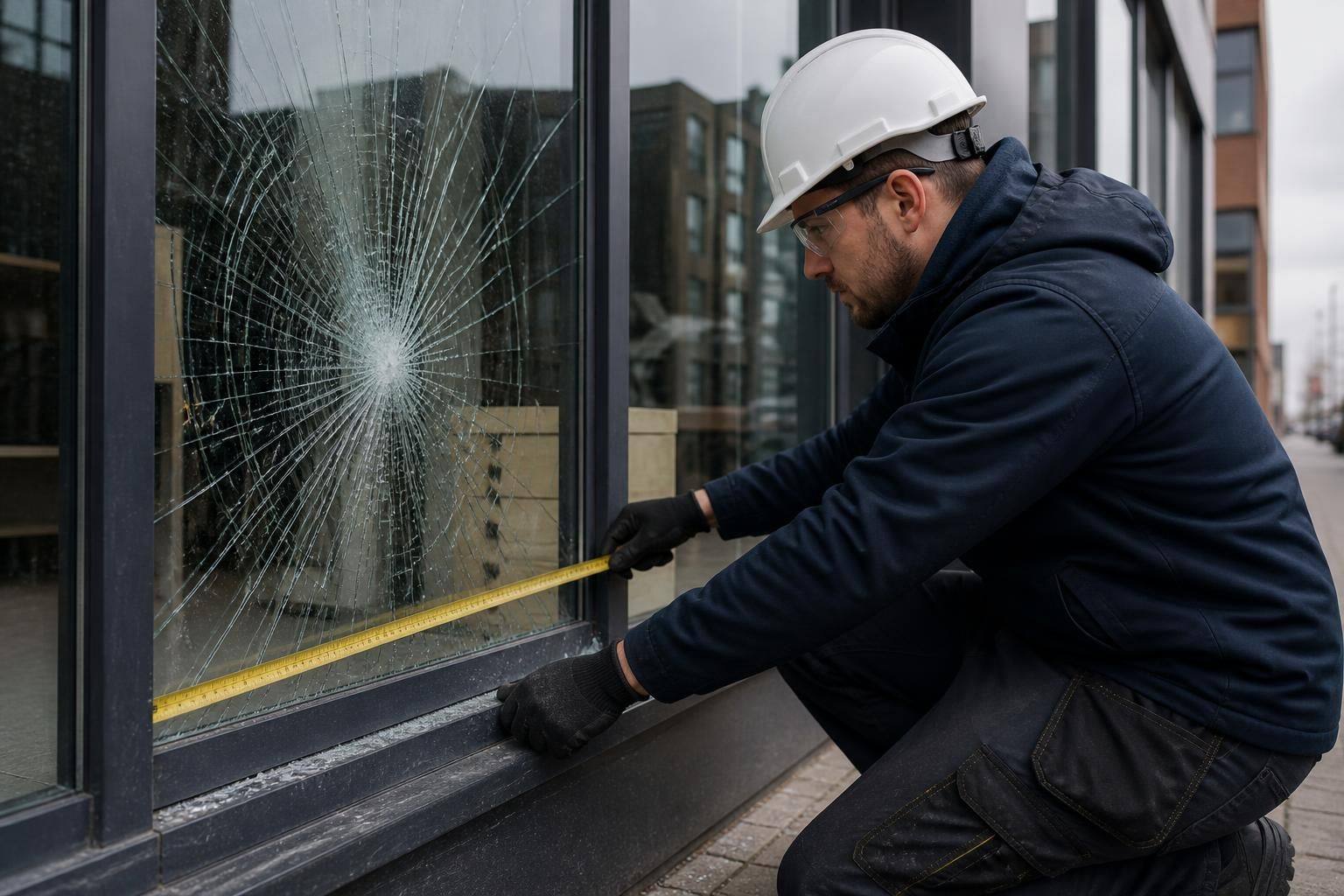
The initial assessment helps establish the extent of the damage and whether adjacent panes, frames, seals or fixings have also been affected. A cracked pane may be relatively contained, whereas impact damage to a shop front, curtain walling panel or commercial window can involve hidden movement or distortion. Identifying these issues at the outset reduces the risk of fitting an unsuitable solution.
Safety and temporary protection can affect the sequence of work. If broken or unstable glass presents a risk to staff, visitors or passers-by, the affected area may need to be isolated and made secure before measurements or replacement work can be completed. Temporary boarding, protective covering or removal of loose fragments may be appropriate depending on the condition of the opening. These measures are intended to control immediate hazards while the permanent repair is arranged.
Glass specification is another important factor. Commercial glazing may require safety glass, laminated glass, toughened glass, insulated units, fire-rated products or glass with specific performance characteristics. The correct replacement must match the building’s requirements rather than simply the visible dimensions of the damaged pane. Where a suitable unit is not readily available, it may need to be ordered or manufactured to specification, extending the overall timescale.
The design of the glazing system also matters. A single pane in an accessible frame can involve a different process from a sealed unit within a curtain walling system or a large shop front panel. Specialist fittings, cover caps, beads, gaskets, pressure plates and sealants may need to be removed and reinstated carefully. Damage to the frame or supporting components can create additional work beyond replacing the glass itself.
Site access and working conditions influence efficiency. The glazing team may need access to internal areas, loading points, plant rooms, roof areas or restricted sections of a commercial building. Large panes can require suitable handling equipment and sufficient space for safe movement. Security procedures, tenant coordination, customer-facing operations and building management approvals may also affect when the work can be carried out.
More complex incidents may require coordination with other parties. Facilities managers, landlords, insurers, security contractors or building control professionals may need to review the proposed repair, particularly where the glazing forms part of a wider façade or where the damage has affected the building envelope. Establishing the required scope and obtaining the necessary approval can add time before the permanent work begins.
Weather and the condition of the opening can be relevant as well. Certain external sealing and installation tasks require suitable conditions to achieve a dependable finish. If water has entered the glazing system or the substrate is damaged, the area may need to be dried, cleaned or repaired before new glass is installed. Rushing this stage can compromise the seal and create further maintenance issues.
GlassPlus UK assesses these factors together rather than relying on the apparent size of the break. Clear photographs, accurate site details and information about the glass, access arrangements and building use can support a more informed assessment. The resulting timescale is then based on the safest practical method, the required specification and the steps needed to complete the repair in line with current building and safety regulations.
The timescale can change if the initial work reveals damage that was not visible during the first inspection. Once loose glass, beads or coverings are removed, the condition of the rebate, frame or fixing points may need to be checked before new glazing is installed. Any necessary preparation must be completed properly rather than concealed beneath the replacement glass.
This is why a straightforward-looking repair may develop into a staged job. The first stage may secure the opening and confirm the full repair scope, followed by preparation and installation once the supporting components are suitable. Allowing time for these checks helps ensure the completed work is stable, correctly fitted and compliant with current building and safety regulations.