
What information should businesses provide when requesting emergency glazing repairs?
When requesting emergency glazing repairs, businesses should provide the property address, a clear description of the damage, the type and approximate size of the glass, and any relevant access or security information. Photographs, details of the affected area and the preferred contact person can also help GlassPlus UK assess the work and prepare an accurate quotation.
For a useful initial assessment, GlassPlus UK needs enough information to understand the incident, identify the likely glazing system and establish what work may be required. Clear, factual details help the team distinguish between a straightforward replacement, a repairable defect and damage that requires further inspection.
Businesses should also explain how and when the damage occurred. For example, they can state whether the glass was struck, cracked without an obvious impact, damaged during attempted entry or affected by a wider incident. This information can indicate whether the priority is securing a breach, preventing further deterioration or investigating a possible failure of the glazing assembly.
It is useful to describe the immediate condition of the area, including whether:
- the glass is still in its frame or has fallen out;
- there are loose, hanging or unstable fragments;
- the frame, door, hinges, locks, seals or surrounding panels appear damaged;
- the opening is allowing weather into the building; or
- the affected section is close to staff, visitors, stock, equipment or a public walkway.
This information helps GlassPlus UK understand the practical risks before attending. It should be supplied alongside any steps already taken to keep people away from the area. Businesses should not attempt to remove large, cracked or unstable panes themselves.
Details about the glazing system are valuable where they are available. The requester can identify whether the glass forms part of a shop front, commercial window, entrance door, curtain walling system, internal screen or another installation. If the property records show the original specification, safety-glass classification, tint, coating, thickness or framing system, those details should be included. They can help avoid unsuitable replacement materials and support compliance with current building and safety regulations.
Businesses should also mention any operational or site constraints that could affect the work. Relevant information may include restricted delivery access, loading arrangements, parking limitations, security controls, reception procedures, lift or stair access, tenant restrictions and the need to coordinate with a facilities manager, landlord or managing agent. If equipment such as access platforms may be needed, the site contact should explain any known limitations around working height, pedestrian routes or vehicle positioning.
The enquiry should identify who has authority to instruct the work. A facilities manager, property manager, landlord, insurer or another authorised representative may need to approve attendance, temporary protection or replacement glazing. Providing the correct decision-maker’s details can reduce avoidable delays when the scope or specification needs to be confirmed. It is also helpful to state whether the business requires a written quotation, photographs for an insurance file, an invoice addressed to a particular entity or documentation for its property records.
Where an insurer or managing agent is involved, the business should provide any claim reference, reporting requirement or approved-work instruction that is already available. These documents should not replace a practical description of the damage, but they may clarify who should receive quotations and what records need to be retained.
GlassPlus UK can then use the information to plan the next stage appropriately. The initial details do not need to provide a technical diagnosis; their purpose is to give a reliable starting point for assessing the glazing, considering the safest practical approach and preparing a quotation based on the known requirements. If important information is unavailable, it is better to say so than to guess. Additional details can be confirmed during the assessment.
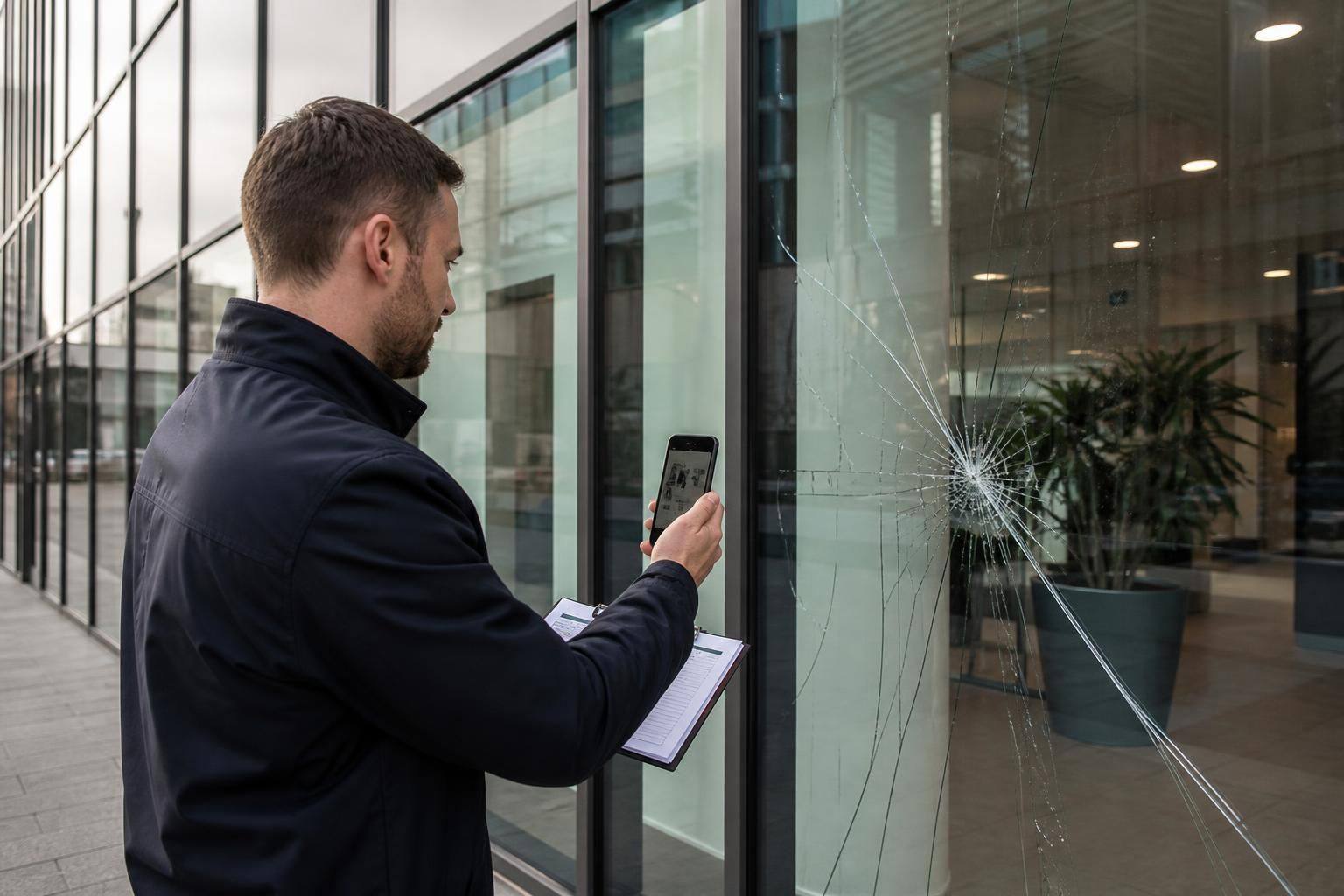
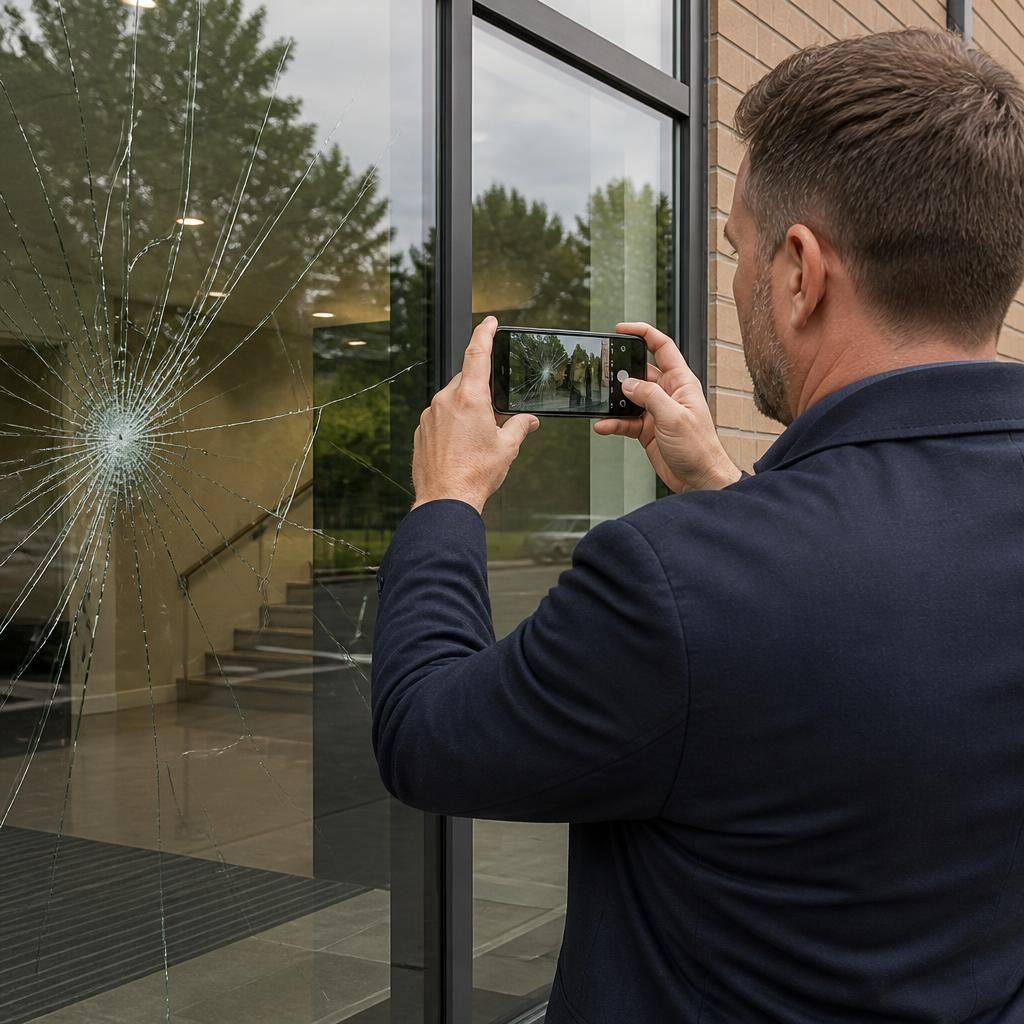
Photographs can make an emergency glazing enquiry more useful, provided they can be taken safely. A wide image showing the affected elevation or room can give context, while closer images may show the crack pattern, frame, seals, adjacent panels and any visible damage around the opening. If possible, businesses should include an image of the surrounding access route and any temporary protection already in place.
Images should be clear, well lit and taken from a safe position without approaching loose or unstable glass. They support the information provided by the site contact but do not replace an inspection where the condition of the glazing or frame cannot be established from photographs. Sending them with the initial enquiry can help GlassPlus UK prepare for the assessment with a better understanding of the visible problem.
Request an emergency glazing repair assessment
Businesses can contact GlassPlus UK to arrange the next stage of assessing the damaged glazing and discuss the appropriate repair or replacement route. The team can work with the authorised site contact to clarify any outstanding requirements before preparing a quotation.