What safety measures are used during emergency commercial glazing repairs?
Emergency commercial glazing repairs are carried out with the area assessed and made safe before damaged glass is handled. GlassPlus UK uses appropriate protective equipment, controlled removal and compliant repair or replacement methods to protect people, property and the surrounding premises.
Safety during emergency commercial glazing repairs depends on controlling the work area, protecting building users and maintaining clear communication with the responsible site contact. GlassPlus UK applies a structured approach so that repair activity does not create additional risks for staff, visitors, customers, vehicles or the building itself.
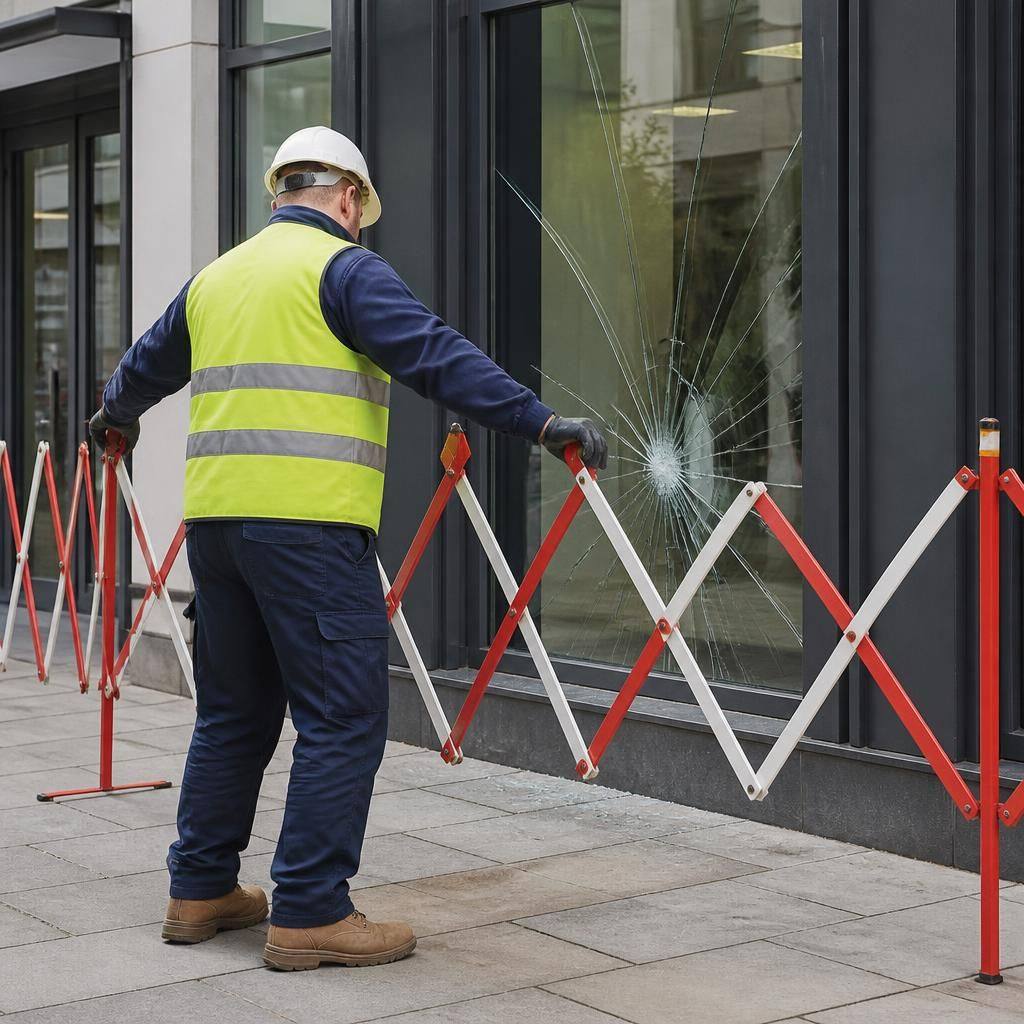
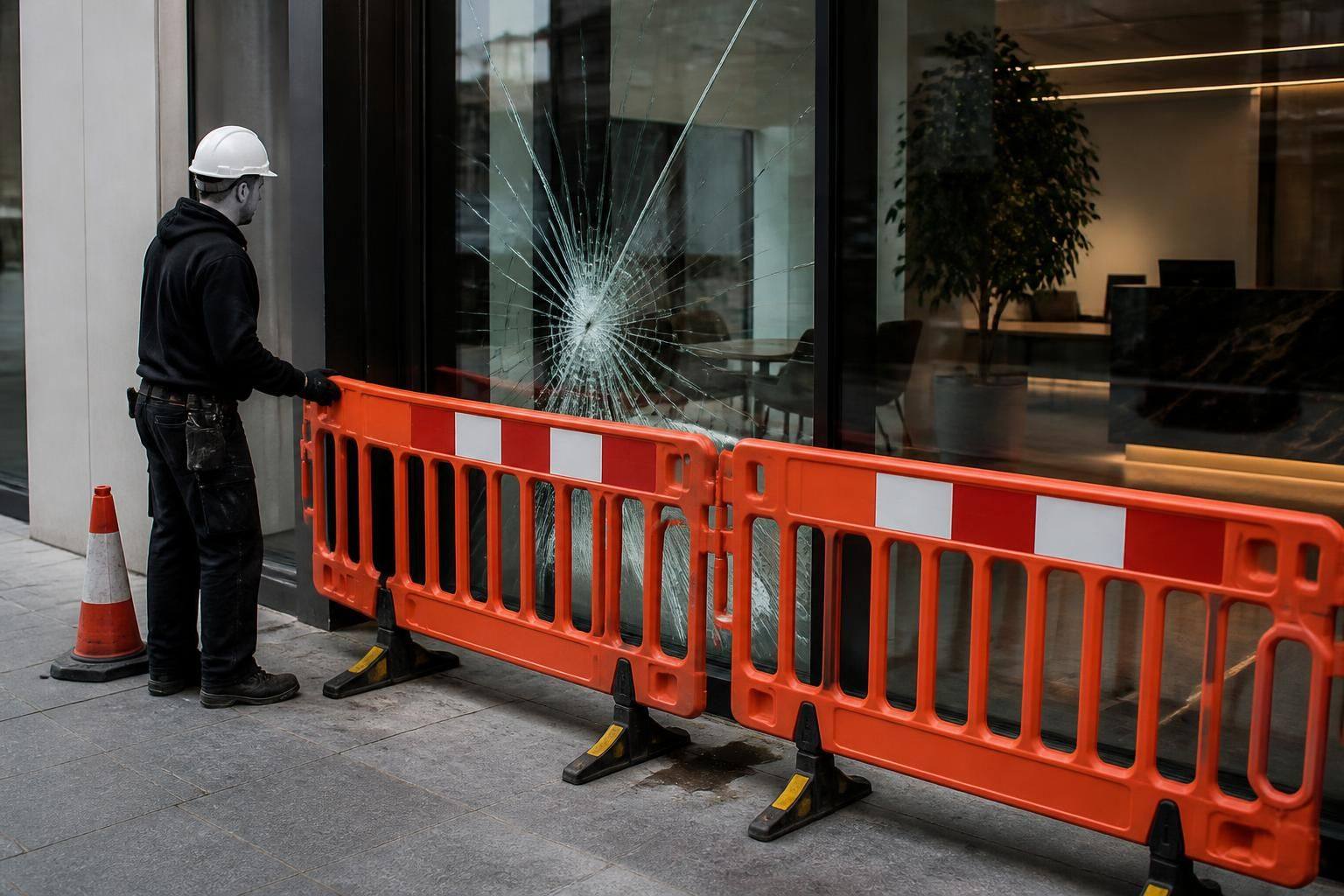
- Work-area control: The immediate area is restricted to authorised personnel while work is in progress. Barriers, warning signs or other suitable controls can be used to prevent people entering beneath, beside or behind the glazing being worked on.
- Pedestrian and vehicle management: Where the damaged glazing is beside an entrance, walkway, loading area or vehicle route, the repair plan takes account of how people and vehicles move through the premises. Access is redirected or temporarily restricted where necessary to keep the public and site staff away from the work zone.
- Protection of surrounding property: Floors, counters, stock, furniture, equipment and adjacent finishes are protected against impact, dust and fragments. This is particularly important in occupied shops, offices and shared commercial buildings where the repair area may be close to valuable contents or sensitive operations.
- Secure handling of materials: Glass and frame components are handled using methods appropriate to their size, position and condition. Materials are kept stable during removal, movement and installation, reducing the risk of slipping, falling or creating further damage to the opening.
- Safe use of access equipment: Where work is above ground level or difficult to reach, access equipment is selected and positioned for the location. The surrounding space is kept controlled while equipment is in use, with attention given to overhead risks and the stability of the working position.
- Safe waste management: Broken glass, damaged components and packaging are gathered as work progresses rather than being left in circulation areas. Waste is handled carefully and removed from the active work area so that it does not present a cut, trip or obstruction hazard.
- Protection during temporary securing: If a permanent repair or replacement cannot be completed during the initial visit, the opening can be secured using a suitable temporary measure where appropriate. The condition of the temporary arrangement and any restrictions on using the area should be made clear to the site representative.
- Site communication: The responsible person at the premises should understand which areas are restricted, what work is being carried out and whether any temporary limitations remain after the glazing work. This helps the business manage its own staff, visitors and contractors safely.
- Completion checks: Before the work area is handed back, the glazing, surrounding frame and immediate environment are checked for stability, remaining debris and obvious hazards. Any relevant observations can then be communicated to the person responsible for the premises.
These measures are supported by work carried out in line with current building and safety regulations. GlassPlus UK’s experience in commercial glazing helps its team account for the practical conditions found in shops, offices, curtain walling and commercial windows, including restricted access, occupied premises and the need to protect business operations while repairs are undertaken.
Businesses comparing emergency glazing contractors should ask how each provider manages the surrounding area, protects the public and staff, disposes of damaged materials and communicates any remaining restrictions. A clear safety process is as important as the technical repair itself, particularly where damaged glazing is located in a busy or publicly accessible part of a commercial property.
A key safety measure is choosing the correct repair approach before any damaged pane is disturbed. The condition of the glass, the surrounding frame and the position of the glazing all affect how the work should be carried out. Where removal is necessary, the work is planned to avoid placing unnecessary stress on the opening or adjacent components.
This considered approach helps prevent a rushed repair from creating further damage or exposing people to avoidable risk. GlassPlus UK applies its commercial glazing experience to the practical conditions of shops, offices and other business premises, ensuring that the proposed repair or replacement is appropriate for the glazing system and the environment in which it is located.