
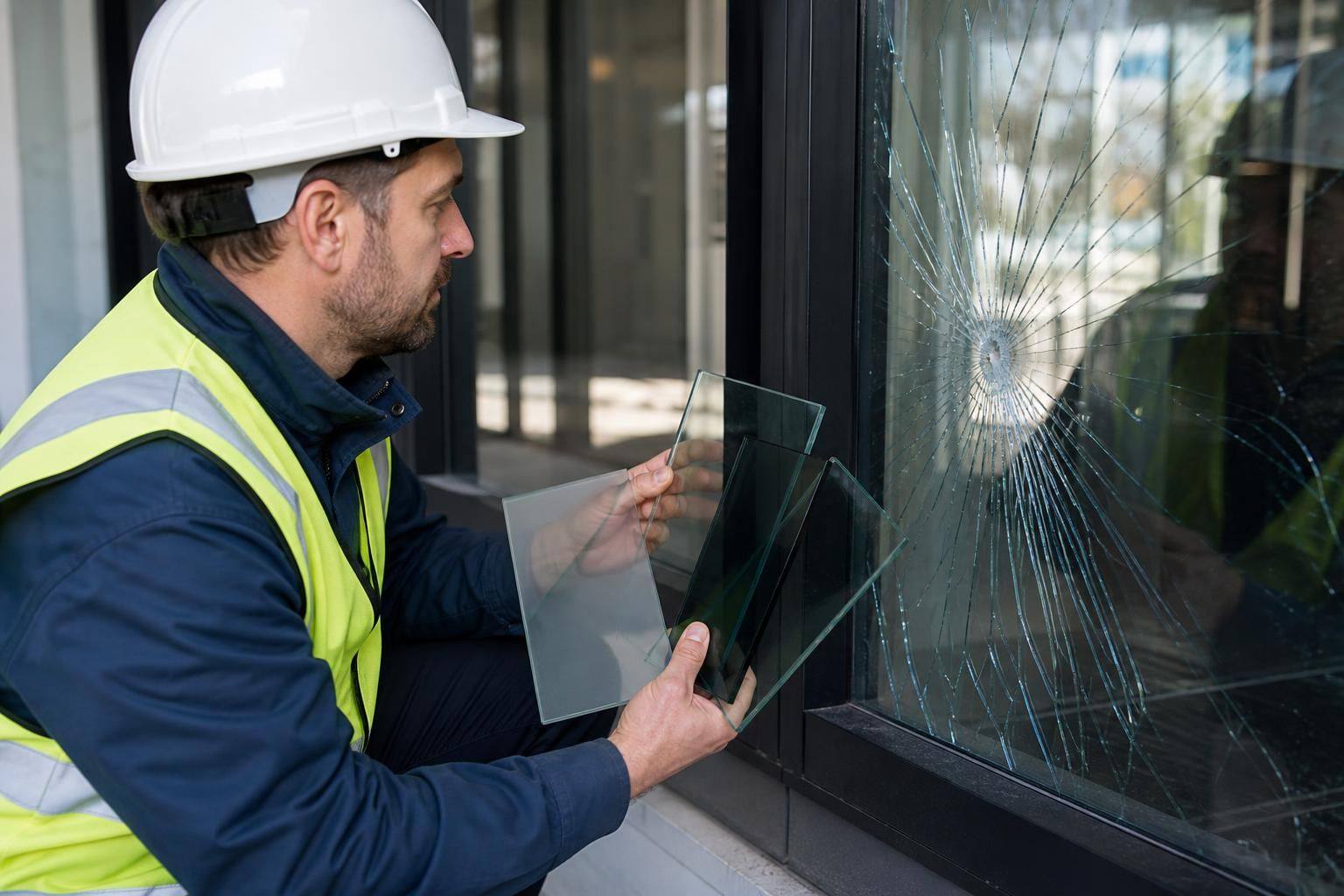
How are emergency commercial glazing repairs handled when matching glass is unavailable?
When matching glass is unavailable, GlassPlus UK assesses the panel’s safety, performance and appearance requirements before recommending a suitable replacement or secure temporary measure. The proposed solution is selected to protect the premises and support compliance with current building and safety regulations.
The replacement is selected by specification rather than appearance alone, with priority given to a compatible, safely installable panel and a finish that is acceptable for the building. If an identical pane cannot be sourced, GlassPlus UK explains the available alternatives before work proceeds.
The assessment normally considers:
- the glass type, including whether it is toughened, laminated, wired or a specialist specification;
- the pane’s thickness, dimensions and edge detail;
- the level of insulation, solar control or privacy required;
- the colour, tint, reflectivity and visual relationship with adjacent panes;
- the condition and design of the surrounding frame, gasket, beads and fixing system; and
- any requirements arising from the building’s use, access arrangements or internal environment.
This prevents a visually similar pane from being used where its physical properties are unsuitable. A replacement may look close to the original but still be incompatible with the frame, unable to provide the required safety performance or likely to stand out once installed. For this reason, matching involves more than comparing colour or thickness.
Where an exact match is no longer manufactured or cannot be obtained within the required timescale, GlassPlus UK may recommend the nearest technically compatible alternative. The proposed glass can be selected to sit appropriately beside existing panes while meeting the relevant requirements for the opening. If the difference in appearance is likely to be noticeable, that is explained to the responsible person so the business can make an informed decision.
For a commercial property, the agreed solution also needs to work in practice. The replacement must be suitable for the existing frame and installation method, and any associated seals, beads or setting materials may need to be renewed rather than reused. If the frame has been distorted or damaged, replacing the glass alone may not provide a satisfactory result. That issue is identified before the scope of work is confirmed.
Where the correct replacement cannot be installed immediately, the opening can be made secure using an appropriate interim measure while the specified glass is sourced. The temporary arrangement is treated as a short-term safeguard, not as a substitute for completing the permanent repair. The business is told what remains outstanding and whether a further visit or specialist manufacture is required.
Before authorisation, the responsible person should provide any available information about the original installation, including photographs, previous invoices, building records or details of nearby panes. Clear photographs of the damage, frame and surrounding elevation can also help GlassPlus UK establish the likely specification and identify practical access considerations.
The final recommendation is recorded in the quotation or repair confirmation, including the proposed glass, any related frame work, the expected visual result and any limitations caused by the unavailable original specification. This gives the business a clear basis for approval and helps avoid disagreement after installation. For commercial premises across London and surrounding areas, businesses can contact GlassPlus UK to discuss the damaged panel and the most suitable replacement route.
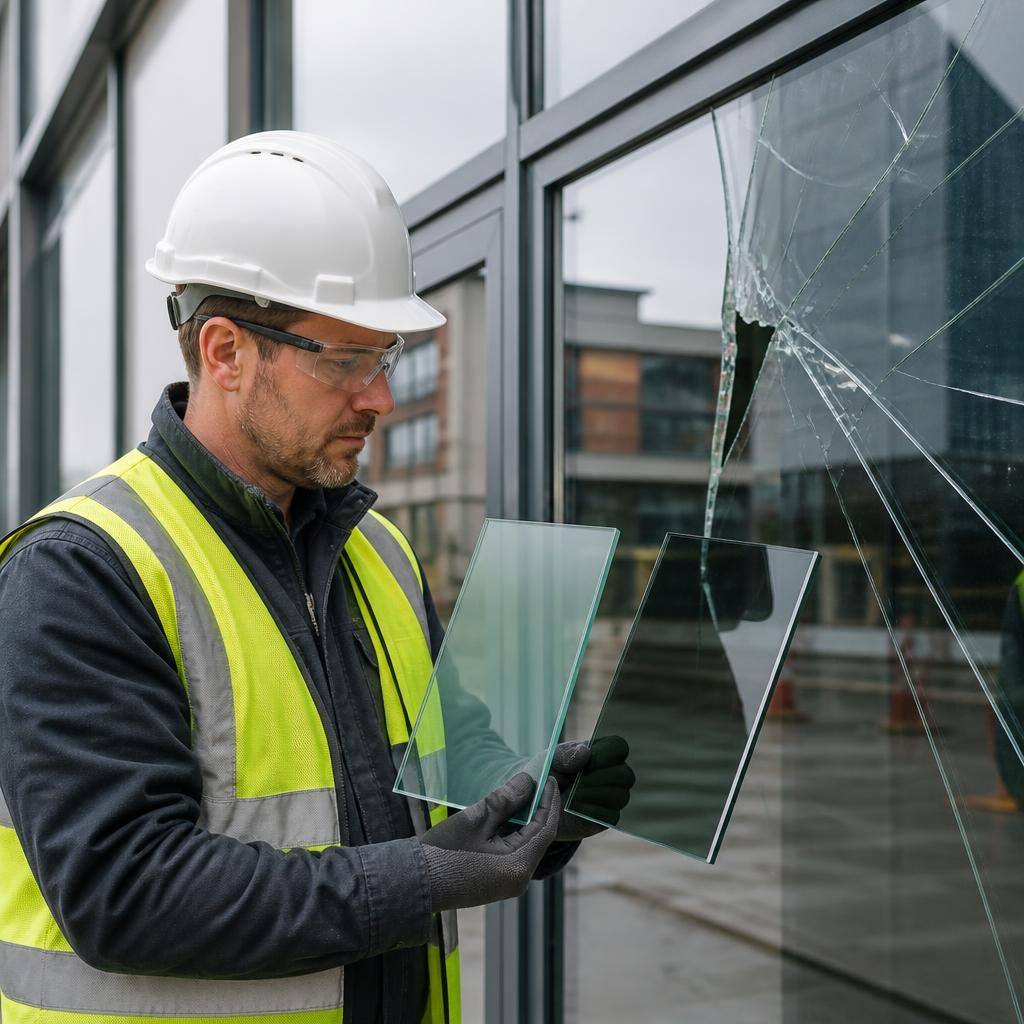
An immediately available pane is not automatically the right emergency solution. GlassPlus UK will not fit a stock replacement where its safety performance, thickness or fixing requirements are unsuitable for the existing opening. If the original specification cannot be confirmed, the business is given a clear explanation of the risk and the practical options before installation is authorised.
Where a temporary safeguard is needed first, the permanent replacement can then be arranged once the specification and installation requirements have been verified. This avoids turning a short-term emergency decision into an unsuitable long-term repair and gives the responsible person a clear record of what has been agreed.