
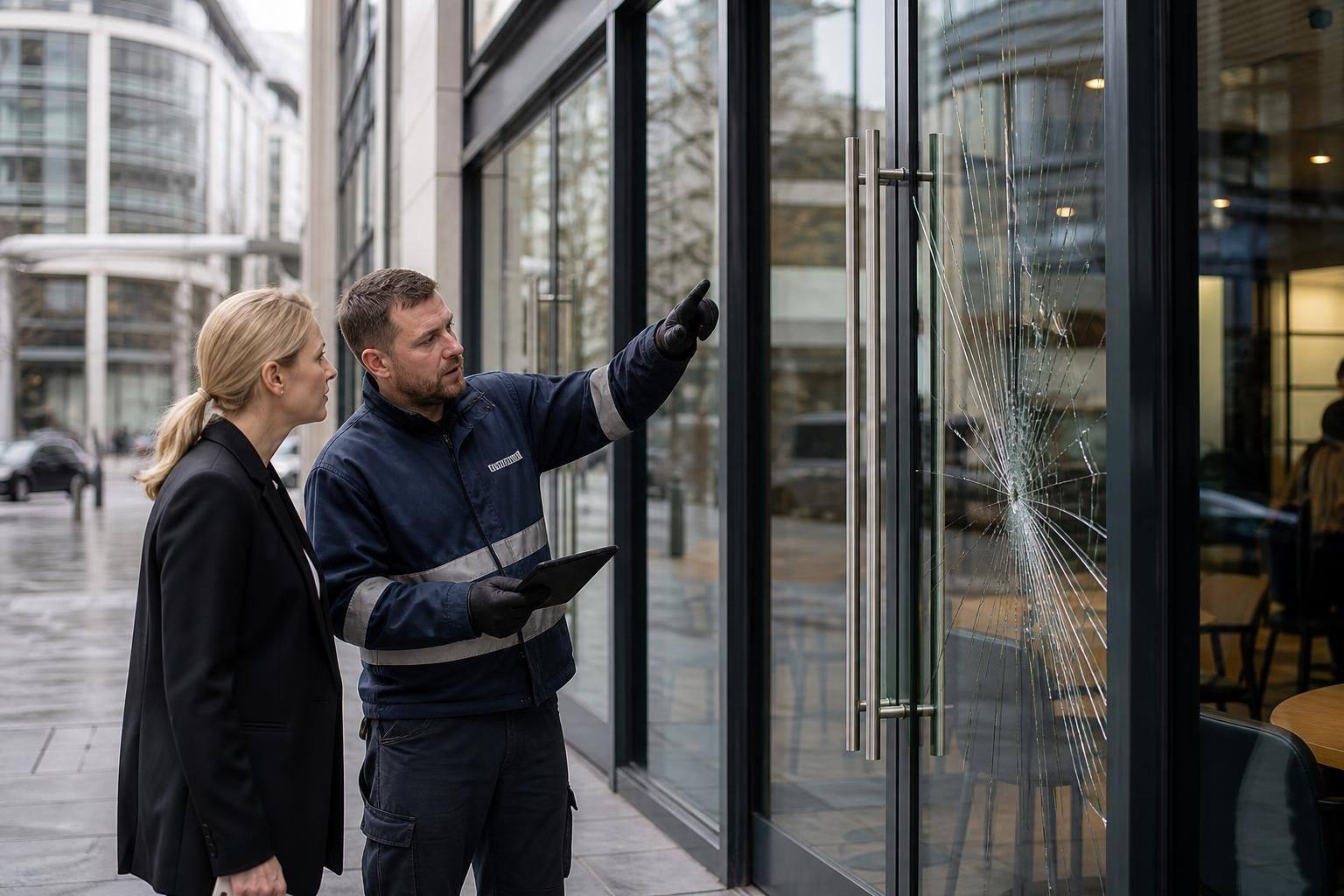
What information should a business provide when requesting emergency commercial glazing repairs?
When requesting emergency commercial glazing repairs, a business should provide the site address, a clear description of the damage, the type and approximate size of the glazing, and details of any immediate safety risks or access restrictions. Photographs, a site contact’s details and any relevant information about the existing installation can help GlassPlus UK assess the requirement and prepare an appropriate response.
A business requesting emergency commercial glazing repairs should provide enough information for GlassPlus UK to understand the incident, assess the risks and plan the next practical step. Beyond the basic damage and site details, the most useful information covers the circumstances of the incident, the building’s operating conditions, site procedures and any commercial requirements attached to the work.
Details of the incident
- When the damage occurred, or when it was first discovered.
- Whether the damage resulted from accidental impact, attempted entry, vandalism, weather or another known cause.
- Whether the condition has changed since it was discovered, such as cracking spreading, loose fragments developing or a frame becoming unstable.
- Whether the police, landlord, managing agent or insurer has been notified, together with any incident or crime reference that may be relevant.
This information helps distinguish between immediately hazardous damage and a defect that still requires attention but can be assessed through the normal repair planning process. A business should not place staff near unstable glazing or attempt to remove broken glass while gathering these details.
Information about the premises
The enquiry should explain how the affected part of the building is used. A shop entrance, office reception, internal partition, communal area and restricted service zone may each create different practical considerations. It is also useful to state whether the premises are occupied, trading, open to the public or subject to particular security requirements.
The business should identify any site rules that may affect attendance, including signing-in procedures, security checks, induction requirements, permitted delivery arrangements and restrictions on vehicle access. Details of parking, loading areas, floor access and the availability of a lift can help the glazing contractor understand how materials and equipment may reach the work area.
Building and installation records
Where available, the requester should provide relevant records such as previous repair information, drawings, maintenance notes, landlord specifications or details of a recent refurbishment. These documents may clarify the construction of the glazing, the frame system and any requirements imposed by the building owner or managing agent.
If the damaged element forms part of a curtain wall, shop front, entrance assembly or a wider glazed elevation, that should be stated clearly. The requester should also mention associated features that may need protection or coordination, such as doors, access-control equipment, alarms, shutters, signage, blinds or adjacent finishes. This does not replace a professional inspection, but it gives the contractor a more complete understanding of the work area.
Safety and operational arrangements
The business should explain what controls have already been put in place. This might include closing an entrance, restricting access to a room, moving stock or furniture, arranging security cover or placing suitable protection around the affected area. It should also identify any vulnerable occupants, high-traffic routes or activities that could be affected while repairs are being assessed or carried out.
Where the premises have a formal health and safety process, the requester should provide the relevant site contact and explain any requirements for risk assessments, method statements, permits or coordination with a facilities team. Such information allows the repair to be considered alongside the building’s own procedures rather than treated as an isolated task.
Commercial and approval information
It is helpful to confirm who has authority to instruct the work and whether approval is required from a landlord, managing agent, insurer, facilities provider or head office. The business should state whether it is requesting an initial assessment, temporary protection, repair, replacement or a quotation for approval. If there is a purchase order process, supplier onboarding requirement or specific invoicing address, this should be explained at the outset.
The requester should also identify any deadline that affects the business, such as a planned opening, inspection, handover, delivery or security review. A deadline is not a guarantee of completion, but it gives GlassPlus UK relevant context when discussing the work and its practical sequence.
What to send with the enquiry
- The incident or discovery date and any known cause.
- Information about occupancy, trading conditions and security concerns.
- Site rules, access arrangements and facilities-management requirements.
- Relevant drawings, maintenance records or landlord instructions, where available.
- The name of the person authorised to approve work and the required billing details.
- Any insurance, police or incident reference connected with the damage.
GlassPlus UK can review the information provided and identify what needs to be clarified before the work is arranged. If some details are unavailable, the business should still make the enquiry and explain what is known. A clear account of the incident, the site’s operating conditions and the required approval route gives the glazing team the best basis for assessing the repair and progressing it correctly.
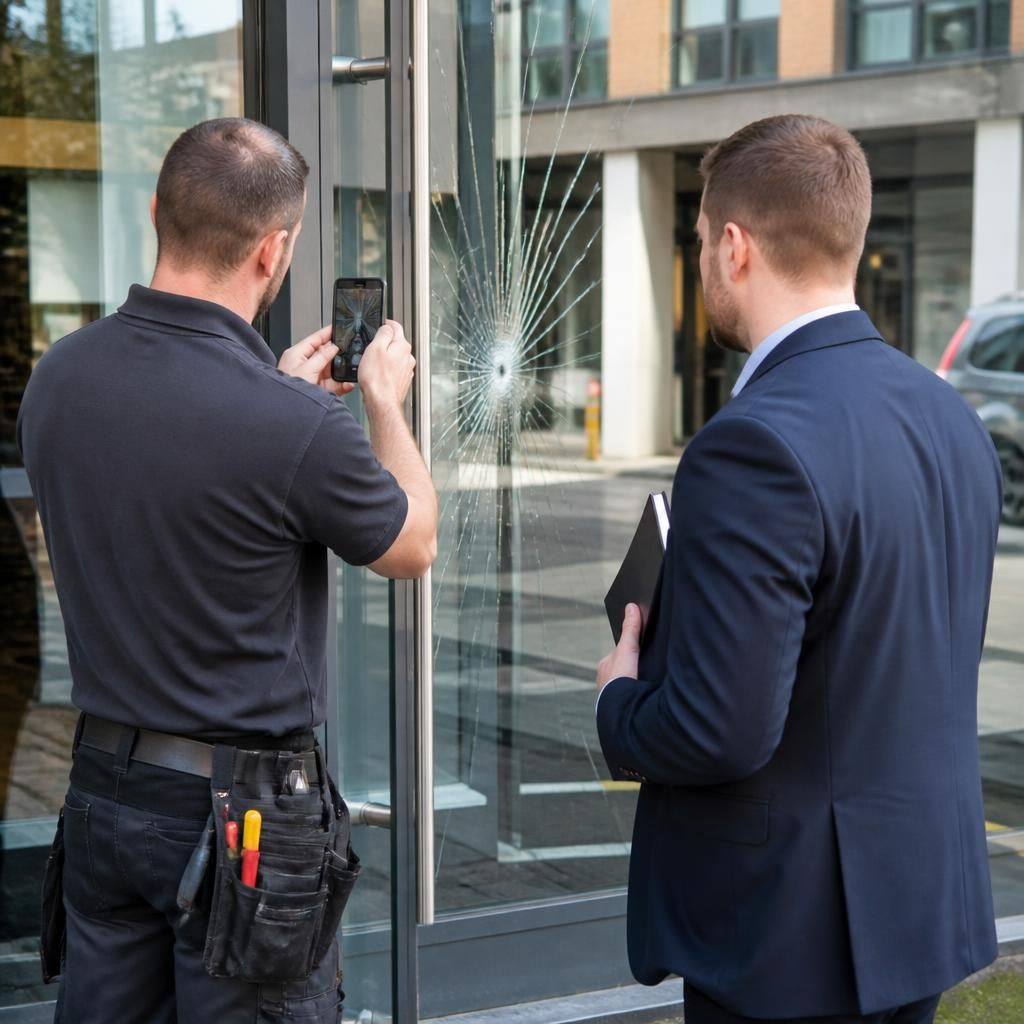
Clear photographs can give GlassPlus UK useful context before a site visit is arranged. Where it is safe to do so, the business should provide a wider image showing the affected elevation, a closer view of the damage and photographs of the surrounding frame, door or shop front. The location should be identified clearly, particularly where a building has several similar glazed areas.
Images should be taken from a safe position and should not require anyone to approach unstable glass or enter a restricted area. A brief note alongside each photograph can explain what it shows, when it was taken and whether the condition has changed. This helps the glazing team compare the visual information with the written enquiry and identify any points that need clarification.