
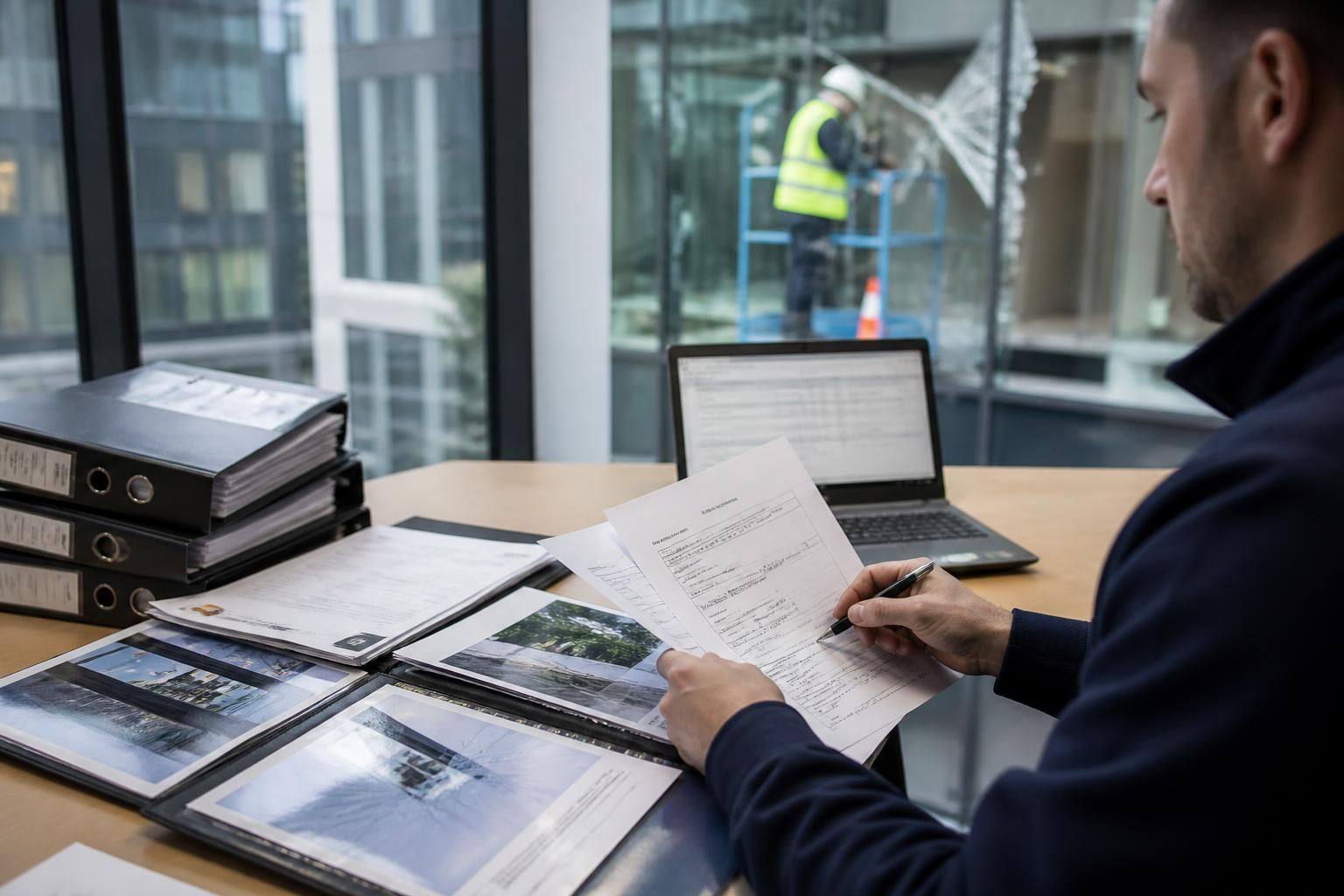
What records should businesses retain after emergency commercial glazing repairs?
Businesses should retain the repair invoice, details of the work completed, photographs of the damage and finished repair, relevant safety or compliance records, and any product or warranty information. Keeping these records provides a clear audit trail for property management, insurers and future maintenance decisions.
Businesses should retain a complete, organised job file for each emergency commercial glazing repair. Beyond the basic proof of purchase and completion, the file should show what happened, who authorised the work, how risks were controlled and whether any follow-up action remains outstanding.
Record the incident and authorisation. The initial notification should include the date and approximate time of the damage, the affected area, the circumstances as understood at the time and the person who reported it. It is also useful to retain the names of those who authorised the repair, approved expenditure or gave access to the premises. This creates a clear management trail where several parties are involved, such as a tenant, managing agent, facilities team or landlord.
Keep the related communications. Emails, photographs shared before attendance, quotations, approvals, changes to the agreed scope and completion correspondence can all help explain the decisions made during the repair. Records should be stored with the job file rather than scattered across personal inboxes or messaging applications. If verbal instructions were given, the business should make a brief written note confirming what was agreed.
Document site controls. Where the work affected staff, visitors, customers or contractors, retain relevant site records showing how the area was made safe. Depending on the circumstances, this may include:
- the site-specific risk assessment and method statement;
- permit-to-work or access documentation;
- details of barriers, warning notices or restricted areas;
- records of coordination with the building manager or other contractors; and
- notes confirming that the work area was cleared and handed back for normal use.
These records are particularly valuable where the damaged glazing formed part of an entrance, circulation route, shop front or occupied workspace. They help demonstrate that the repair was managed as a controlled maintenance activity rather than treated solely as a replacement of materials.
Retain technical information. The job file should identify the location and type of glazing, the framing or fixing arrangement where relevant, and any limitations affecting the repair. If the work involved a temporary solution, the record should state what was installed, why it was used and whether a permanent follow-up is required. Any instructions supplied for cleaning, operation, inspection or future maintenance should be kept with the property’s maintenance information.
Link the repair to the wider property record. A commercial premises may have separate files for planned maintenance, statutory inspections, fire safety, security or facilities management. The emergency repair should be cross-referenced in the relevant system, including the asset or room reference used by the business. This prevents important information being lost when responsibility for the premises changes.
Keep inspection and handover evidence. The person responsible for receiving the completed work should be identified, with any outstanding observations recorded clearly. If access restrictions, surrounding damage or a pending follow-up inspection prevented a full handover, that limitation should be noted. A later review can then confirm whether further action was completed or whether the matter remains open.
Organise records for insurers and audits. Insurers may request evidence of the incident, the authorisation route, the scope of the repair and the condition of the premises afterwards. A chronological file with consistent document names makes those checks easier. Original files should be preserved where practical, while photographs and scanned documents should be backed up securely. Access should be limited to people who need the information for property, insurance, finance or compliance purposes.
There is no single retention period that suits every business or property. The appropriate period may depend on the lease, insurance policy, internal document-control policy, contractual obligations and any legal or regulatory requirements that apply to the premises. The business should therefore follow its established retention schedule and seek appropriate professional advice where the position is uncertain. Records containing personal information should also be handled in line with the organisation’s data-protection procedures.
GlassPlus UK can provide clear repair documentation to support a business’s maintenance and compliance records. When requesting or closing a repair, the responsible contact should confirm any insurer, landlord or facilities-management requirements so that the completed job file contains the information needed for future reference.
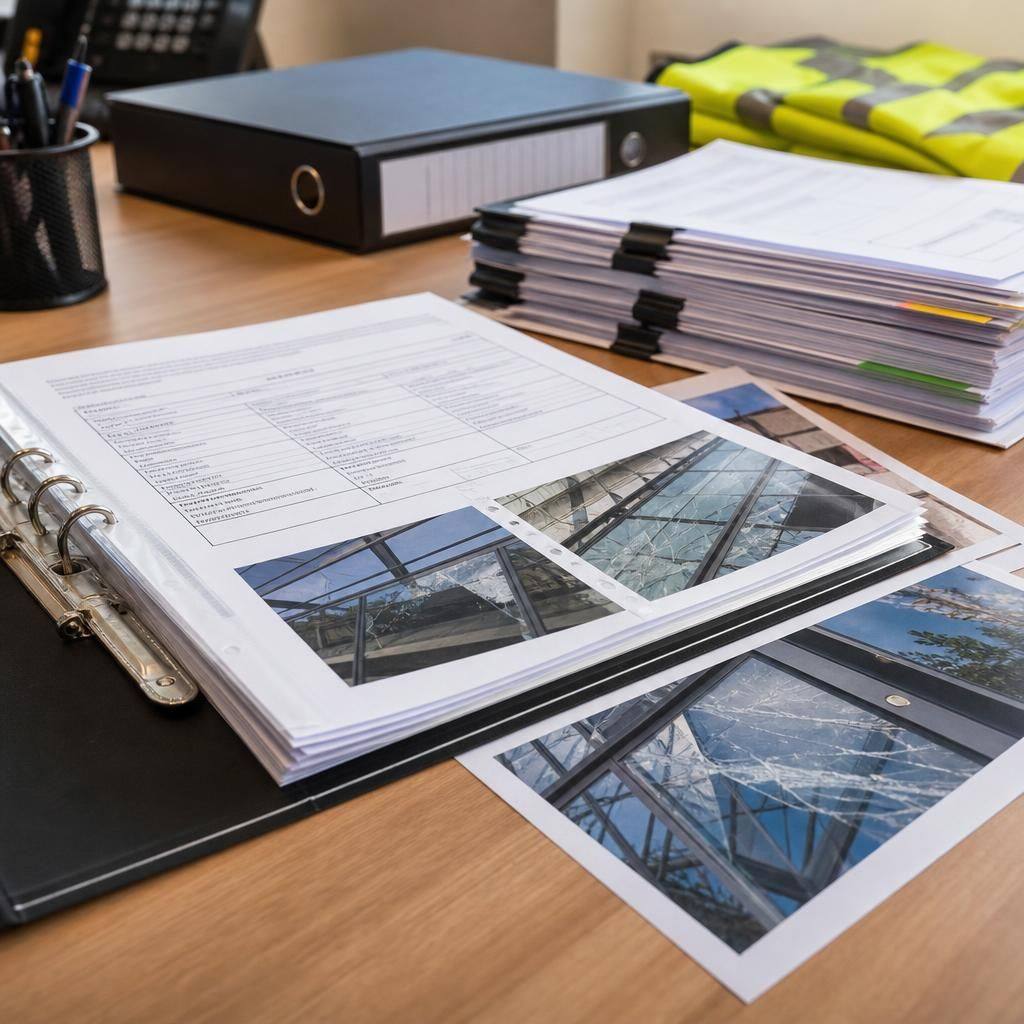
Businesses should also retain the record of when the job file is due for review or disposal. A simple document register can identify the property, repair reference, record owner, retention category and planned review date. This helps prevent important evidence being removed too early or retained indefinitely without a clear purpose.
Where a repair file is closed, the business should record any authorised disposal in line with its document-control procedure. If a claim, dispute, investigation or ongoing remedial issue arises, disposal should be paused until the matter has been resolved. This approach keeps emergency glazing records controlled, traceable and available when they are needed.
Discuss Your Emergency Commercial Glazing Repair Requirements
Contact GlassPlus UK to discuss an emergency commercial glazing repair and confirm the documentation required for your property, insurer or facilities team. The team can help ensure the completed repair is properly recorded for future reference.