What should businesses check before authorising emergency commercial glazing repairs?
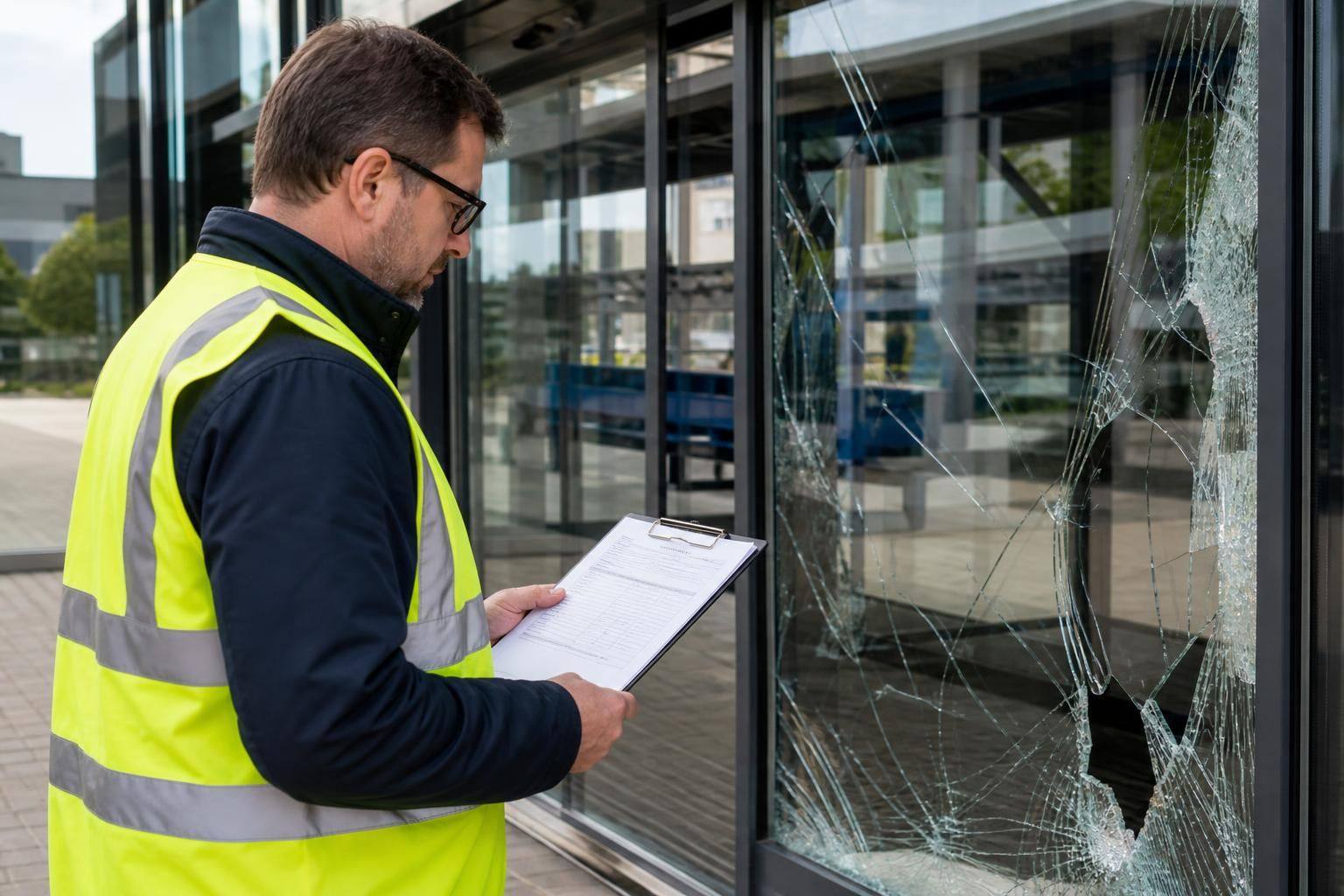
Before authorising emergency commercial glazing repairs, businesses should confirm the proposed scope, costs, contractor competence, safety arrangements and expected timescales. They should also ensure the work will comply with current building and safety regulations, with the quotation and agreed repair details recorded clearly.
Before authorising emergency commercial glazing repairs, a business should confirm that the contractor has understood the site, proposed the correct glass and framing solution, and set out what will happen before, during and after the repair. The decision should be based on a clear written record rather than pressure created by the damage.
Check who is authorised to approve the work. On leased, managed or multi-occupancy premises, the person requesting the repair may not have authority to alter the building envelope, shop front or curtain walling. The responsible facilities manager, landlord, managing agent or insurer may need to approve the specification. Confirming this at the outset helps prevent disputes over access, reinstatement or payment after the work is complete.
Check that the proposed replacement is technically suitable. The quotation or repair description should identify, where known, the affected location, glass type, thickness, dimensions, finish and any associated beads, seals, gaskets or framing components. For commercial windows, doors and curtain walling, a visually similar pane may not provide the same performance as the original. The contractor should explain where the existing specification cannot be confirmed and how the replacement will be selected.
This is particularly important where the glazing forms part of a fire-sensitive, security-sensitive, acoustic, solar-control or thermally efficient installation. A business should ask whether the proposed repair is a like-for-like replacement, a temporary measure or a different compliant solution. Any limitations should be recorded before approval, including possible differences in tint, reflection or appearance between new and existing panes.
Check the practical arrangements for the premises. The business should provide accurate information about entrances, delivery restrictions, loading areas, alarm systems, permits, restricted access zones and any equipment that may obstruct the work. It should also identify vulnerable occupants, public-facing areas and nearby stock or machinery. These details allow the contractor to plan the repair properly and reduce avoidable disruption to trading or operations.
Where the damaged glazing is part of a shop front, entrance or busy internal route, the business should agree how the area will be managed while work is under way. This includes confirming who will move stock or furniture, who will control access and whether the contractor needs a clear working area. A photographic record of the condition before work starts can also help distinguish pre-existing damage from issues arising during the repair.
Check the contractor’s relevant commercial experience. Emergency work on a shop front is not necessarily comparable with replacing a pane in a domestic window. Curtain walling, large panes, glazed doors and structural framing require suitable handling methods and an understanding of how the components interact. Businesses should look for evidence of comparable completed projects, clear contact details and a professional quotation process. GlassPlus UK has more than 30 years of industry experience and provides commercial glazing repair services for businesses across London and surrounding areas.
Check what is included in the final price. In addition to the glass itself, the business should establish whether the quoted work includes measurement, removal of damaged material, replacement seals or beads, access equipment, protection of adjacent finishes, waste removal and making good. It should also clarify how any additional defects discovered during removal will be reported and approved. This avoids an assumption that every associated item is included when the written scope says otherwise.
Check the handover information. Once the repair is complete, the business should receive a description of the work carried out and details of any materials or components installed where these are available. It should retain the quotation, approval, invoices, photographs and correspondence with its property or maintenance records. If the repair relates to an insurance claim, lease obligation or internal incident report, these records may also support the required audit trail.
GlassPlus UK works in line with current building and safety regulations. A business ready to proceed should provide the site address, photographs if available, the location and nature of the damage, access arrangements and the appropriate billing contact. GlassPlus UK can then assess the repair requirement and explain the next practical step during its operating hours, Monday to Friday from 7.30am to 4.30pm.
Before authorising the repair, the business should confirm how the damaged area will be made safe until permanent work begins. The quotation should state whether temporary boarding, barriers or other protective measures are required, who will arrange them and whether they are included in the agreed scope. Responsibility for checking the area during this interim period should also be clear, particularly where the damage is close to a public entrance, workplace or shared access route.