
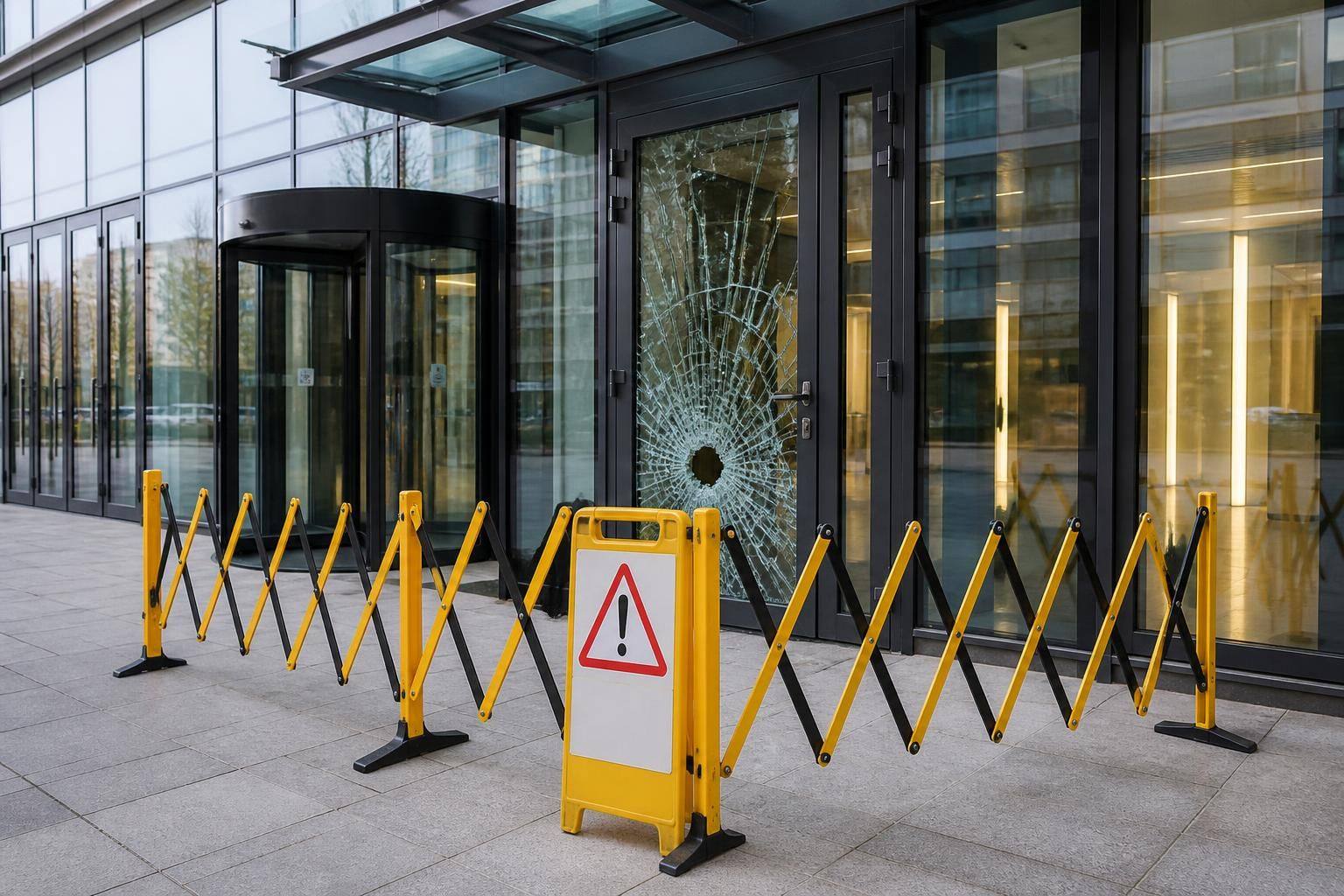
What temporary measures can protect a commercial premises before glazing repairs?
Temporary protection should secure the damaged area, prevent access and limit further exposure until a qualified glazing professional can assess it. Keep people away from broken glass, avoid handling loose fragments and use suitable barriers or boarding only where it can be installed safely without disturbing the remaining glazing.
The safest temporary protection combines controlled access, protection from weather and a clear route to professional assessment. The appropriate measure depends on the location, extent and stability of the damage, so staff should not attempt to make a cracked pane, glass door or shop front structurally safe themselves.
- Separate the area from normal activity. Use suitable freestanding barriers and clear warning notices to keep staff, visitors and contractors away from the affected zone. The control area should extend beyond any immediately visible fragments or cracks.
- Do not place pressure on damaged glazing. Avoid taping, pushing, drilling, leaning materials against, or attempting to remove a cracked or loose pane. These actions can disturb the glass or place additional stress on the frame.
- Consider temporary boarding only where it is safe. A properly installed board can help reduce exposure and improve security, but it should not be fitted if doing so could destabilise the remaining glazing, damage concealed services or obstruct a required entrance, exit or escape route. Boarding should be treated as a temporary control, not a repair.
- Reduce the effect of rain and wind. Close internal doors where appropriate, move stock, furniture and equipment away from the opening, and deal with water ingress without approaching unstable glass. Electrical equipment affected by water should be isolated by a competent person.
- Maintain safe circulation and fire arrangements. If a damaged glazed door or entrance cannot be used safely, direct people through an alternative route that remains suitable for the premises. Temporary protection must not block fire exits, emergency access, alarms, fire-fighting equipment or accessible routes.
- Protect the premises without concealing the problem. Building security or the responsible facilities team should be informed so that access arrangements, CCTV observations and site controls can be reviewed. Any temporary covering should still allow the damaged area to be assessed properly.
Where a pane has failed, the surrounding frame, seals, fixings and adjacent glass may also require inspection. A visual check from a safe position cannot establish whether the assembly remains suitable for continued use. Loose fragments should therefore be left for a suitably qualified glazing professional unless there is an immediate, unavoidable risk that requires emergency action under the premises’ own safety procedures.
The business should record the location, apparent cause and time of the damage, together with photographs taken from a safe distance and details of the temporary controls introduced. Incident records, landlord notifications and insurer requirements may also be relevant, particularly where the damage affects a leased property, public area or valuable stock.
GlassPlus UK can assess damaged commercial windows, shop fronts, curtain walling and glazed doors, then advise whether repair, replacement or a more controlled temporary arrangement is appropriate. Businesses can contact the team during Monday to Friday, 7.30am to 4.30pm, with the premises address, affected glazing type, access conditions and photographs where these can be provided safely.
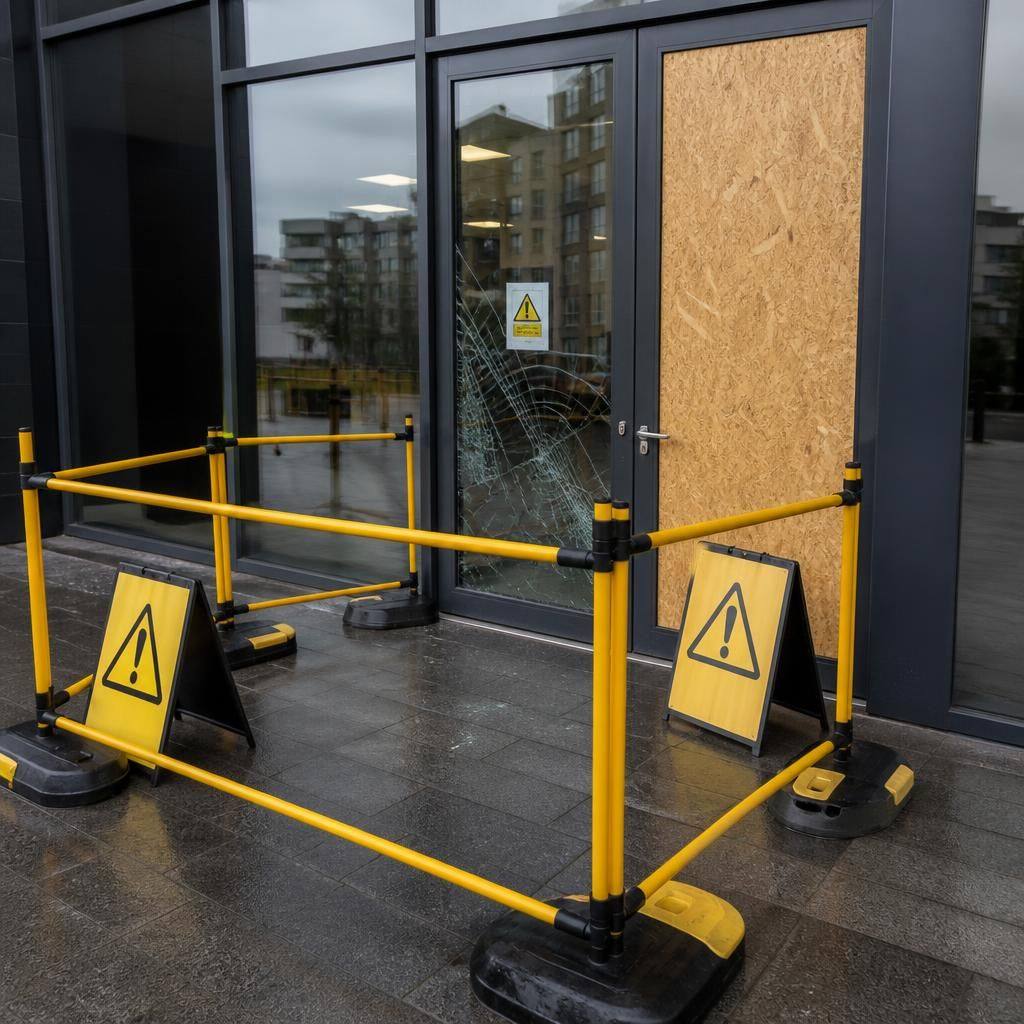
Temporary protection should be checked regularly by the person responsible for the premises. Any movement in a board or barrier, new cracking, rattling, water ingress or change in the surrounding frame should be treated as a reason to increase the exclusion area and seek professional advice. Staff should not adjust fixings or attempt to make the glazing secure themselves.
Keep a clear handover for reception, facilities and security teams so everyone understands which entrance, room or work area is affected and what restrictions apply. This prevents temporary controls being moved for deliveries, cleaning or routine access before the damaged glazing has been assessed.