

How are commercial glazing repairs kept compliant with safety requirements?
Commercial glazing repairs are kept compliant through a careful assessment of the damage, selection of suitable materials and workmanship that follows current building and safety regulations. GlassPlus UK’s experienced team considers the condition and intended use of the glazing before completing and checking the repair.
Commercial glazing repairs remain compliant with safety requirements when the work is treated as a controlled building repair rather than simply a glass replacement. The process must account for the type and location of the glazing, the surrounding frame or curtain walling system, the risks to people using the premises and the requirements of current building and safety regulations.
Compliance begins with identifying the relevant risks. Glazing in a shop front, entrance, office partition or curtain wall may be exposed to very different conditions. A repair assessment should consider whether the glass is in a location where people could collide with it, whether it forms part of a door or screen, and whether the installation is exposed to wind, weather, impact or attempted entry. The required specification may therefore involve safety glass, suitable thickness, specific edge protection or a compatible framing arrangement.
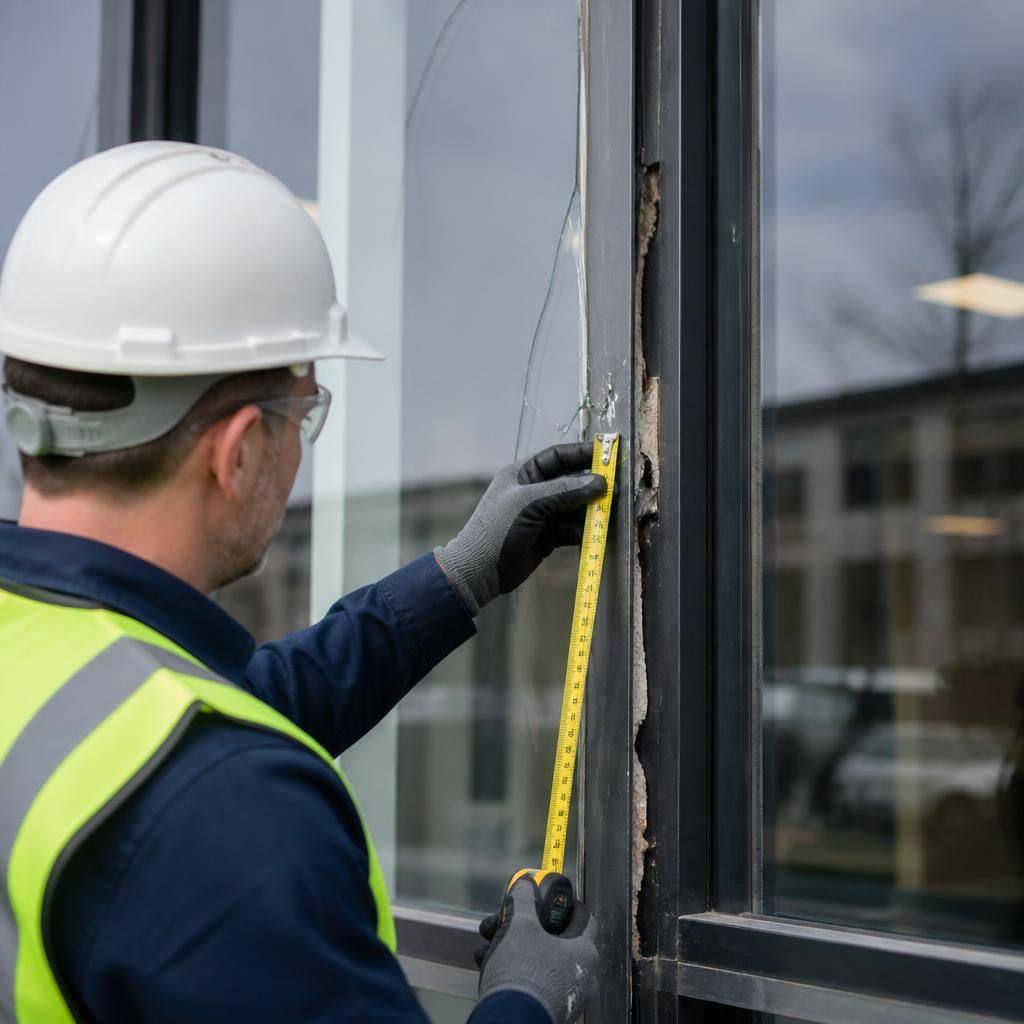
It is also important to establish whether the damage is limited to the glass or has affected the supporting system. Distorted frames, damaged beads, failed gaskets, loose fixings and defective sealant can all undermine the performance of a repaired pane. Replacing the visible glass without addressing a related defect may leave the installation vulnerable and could prevent it from performing as intended. Where the surrounding construction is not suitable for a safe repair, a wider remedial solution may be more appropriate.
The replacement material must be appropriate to the application. Commercial glazing is not a single product category. Toughened and laminated safety glass provide different forms of protection, while insulated units may be required where thermal or condensation performance is relevant. The choice should reflect the position of the pane, the way the premises are used and the design of the existing installation. Glass that is technically sound but unsuitable for its location does not provide a compliant repair.
Correct identification also matters when matching a damaged pane in an existing system. Measurements, glass build-up, clearances and the condition of the rebate need to be checked so that the new unit can be installed without excessive pressure or movement. The repair should preserve the intended function of the window, shop front or curtain wall, including weather resistance and safe operation where the glazing forms part of an opening element.
Safe working methods form part of compliance. Commercial repairs are often carried out while a property is occupied, so the work area should be managed to protect staff, visitors and members of the public. Appropriate controls can include segregating the affected area, preventing access to broken glass, using suitable handling equipment and removing damaged material in a controlled manner. The method should take account of nearby doors, walkways, displays, workstations and other operational constraints.
Installation quality is equally important. The pane needs to be properly supported and positioned within the frame, with suitable blocks, gaskets, beads or sealants used for the system. Excessive pressure, unsupported edges or incompatible materials can create stress and lead to premature failure. Seals and drainage paths should remain effective, and fixings or retaining components should be reinstated securely rather than improvised on site.
A final inspection confirms that the completed work is suitable for use. This should include checking the glass for damage, verifying that it is seated correctly and examining the frame, seals and retaining components. Openable windows and doors should be checked for safe movement, while fixed glazing should be reviewed for stability, visible gaps and signs that water could enter. The area should be left free from fragments and other hazards before it is returned to normal use.
For commercial clients, keeping a clear record of the work can also support ongoing property management. Useful information may include the location repaired, the nature of the damage, the type of glazing installed and any observations about the surrounding frame or system. This gives facilities managers and landlords a reference point for future inspections, planned maintenance or discussions with building control and insurers where relevant.
GlassPlus UK brings more than 30 years of industry experience to commercial glazing work. Its approach combines practical inspection, appropriate material selection and controlled installation with compliance with current building and safety regulations. For businesses comparing glazing contractors, evidence of relevant commercial experience, a clear quotation process and an ability to explain how the proposed repair addresses both safety and the wider installation are important indicators of a dependable service.
For a commercial client, compliance should be clear in the proposed scope of work, not left as an assumption. A suitable quotation should identify the affected glazing, describe the proposed repair and note any limitations caused by the existing frame or surrounding construction. This gives the responsible person a practical basis for reviewing the work before it begins.
When comparing contractors, it is worth asking how the specification has been reached and what will be checked once the repair is complete. GlassPlus UK can explain the reasoning behind its proposed approach, helping facilities managers, landlords and other responsible parties maintain a clear record that the repair was considered in relation to the building’s use and current safety requirements.