
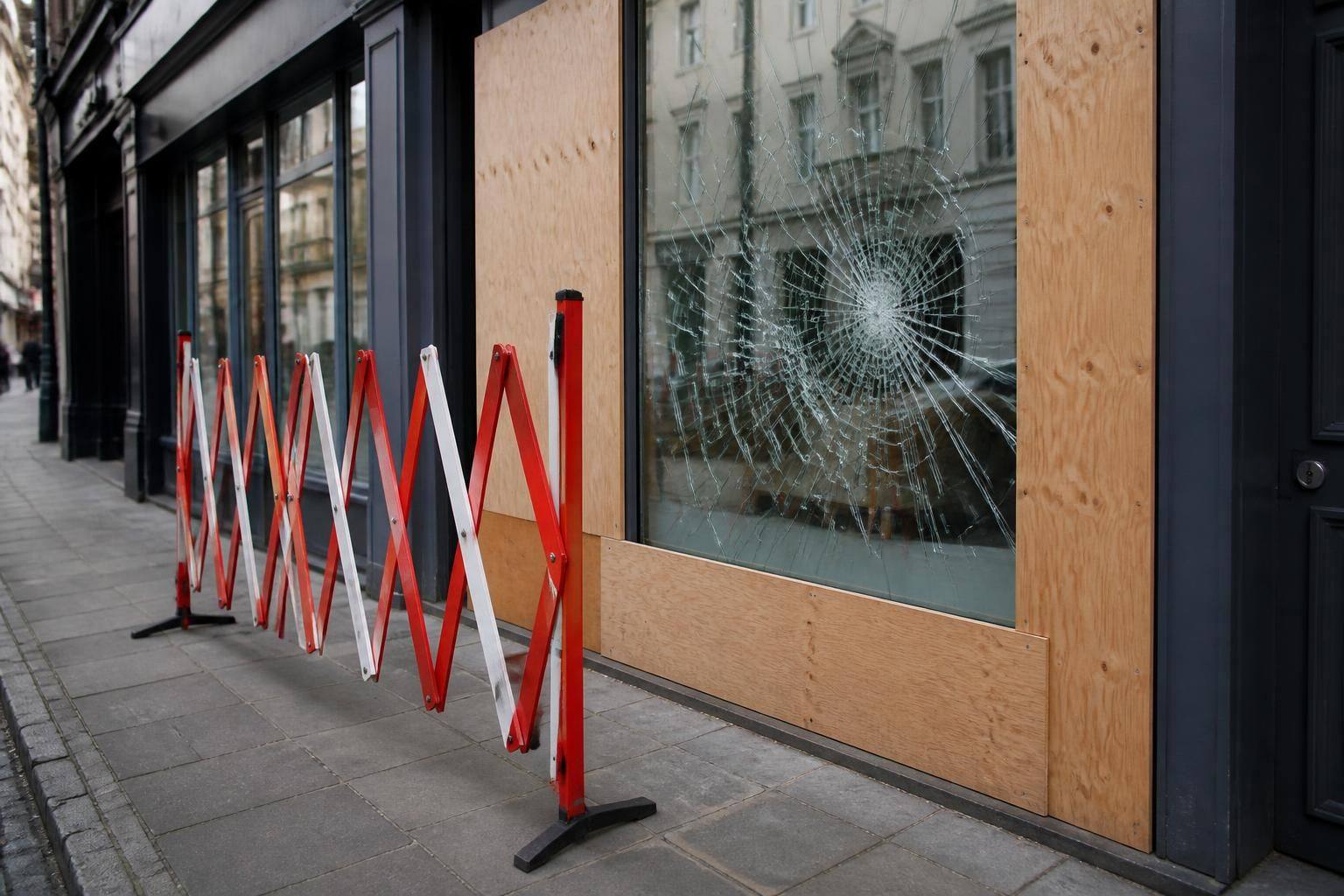
How should businesses protect a damaged shop front before repairs begin?
Businesses should keep people away from the damaged area, clearly cordon it off and avoid handling loose shards or attempting temporary repairs. A qualified glazier should then assess the shop front and advise on safe protection until permanent repairs can be arranged.
The safest way to protect a damaged shop front before permanent repairs is to control access, reduce exposure to weather and security risks, and arrange an assessment by a competent commercial glazier. Temporary measures should suit the type of damage and the existing frame, rather than being improvised on site.
Establish the condition without disturbing it. Damage may involve a cracked pane, shattered safety glass, a displaced panel, damaged seals or distortion to the surrounding frame. These issues can look similar from outside but require different precautions. A professional assessment should consider whether the glass is laminated or toughened, whether the frame remains stable and whether adjacent panels have been affected.
Before work is arranged, the business should make a visual record from a safe position. Photographs of the shop front, frame, signage and surrounding area can help the glazier understand the incident and may also support an insurance or landlord report. Notes should include when the damage was discovered, any known cause and whether there has been water ingress or a security concern. The damaged area should not be altered simply to make the frontage look presentable, as this can obscure useful evidence.
Protect the premises and nearby contents. Stock, display equipment, electrical items and documents close to the frontage should be moved away from the affected zone where this can be done safely. Internal areas beneath a damaged glazed section may need protection from rain, draughts or falling material. Any coverings used should be positioned so that they do not press against the glass, load the frame or conceal changes in the damage.
Security should also be reviewed. If the damaged opening leaves the premises vulnerable, a suitable temporary closure may be required. Boarding, temporary screening or other protection should be specified and installed by an experienced contractor. It must not block entrances, emergency exits, ventilation routes, fire safety equipment or access needed by other occupiers. Poorly fitted boarding can damage aluminium sections, obscure signage and create additional work when the permanent repair is carried out.
Do not apply pressure to the frame or surrounding panels. Shop fronts often use connected sections, so forcing a damaged panel, leaning materials against it or attempting to pull a frame back into position may transfer stress to adjoining glass. Temporary protection should be fixed to sound parts of the structure only, using a method that can be removed without damaging the shop front.
Where rain is entering, the priority is to limit the route of water until the glazing can be repaired. Temporary weather protection should be kept clear of drainage paths and should not rely on household materials that leave adhesive, trap moisture or interfere with the frame. A glazier can identify whether water is entering through the damaged pane, a failed seal, a joint or the surrounding building fabric.
Keep information available for the repair team. Useful details include:
- the approximate dimensions and position of the affected pane;
- whether the damage is to a door, fixed window, corner section or larger curtain-style frontage;
- the frame material and any visible identification marks;
- access restrictions, delivery limitations and the preferred working arrangements for the premises;
- whether the frontage forms part of a shared building or leased unit; and
- any requirements from the landlord, insurer or managing agent.
This information helps the contractor plan the correct glass specification, access equipment and protection method. It also reduces the risk of ordering a replacement that does not match the existing thickness, safety classification, tint, finish or framing system.
Temporary protection must not be treated as a permanent repair. A covered or boarded shop front can still contain concealed damage, and a crack may extend or change as temperatures and building movement vary. The condition should be monitored visually from a safe distance, with any change reported to the contractor. New water ingress, movement in the frame, damage to adjacent sections or a worsening security problem should be treated as reasons for further professional advice.
GlassPlus UK approaches this preparation as part of the repair rather than as an afterthought. With over 30 years of industry experience, the company assesses the glass, frame and surrounding shop front before recommending a practical protection and repair method. Work is carried out with regard to current building and safety regulations, helping commercial clients protect their premises while the correct permanent solution is arranged.
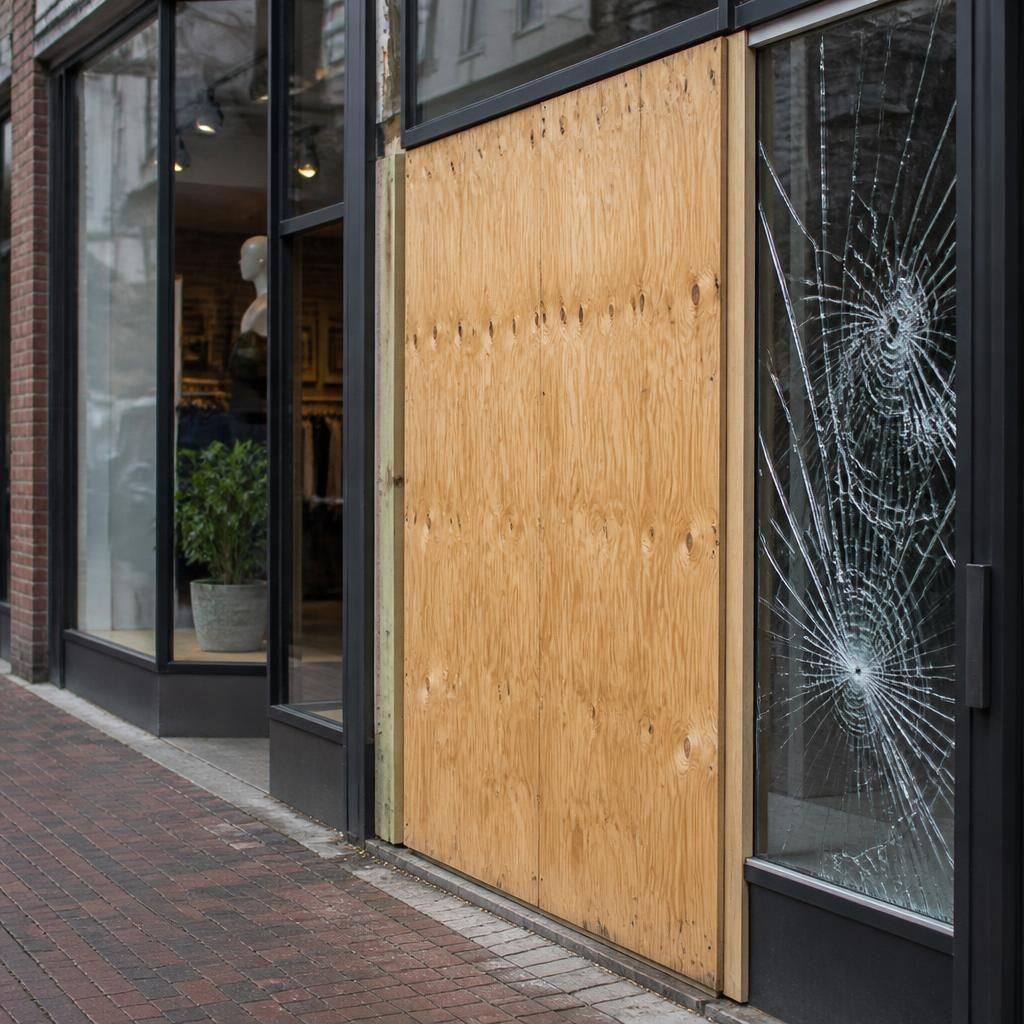
When comparing glazing contractors, businesses should check that temporary protection is included in the proposed repair method rather than treated as a separate emergency measure. The quotation or work plan should explain how the damaged frontage will be made safe, how the protection will be secured and how it will be removed when the permanent repair is completed.
This provides a clearer basis for comparing quotations and helps prevent unsuitable short-term work being carried out before the correct glass and framing solution is agreed. GlassPlus UK considers the protection required alongside the permanent repair, giving commercial clients a more coordinated approach to securing the shop front.