
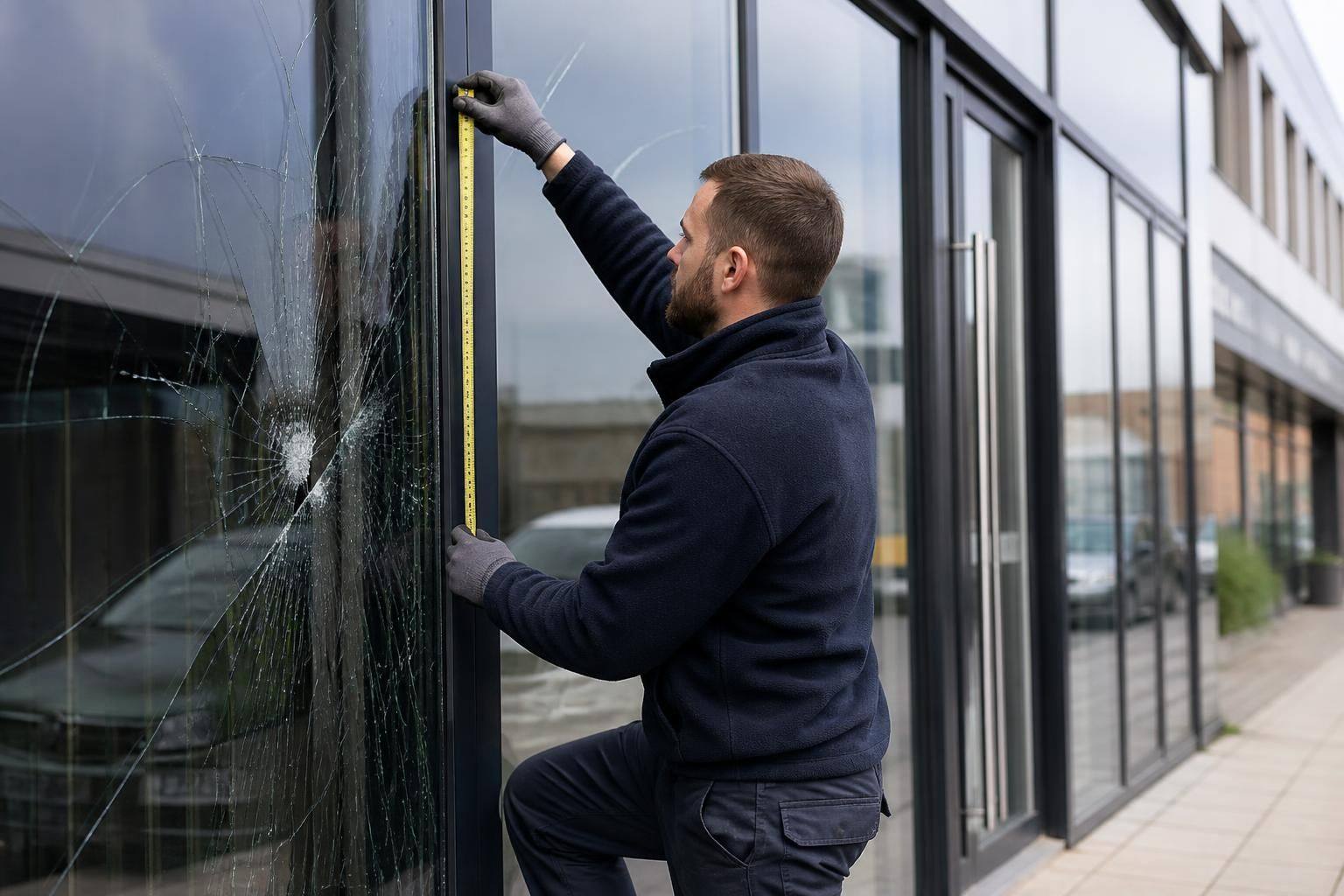
How should a business prepare for shop front glass replacement?
A business should make the affected area safe, clear access to the shop front and gather key details such as measurements, photographs and any site restrictions. Providing this information to a commercial glazing specialist helps establish the replacement requirements and plan the work with minimal disruption.
Effective preparation for shop front glass replacement involves coordinating the people, permissions, site conditions and business arrangements that can affect the work. A business should appoint a responsible contact, confirm the required glass specification, check any building or insurance requirements, and plan how staff, customers and stock will be managed while the replacement is carried out.
Appoint a site contact. One named person should be available to answer questions, approve decisions and provide access to relevant information. This avoids delays caused by conflicting instructions and gives the glazing contractor a clear point of contact before and during the work.
Check permissions and responsibilities. If the premises are leased, the landlord, managing agent or facilities team may need to approve the work. Listed buildings, managed developments and properties with a uniform shop front may also have specific requirements. The business should check its lease, building management arrangements and insurance policy before authorising replacement glass. It is also sensible to establish who is responsible for arranging and paying for the work.
Review the required specification. Replacement glass should be suitable for its position and use, rather than selected on appearance alone. The discussion may include:
- whether safety glass is required for the location;
- the appropriate glass thickness and construction;
- clear, tinted, patterned or coated glass, where relevant;
- compatibility with the existing frame, seals and surrounding shop front; and
- whether the finished installation needs to match adjacent panes.
The correct choice depends on the opening, the framing system, the level of exposure and applicable building and safety regulations. A commercial glazing specialist can assess these factors before the specification is finalised.
Plan around the business. The business should decide how the affected entrance or display area will be managed during the work. This may involve informing employees, adjusting customer routes, moving valuable or delicate merchandise away from the immediate work zone and considering whether trading arrangements need to change temporarily. Advance communication is particularly important where the shop front forms part of a shared entrance, reception area or busy commercial building.
Confirm practical site arrangements. Before the installation date, the business should check how materials and equipment can reach the property, whether a loading area or building booking is needed, and whether the contractor must comply with site induction, security or permit procedures. Managed buildings may require named operatives, risk assessments or method statements in advance. Providing these requirements early helps the work to be planned in accordance with the building’s procedures.
Prepare relevant records. Existing photographs, previous glazing specifications, maintenance records and details of earlier alterations may help clarify what is being replaced. If the shop front forms part of a wider refurbishment or insurance claim, the business should retain correspondence, approvals and invoices. These records can be useful for property managers, insurers and future maintenance decisions.
Agree the completion arrangements. The business should understand how the completed work will be checked, including the appearance of the glass, the operation of doors or windows and the condition of surrounding finishes. Any questions about cleaning, protective films, seals or follow-on work should be raised before the job begins. Clear agreement at this stage helps ensure that the replacement meets the property’s practical and visual requirements while supporting a well-organised installation.

Before work begins, the business should identify any fittings or systems attached to, or positioned immediately beside, the affected pane. These may include alarm contacts, automatic door sensors, security shutters, signs, blinds, lighting or display fixtures. A glazing contractor can then determine whether another specialist needs to isolate, remove or reconnect them. Confirming these interfaces in advance helps prevent unexpected complications and ensures the replacement can be completed without damaging connected equipment.
Discuss your shop front glass replacement requirements
Once the relevant site details have been reviewed, businesses can discuss the replacement requirements with GlassPlus UK to clarify the proposed approach and any outstanding considerations. This provides a practical basis for progressing towards a suitable quotation.