What glass thickness is suitable for shop front replacement?
The suitable glass thickness for a shop front replacement depends on the pane’s dimensions, framing system, location and required safety performance. GlassPlus UK can assess these factors and specify compliant replacement glass for the commercial property.
There is no universal glass thickness for a shop front replacement. The correct specification must be selected for the opening, the existing framing system and the level of safety, security and performance required. A thicker pane is not automatically a better replacement if it is incompatible with the frame or does not provide the right type of protection.
For most commercial shop fronts, safety glass is an important consideration. Toughened glass provides improved resistance to impact and breaks into small, relatively blunt fragments if it fails. Laminated glass holds together when broken, helping to reduce the risk of falling fragments and providing additional resistance where security or continued separation is important. In some locations, the specification may require one type, the other or a combination of both.
The glass thickness is assessed alongside several practical factors:
- Pane size and proportions: larger or more exposed panes place different demands on the glass than smaller sections.
- Frame and glazing system: the replacement must fit the rebate, gaskets, beads and drainage arrangements without placing excessive load on the surrounding structure.
- Position within the premises: glass close to entrances, circulation areas and other vulnerable locations may require a specific safety-glazing treatment.
- Wind and building exposure: the location, height and surrounding conditions can affect the performance required from the pane.
- Security needs: a business concerned about forced entry may need laminated or specially specified glazing rather than simply a thicker standard pane.
- Thermal and acoustic performance: where the shop front forms part of an insulated or double-glazed system, the replacement must match the unit design and the required performance.
It is also important to distinguish between the thickness of the glass itself and the overall thickness of a sealed double-glazed unit. A shop front may use a single pane, a laminated construction or an insulated unit, each of which is specified differently. The visible pane may therefore not reveal the complete specification.
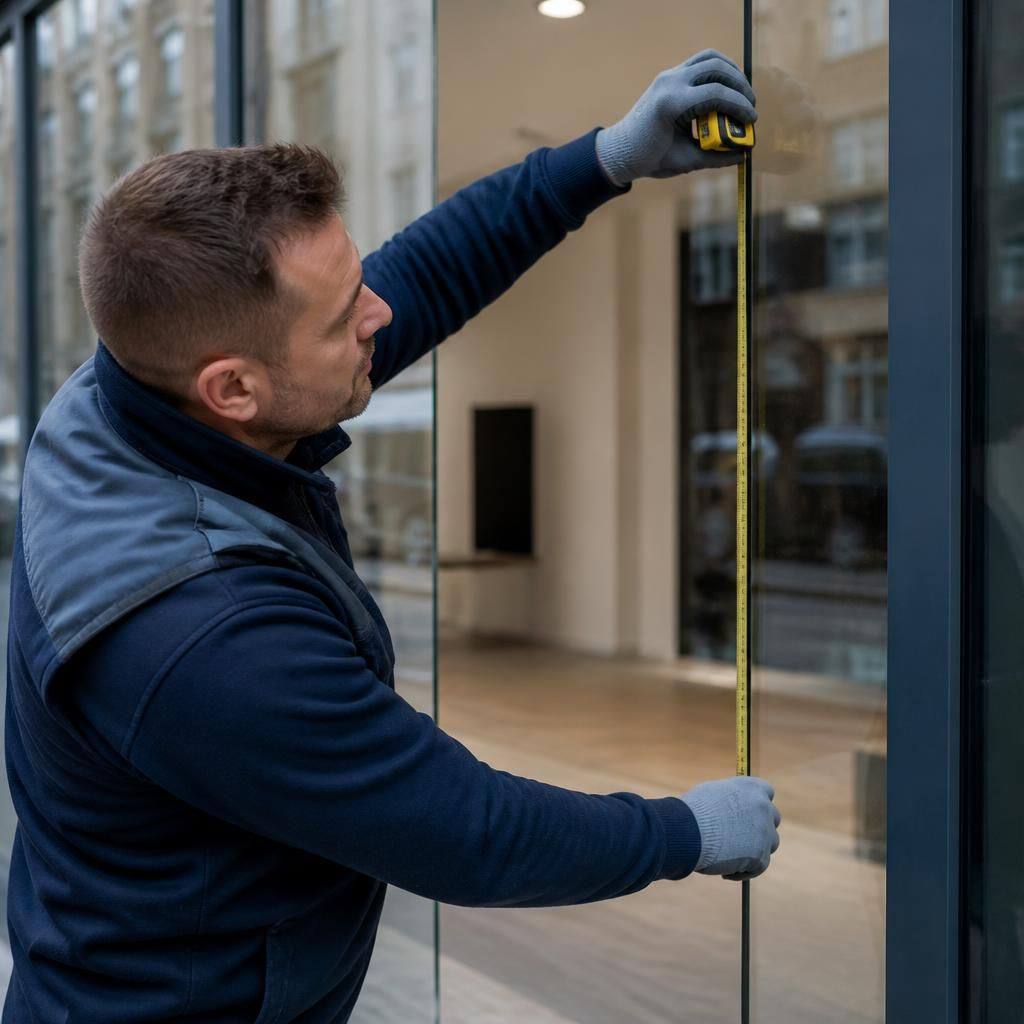
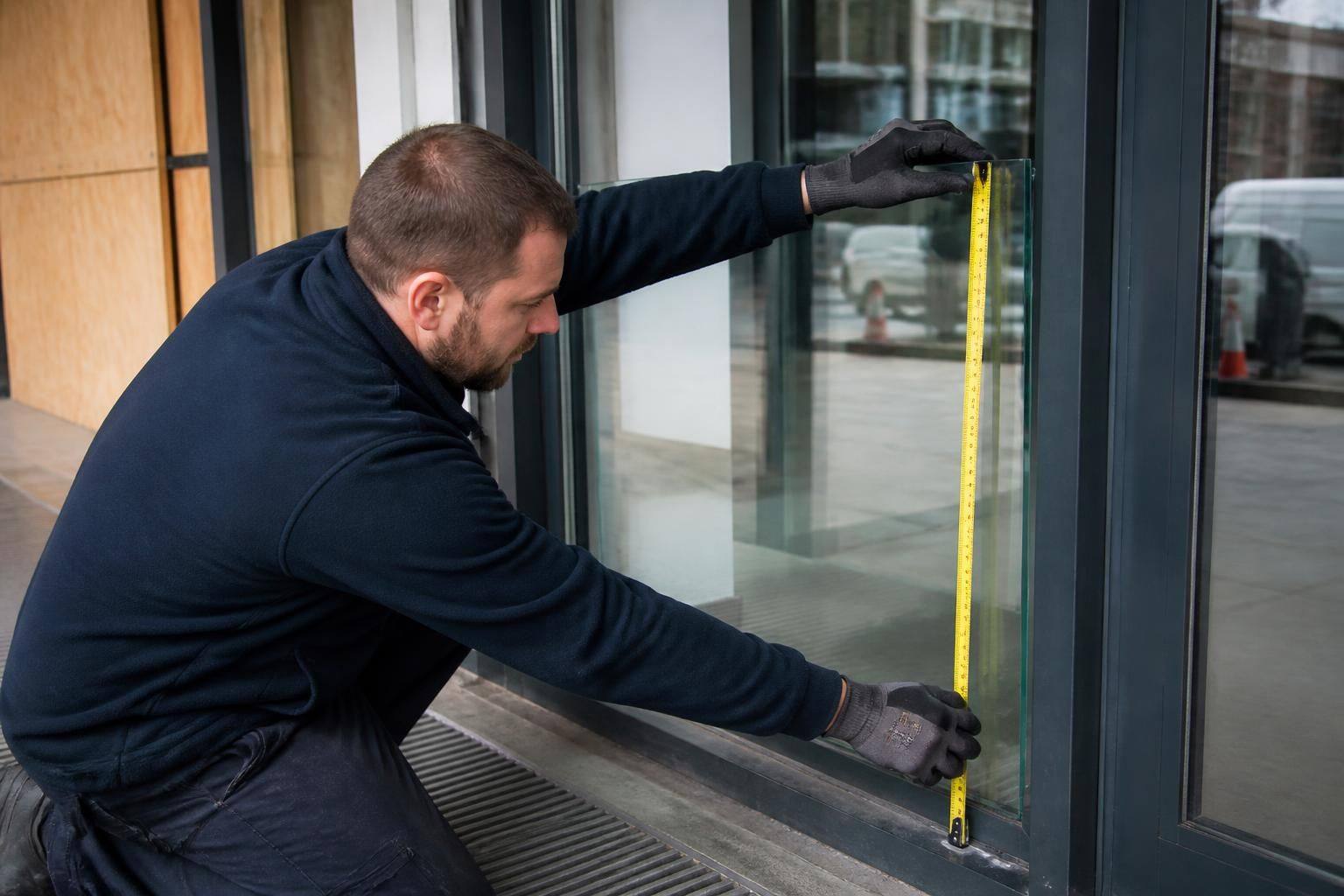
GlassPlus UK will inspect the opening and consider the existing frame, measurements, glazing method, condition of adjacent components and the likely use of the area. The replacement can then be specified to meet applicable building and safety requirements rather than selected by thickness alone. Where the original glass is marked, its safety classification and other identifying information can also assist with establishing a suitable replacement.
Businesses should provide clear photographs, the approximate opening dimensions and details of any visible damage when requesting an assessment. A site inspection remains the reliable way to confirm the glass construction and ensure that the proposed replacement is suitable for the shop front.
Glass thickness should be recorded as part of the complete glass build-up. Laminated glass comprises separate glass leaves and an interlayer, while an insulated unit has multiple panes, spacers and a sealed cavity. Their overall thickness and edge construction can therefore differ even where the visible face appears similar.
When arranging a shop front replacement, the quotation should identify the proposed construction rather than state thickness alone. This gives the business a clear specification to approve and helps ensure the replacement is suitable for the existing glazing arrangement.