What information is needed for a shop front glass replacement quotation?
To prepare a shop front glass replacement quotation, GlassPlus UK needs the opening’s approximate dimensions, the existing glass type and thickness where known, details of the frame or system, and clear photographs of the damage and surrounding shop front. Information about site access and any required timescales also helps the team assess the work accurately.
A reliable shop front glass replacement quotation depends on defining the full scope of work, the required glass specification, and any practical constraints at the premises. The more complete the information provided, the less likely it is that important assumptions will affect the final assessment.
In addition to the basic details about the opening and damaged panel, it is useful to confirm:
- The business and site contact: Provide the company name, property address, named contact and the person authorised to approve the work. For managed premises, include the landlord, managing agent or facilities contact where applicable.
- The condition of the surrounding installation: Explain whether the damage appears limited to the glass or whether beads, seals, gaskets, doors, locks or adjacent panels may also be affected. If broken glass is present, state whether it has been made safe or whether the area remains exposed.
- The required appearance: Mention any preference or existing requirement for clear, tinted, obscure, laminated or toughened glass, as well as manifestations, branding or a need to match neighbouring panels. The correct specification can depend on the position of the glass and how the shop front is used.
- Relevant property requirements: Shopping centres, managed estates and multi-occupancy buildings may have rules covering approved contractors, protection of communal areas, delivery arrangements, noise, permits or working methods. Sharing those requirements at quotation stage helps ensure the proposed work is suitable.
- Access and site logistics: Explain how the glazing team can reach the work area, including entrances, stairs, restricted loading areas, security procedures, parking limitations and any need to coordinate with neighbouring occupiers. Large panes may also require additional handling arrangements, depending on the installation.
- Available records: Previous glazing specifications, maintenance records, plans or photographs from before the damage can help where the original glass is difficult to identify. These records are particularly useful if the replacement must match other elevations or comply with a landlord’s specification.
The quotation should make clear whether it covers removal and disposal of the damaged glass, preparation of the opening, supply and installation of the replacement pane, new gaskets or seals where required, and making good around the completed installation. It should also identify any items that cannot be confirmed without closer inspection.
Glass specification is an important part of the assessment. A commercial shop front may require safety glazing, and the appropriate choice can be influenced by the pane’s location, size, proximity to doors or walkways, and the existing framing system. Where the available information does not establish the specification with confidence, GlassPlus UK can identify the points that need checking before a firm quotation is issued.
A clear quotation should also distinguish between confirmed costs and provisional elements. For example, concealed damage, difficult removal, restricted access or deterioration within the frame may only become apparent when the installation is inspected. Asking for these assumptions to be stated in writing allows a business to compare quotations on a like-for-like basis rather than comparing headline prices alone.
For a commercial client, the strongest quotation is one that records the proposed glass, installation scope, site assumptions, compliance considerations and any exclusions in plain language. GlassPlus UK’s experience in commercial glazing repairs supports a practical assessment that considers both the immediate replacement and the condition of the surrounding shop front. Its work is carried out in line with current building and safety regulations, helping businesses make an informed decision about the repair.
If the available information is incomplete, the appropriate next step may be a further technical discussion or a site inspection before the price is finalised. This is preferable to selecting a quotation based on an uncertain specification, particularly where the shop front forms part of a larger commercial façade.
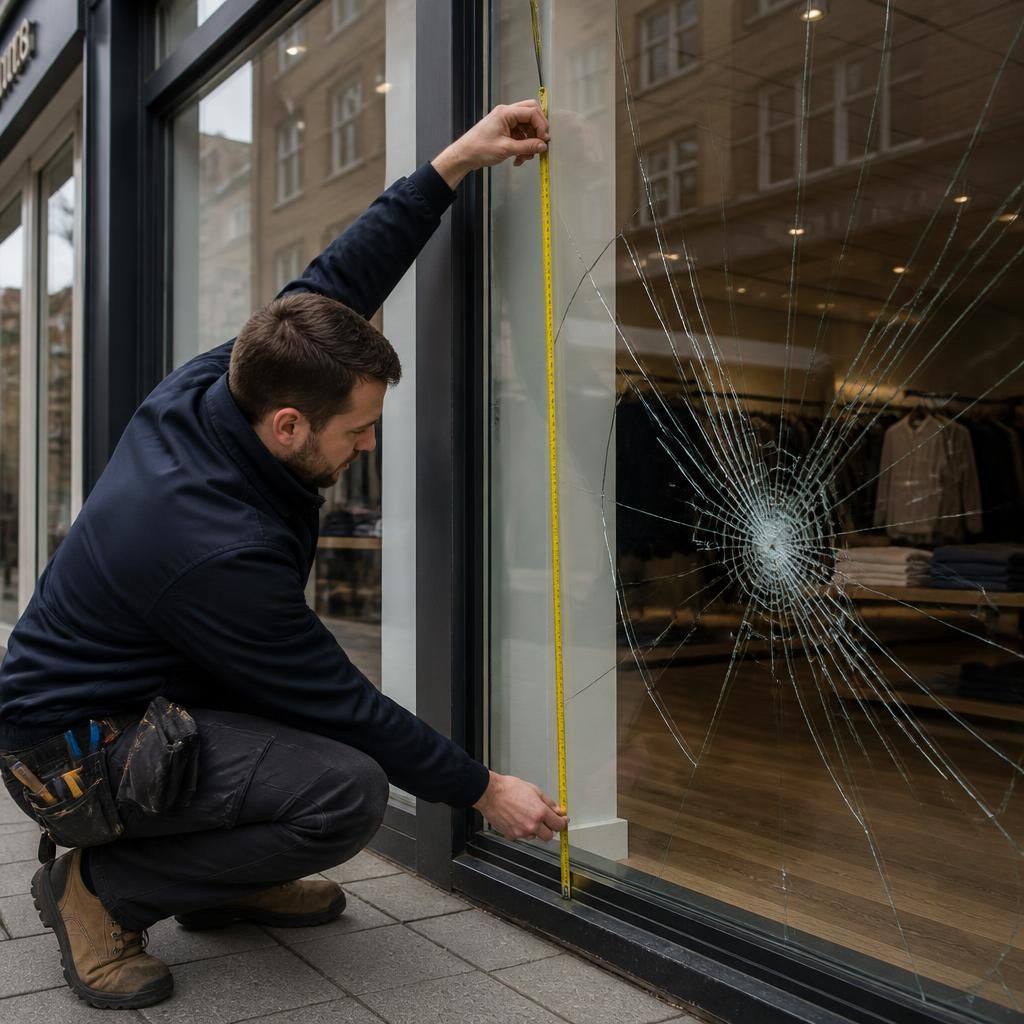
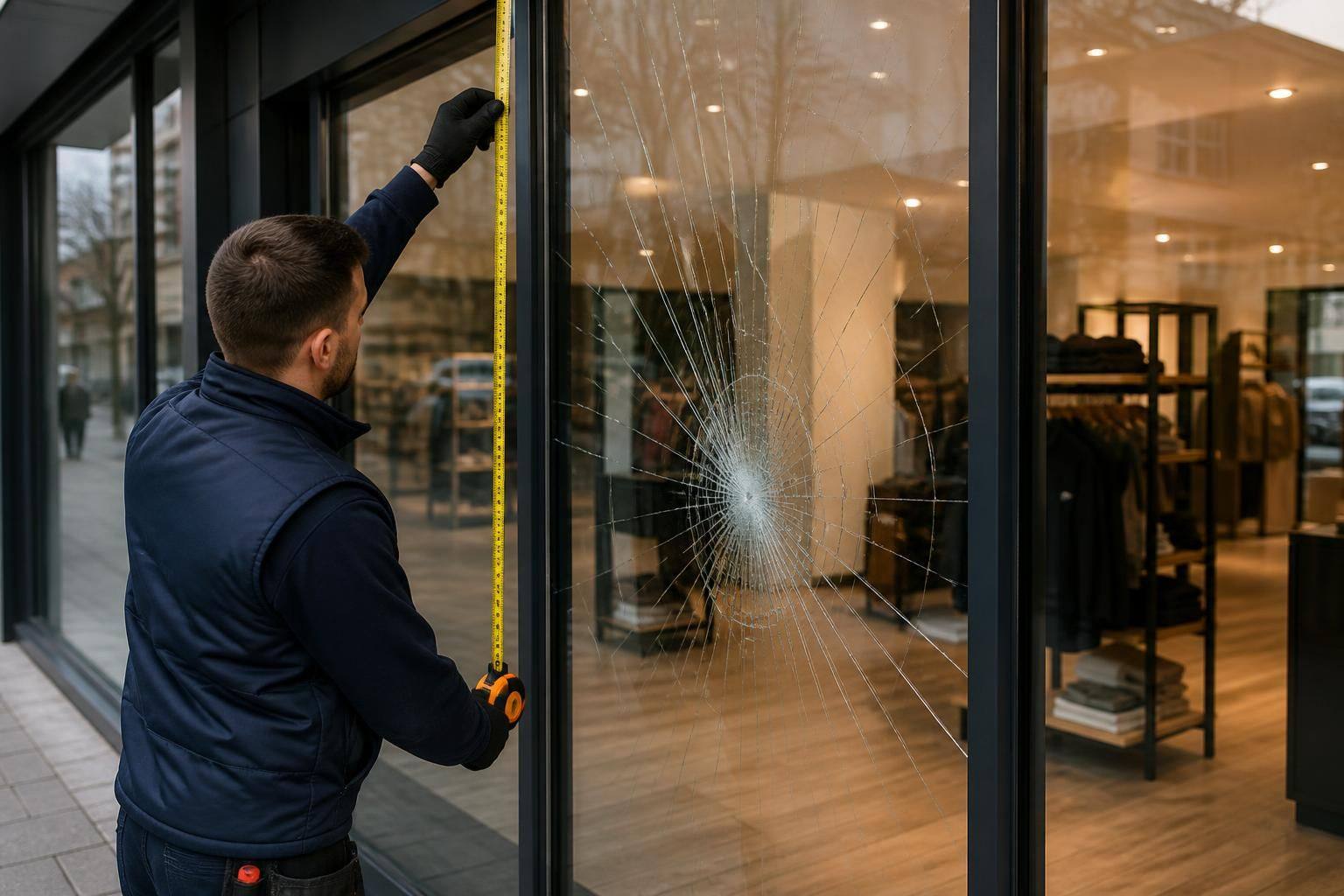
Measurements are most useful when they describe the opening rather than relying solely on the visible face of the broken pane. Where it is safe to do so, provide the approximate width and height of the glazed opening, note whether the panel is fixed or part of a door, and indicate which measurements are estimates. A photograph showing the panel in relation to the surrounding shop front can help place those dimensions in context.
Broken glass should not be handled to obtain a measurement. If the opening cannot be assessed safely, that should be stated in the enquiry so the quotation can allow for confirmation during inspection. Clear, honest information is more valuable than an apparently precise measurement taken from an unsafe or incomplete position.