What types of damage require shop front glass replacement?
Shop front glass replacement is typically required when glazing is cracked, shattered, extensively chipped or otherwise compromised in a way that affects safety, security or the appearance of the premises. GlassPlus UK can assess the damage and advise whether replacement is necessary.
Shop front glass usually requires replacement when the damage has affected the pane’s structural integrity, security, safety performance or suitability for continued use. GlassPlus UK assesses the condition of the glazing, the surrounding frame and the existing specification before recommending the appropriate replacement.
Replacement is commonly needed in the following circumstances:
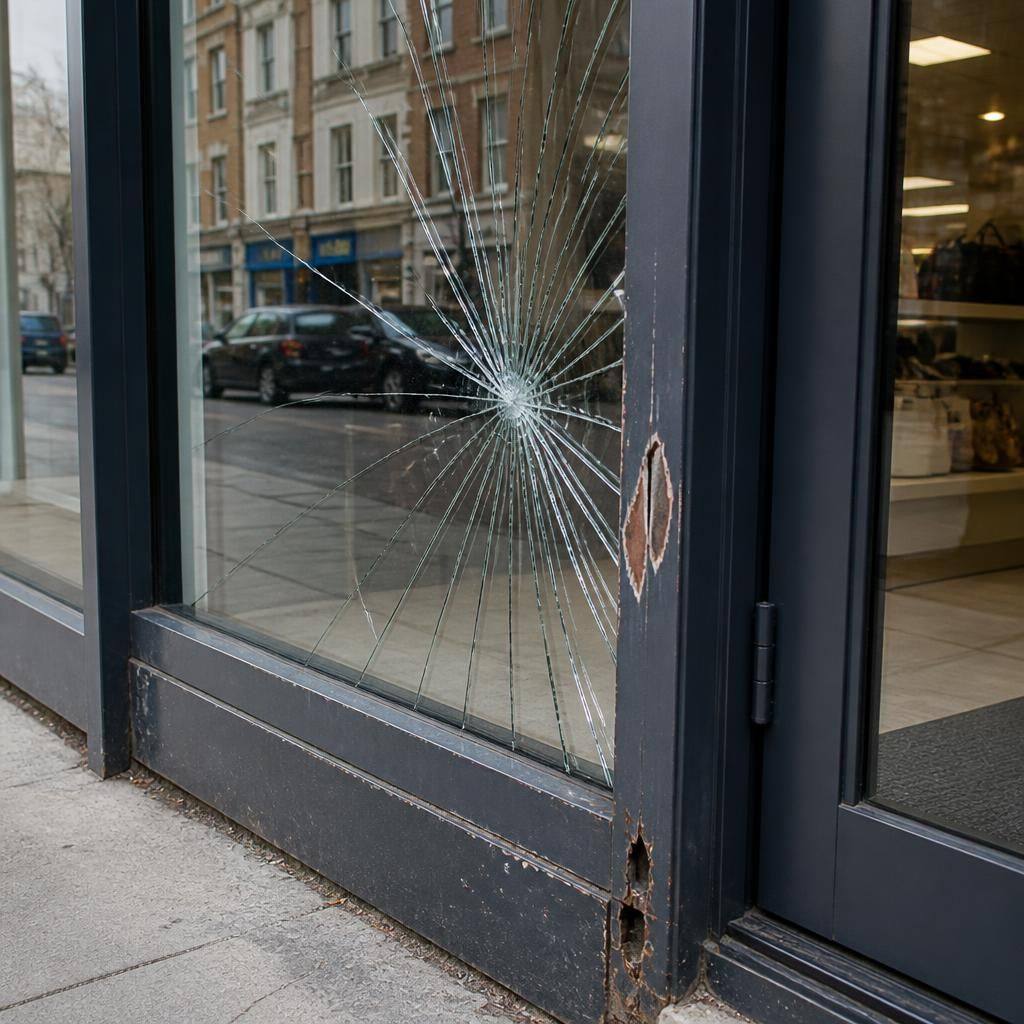
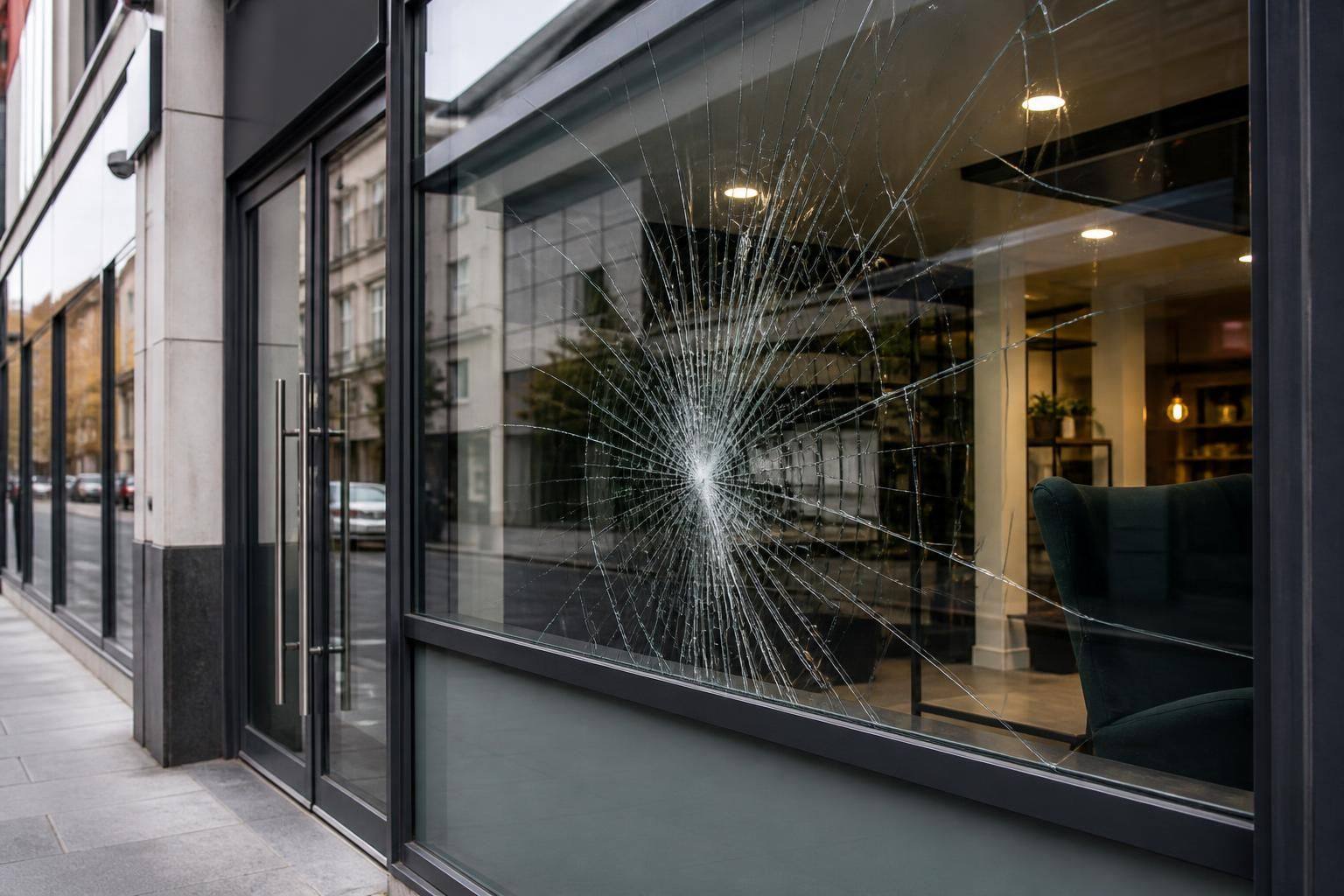
- Impact damage: A pane struck by an object may have a visible impact point, star-shaped marks or fractures spreading from the point of contact. Even where the glass remains in place, this type of damage can weaken the pane and make further failure more likely.
- Breakage or missing sections: A shop front with an open gap, a partially failed pane or glass held only by limited remaining material presents an immediate security and safety concern. Temporary boarding may protect the opening, but it does not replace the required glazing.
- Damage around the edges: Chips, bruising or fractures close to the edge of a pane can be particularly serious because the edge supports the glass within the frame. Damage in this area may worsen through vibration, temperature changes or movement in the shop front.
- Deep scratches, gouges and surface damage: Minor marks may be tolerable in some settings, but deep damage can impair visibility, affect the appearance of the premises and create a weak point. Polishing is not an appropriate solution where the surface has been substantially cut or compromised.
- Failed sealed units: Insulating glass units may develop misting, condensation or visible staining between the panes when the edge seal has failed. Cleaning the surfaces does not resolve this problem; the sealed unit normally needs to be replaced while retaining the frame where it remains suitable.
- Laminated glass damage: Laminated glazing can remain together after an impact because of its interlayer. This does not necessarily mean it is safe to leave in place. A damaged interlayer, loose fragments or significant distortion can mean that the complete pane must be renewed.
- Distortion or excessive wear: Glass that has become visibly warped, heavily marked or difficult to see through can affect presentation and safe operation at the entrance. Replacement may be appropriate where the condition cannot be corrected through cleaning or adjustment.
- Damage associated with the frame: A pane may be unsuitable for reuse if the frame, beads, gaskets or fixing points have been bent or damaged. The glazing and its supporting components need to work together, so the assessment should cover the complete shop front rather than the glass alone.
The correct replacement is determined by the pane’s position, dimensions, method of installation and required safety characteristics. A shop front may need toughened, laminated or insulating safety glass, depending on the location and design. The replacement should also be compatible with the existing framing system and installed in accordance with current building and safety regulations.
Businesses should avoid handling loose fragments, applying pressure to damaged glazing or relying on adhesive as a permanent repair. Photographs can help with an initial discussion, but an accurate quotation normally requires details of the opening, access conditions and the existing glass specification. GlassPlus UK can inspect the damage, identify whether the pane or wider framing needs attention and provide a clear recommendation for replacement.
The location of the damage is as important as its appearance. Glazing in a door leaf, low-level panel or busy customer access area is exposed to repeated movement and contact, so even limited damage may make replacement the safer option. GlassPlus UK considers how the pane is used, how it is secured and whether the surrounding shop front can continue to operate correctly before recommending the appropriate replacement.