
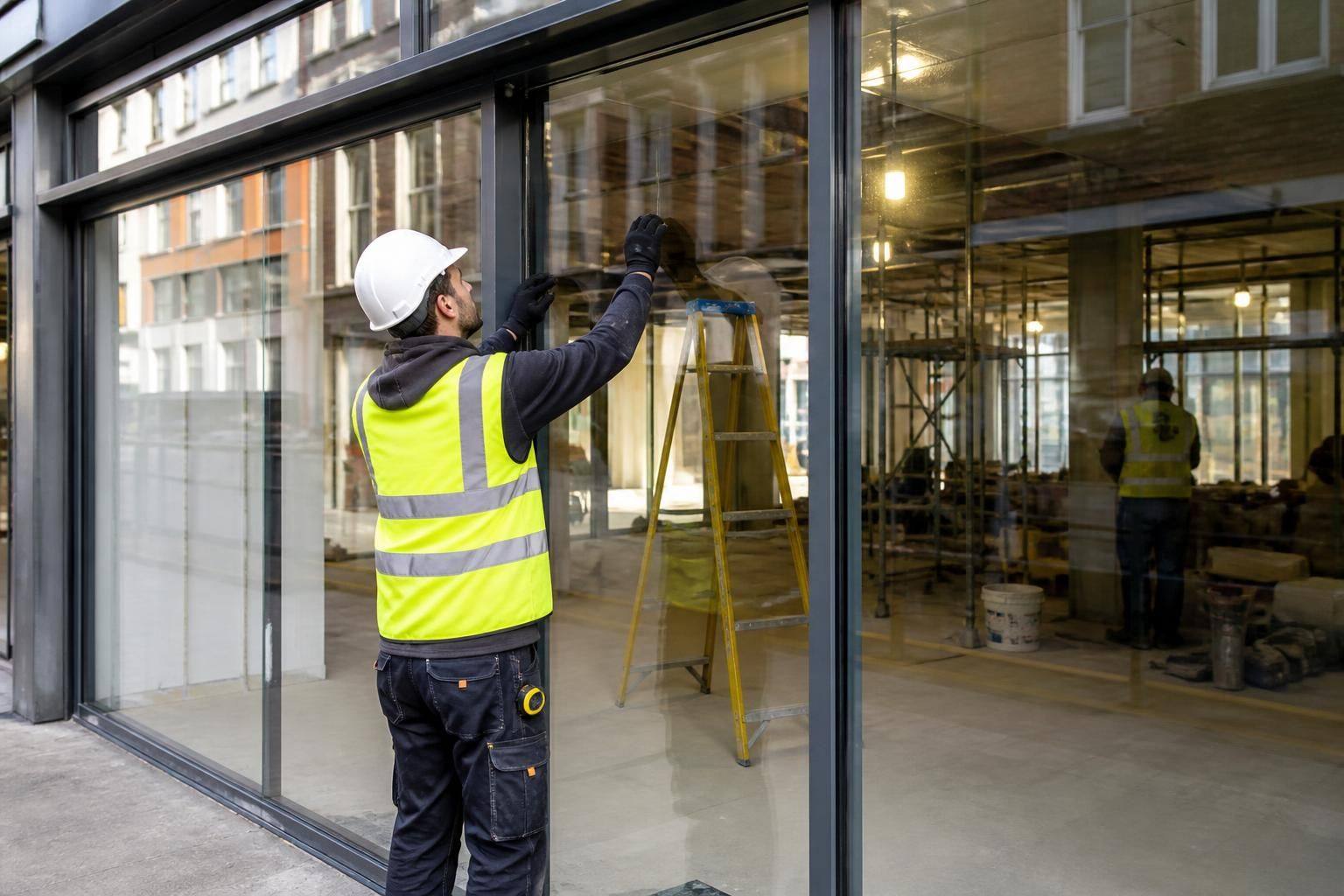
How can shop front installation accommodate a trading business?
Shop front installation can accommodate a trading business through careful planning, agreed access arrangements and, where appropriate, staged work to help maintain normal operations. GlassPlus UK coordinates the installation around the property’s practical requirements, managing site safety and customer access while fitting the new shop front efficiently.
A shop front installation can support a trading business by separating preparation, fabrication and fitting wherever the design allows. This reduces the amount of work taking place at the premises and helps the installation team focus on a controlled sequence once the site is ready.
Before work begins, the existing frontage can be assessed for its construction, fixing points, surrounding finishes and any defects that may affect the new installation. This information helps establish which components can be prepared in advance and identifies issues that could otherwise interrupt progress. The proposed sequence should also account for entrances, customer circulation, display areas, tills and adjacent occupied units.
For a live retail or commercial setting, the work area needs to be clearly separated from trading and pedestrian routes. Suitable protection can be used around floors, counters, stock and internal finishes, while the removal of existing glass and framing is carried out in a controlled manner. Clear separation is particularly important where customers, staff or deliveries continue to use the premises during the installation.
Installation activity may be organised so that the business retains a usable entrance or a practical alternative route wherever the design and site conditions permit. The position of temporary barriers, access restrictions and material storage should be agreed in advance. Deliveries also need to be coordinated with the available space, as large glass units and framing require careful handling and secure positioning before fitting.
The choice of shop front system can affect how easily the work is accommodated. A replacement that matches the existing opening and surrounding structure may involve less alteration than a substantially different arrangement. Glass specification, frame configuration, door position and finishes should therefore be confirmed before manufacture, rather than changed after removal has started.
Workmanship remains important in a trading environment because the completed frontage must provide more than a finished appearance. Glazing should be installed securely, doors and hardware should operate correctly, and joints and interfaces should be finished appropriately. The completed work must also comply with current building and safety regulations. GlassPlus UK brings more than 30 years of industry experience to commercial glazing projects, helping businesses consider both installation practicality and the performance of the finished shop front.
A structured handover gives the business an opportunity to check the completed frontage, access arrangements and any areas affected by the work. Any agreed finishing tasks can then be identified clearly, allowing the property manager or business operator to understand what has been completed before the installation is considered closed.
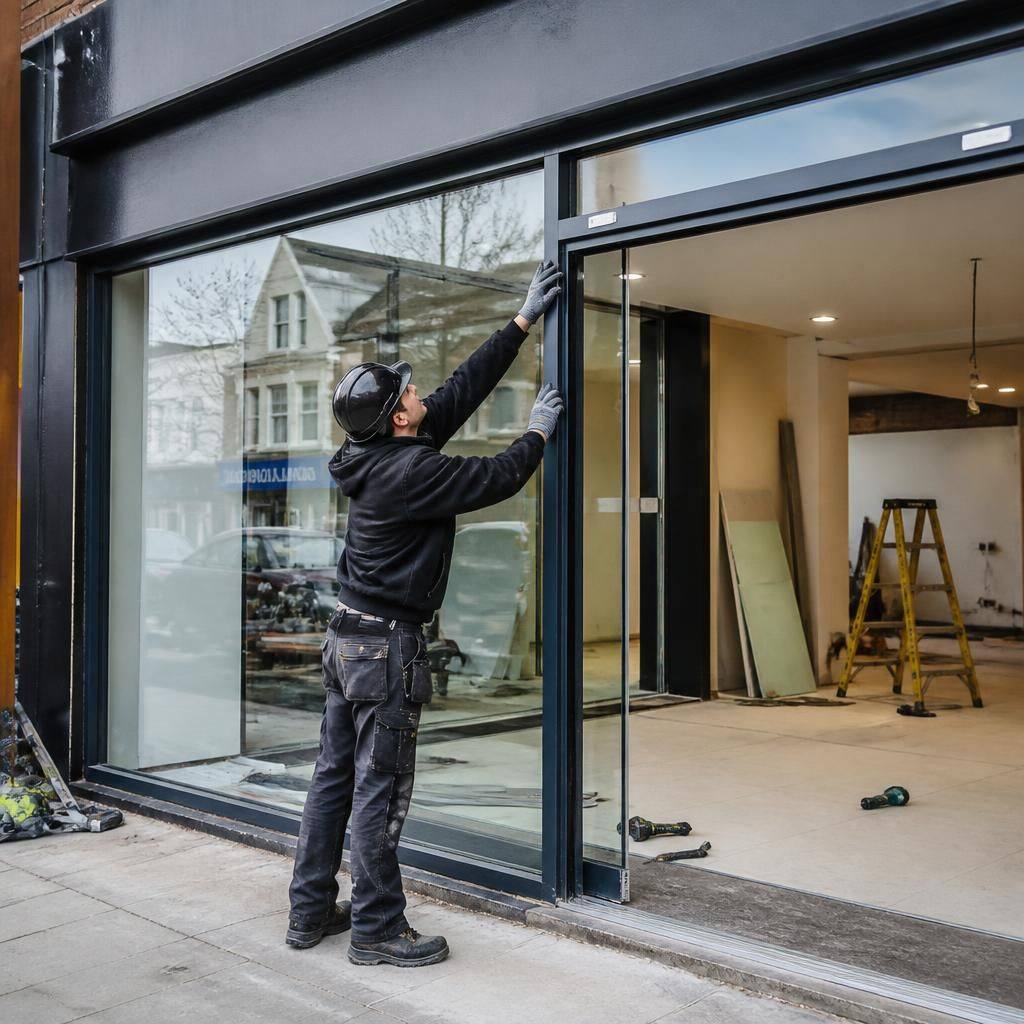
Maintaining security and weather protection is an important part of accommodating a trading business. When the existing frontage is removed, the open section should be managed carefully so the premises are not left unnecessarily exposed to unauthorised access or the elements. The installation plan should identify how each opening will be secured while work is in progress.
Before the new glazing is fitted, the team can also confirm that the surrounding structure is ready to receive it and that seals, thresholds and frame connections are properly considered. This helps protect the interior from draughts and water ingress while supporting a secure, finished shop front once the installation is complete.