
Is shop front refurbishment suitable for an older commercial frontage?
Yes, shop front refurbishment can be suitable for an older commercial frontage when the existing structure remains serviceable. GlassPlus UK can assess the glazing, framing and associated components to determine whether targeted repairs or selective replacement can improve the frontage while retaining appropriate features and meeting current building and safety regulations.
Shop front refurbishment is often suitable for an older commercial frontage, particularly where the main structure is sound and the original features contribute to the character of the premises. The decision should be based on the condition of the glazing system, the framing, the fixings and the surrounding building fabric rather than on the age of the frontage alone.
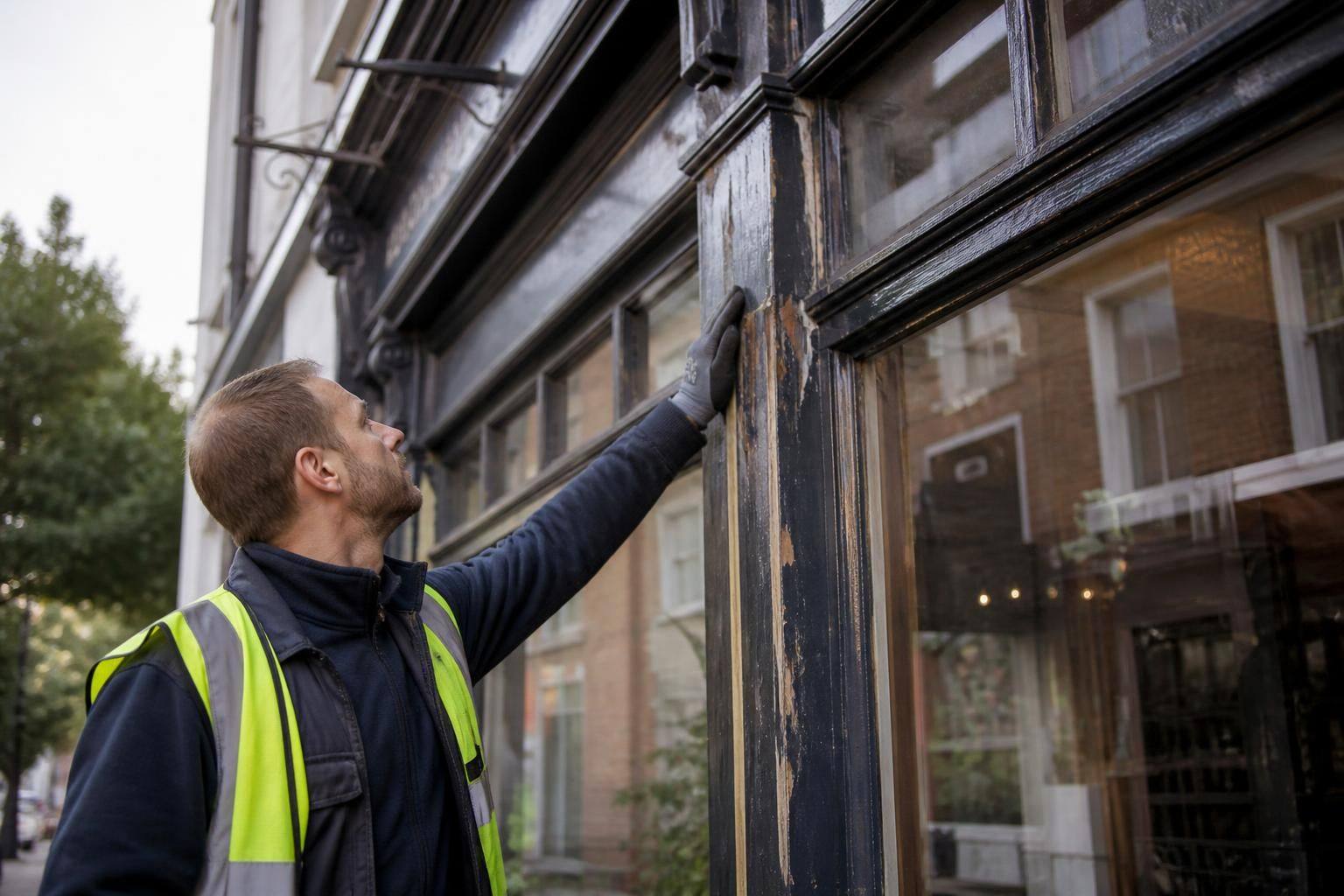
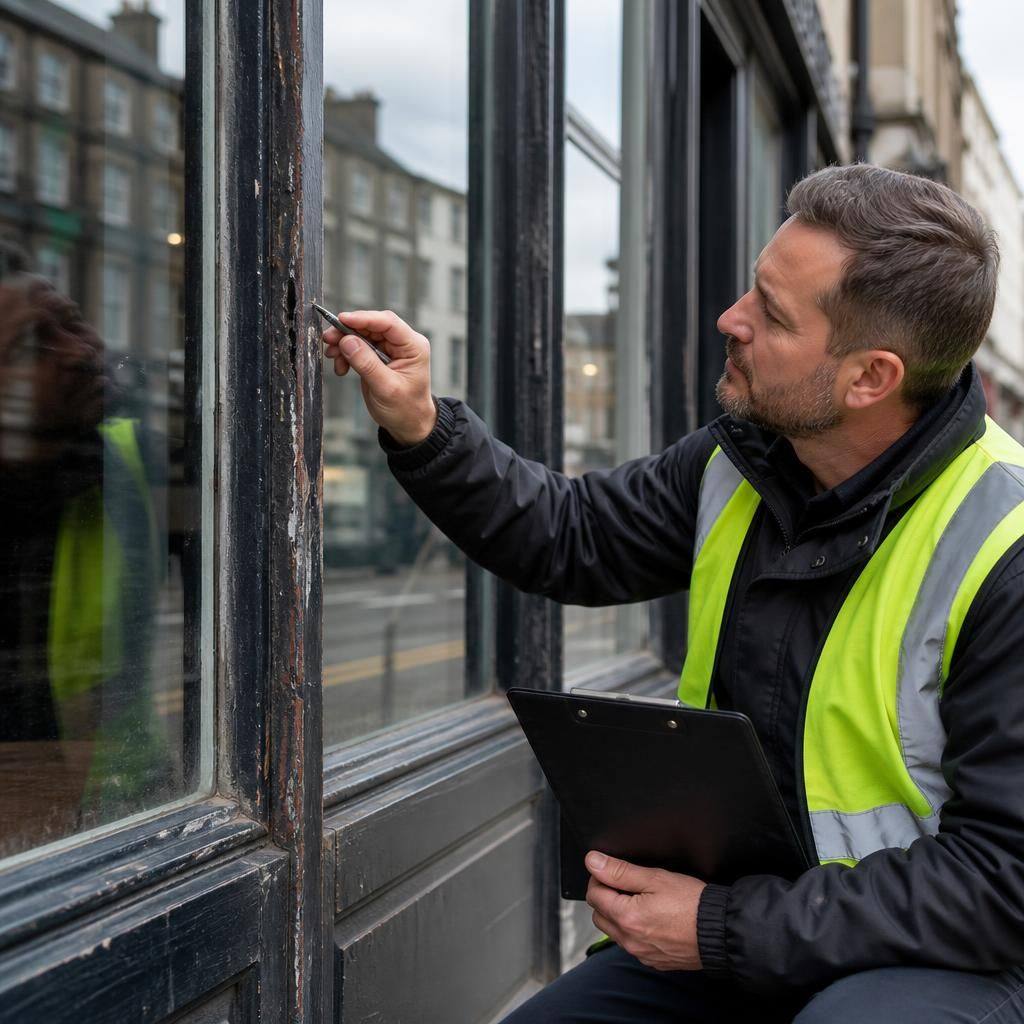
For an older shop front, a careful assessment can help establish which elements can be retained and which require attention. This may include checking for:
- Cracked, misted, loose or otherwise damaged glazing
- Corrosion, distortion or deterioration within metal frames
- Rot, movement or water ingress around timber or adjoining construction
- Failed seals, worn gaskets and defective beads
- Loose fittings, damaged doors or problems with alignment
- Signs that previous alterations have affected the frontage
Where the existing framework remains serviceable, refurbishment can be a practical way to improve the appearance and performance of the frontage without removing every original element. Localised glazing repairs, replacement panes, renewed seals and attention to framing may address specific defects while preserving established proportions, detailing or materials. This approach can be particularly appropriate where the frontage forms an important part of the building’s identity.
Selective replacement may be more suitable where individual components are beyond economical repair. For example, damaged panes, heavily deteriorated sections of framing or failed hardware can be dealt with without necessarily replacing the complete shop front. A competent commercial glazier should distinguish between cosmetic defects and problems that affect safety, weather resistance or the reliable operation of the frontage.
There are also circumstances in which refurbishment may not be the best option. Extensive corrosion, substantial movement, repeated water penetration or widespread failure across the framing can indicate that a more comprehensive replacement is required. Replacing isolated parts may not provide a dependable result if the supporting elements have already lost their integrity. The condition of the surrounding structure and the availability of suitable replacement components should also be considered, especially where the frontage uses older or non-standard details.
Appearance is only one part of the decision. The refurbished frontage should be considered in relation to the building’s use, the level of public contact, security requirements, ease of maintenance and the practical needs of the occupier. A visually sympathetic solution still needs to provide an appropriate standard of safety and usability for a busy commercial setting.
GlassPlus UK can advise on whether repair, selective replacement or a broader refurbishment is the more sensible route. With more than 30 years of industry experience in commercial glazing, the company can review the existing arrangement and explain the implications of each option before work is specified. This gives property owners, facilities managers and occupiers a clearer basis for comparing the likely scope of work rather than treating every older frontage as a complete replacement project.
A suitable refurbishment proposal should identify the affected areas, distinguish repairable items from replacement items and set out any limitations arising from the existing construction. It should also make clear whether access, temporary protection or coordination with other trades will be needed. For an older commercial frontage, this level of detail is important because concealed deterioration may only become apparent once components are opened up or removed.
In summary, age alone does not make a shop front unsuitable for refurbishment. If the underlying construction is sufficiently sound, a carefully planned combination of repair and selective replacement can preserve useful existing features while addressing defects. Where the condition is more widespread, a full replacement may offer a more appropriate long-term solution. An on-site assessment is the most reliable way to establish which option fits the property and its intended use.
For an older commercial frontage, refurbishment is often most suitable when the property is expected to remain in use and the existing design still serves the building’s purpose. The work can be planned around the owner’s longer-term intentions, including future alterations, changes in occupancy or a later redevelopment project. This helps avoid specifying extensive work that may soon become redundant, while still addressing defects that affect the frontage’s safe and practical use.
GlassPlus UK can help property owners and facilities managers compare a focused refurbishment with a more extensive intervention. The appropriate choice should reflect the building’s condition, its intended future and the level of investment that can be justified in the existing frontage.