
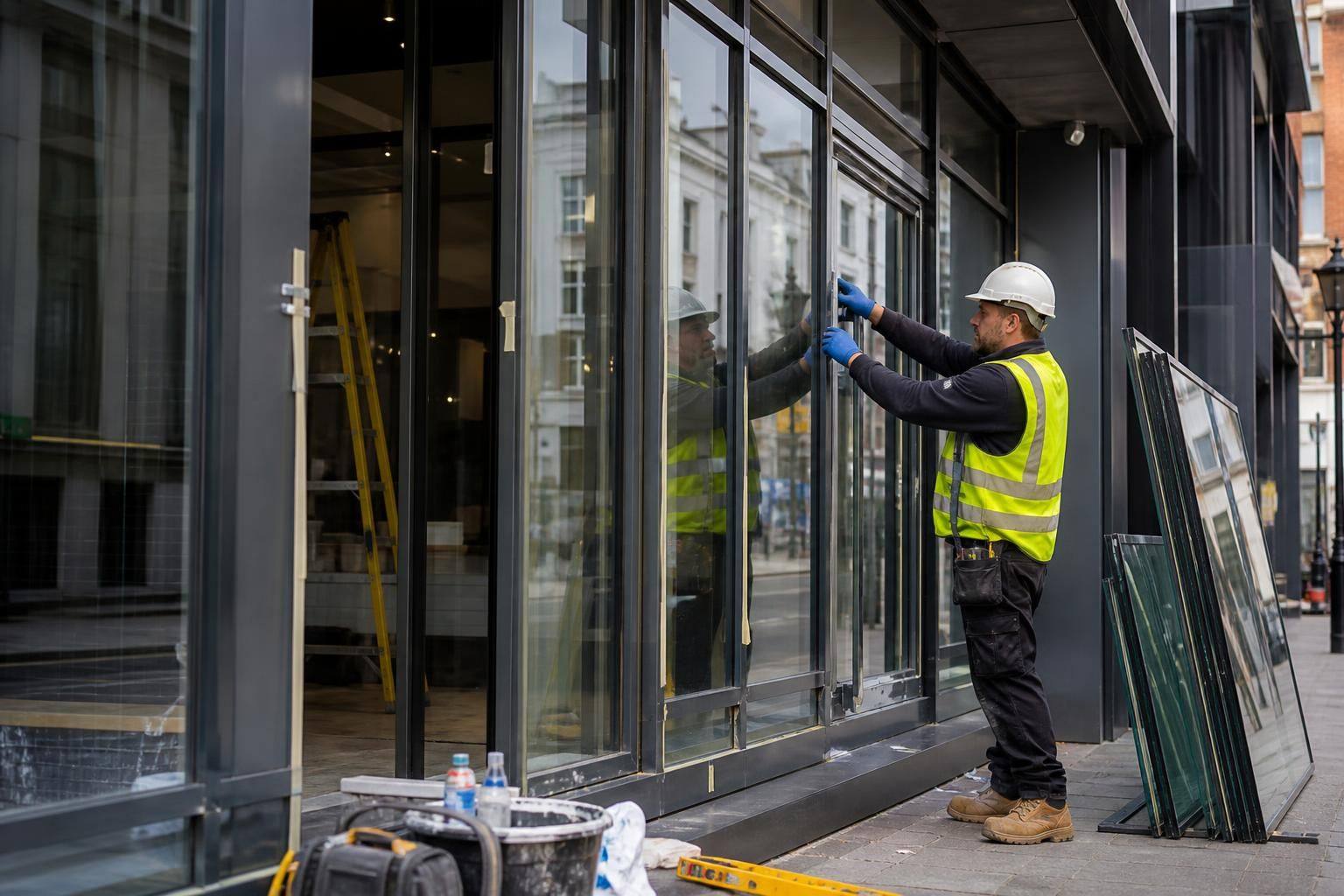
What is included in a shop front refurbishment quotation?
A shop front refurbishment quotation should clearly set out the proposed glazing, frame repairs or replacement, installation work and finishing details. It should also identify access requirements, any associated preparation, relevant building and safety considerations, and the costs included so the scope is clear before work begins.
A well-prepared shop front refurbishment quotation should give a clear, itemised description of the proposed work, the materials and specifications, the installation requirements, and the costs and conditions that apply. It should allow a commercial property owner, landlord or facilities manager to compare quotations on a like-for-like basis rather than relying on a single overall figure.
The quotation will normally begin with the findings from an initial assessment. This may record the existing shop front’s dimensions, the condition of the glazing and framing, visible damage, alignment issues, security concerns and any constraints affecting the work. If the quotation is based on photographs or preliminary information rather than a full survey, that assumption should be stated clearly, as measurements or concealed defects may need to be confirmed before work starts.
Material specifications should be sufficiently detailed to identify what is being proposed. For the glass, this can include the type, thickness, safety characteristics, appearance and any required performance properties. The quotation should also describe the proposed framing, doors, glazing beads, seals, finishes and associated ironmongery where these form part of the refurbishment. Where more than one specification is suitable, a useful quotation will explain the practical difference between the options instead of presenting an unexplained price variation.
The scope should distinguish between repair, partial replacement and a more extensive renewal. It should identify which existing elements are being retained, which are being removed and which are being replaced. This is particularly important where the frontage combines several materials or where the visible condition does not reveal the state of the supporting frame, seals or fixings. A clear description helps prevent assumptions about adjoining panels, doors, internal finishes or concealed work.
Installation details should cover the practical work required to complete the refurbishment. A quotation may include removal of existing glazing or framing, preparation of openings, fitting and sealing, securing the new components, adjustment of doors and final cleaning. It should also state whether the price includes removal and disposal of redundant materials, protection of nearby surfaces and making good around the refurbished area. These details can have a material effect on the final cost and should not be left ambiguous.
Access and site conditions should be recorded as part of the quotation. The document may need to identify requirements for working at height, delivery access, parking, lifting equipment, protection of the public and coordination with the building’s occupier or facilities team. If the premises must remain operational, the quotation should clarify any assumed working arrangements and whether the client needs to arrange access, permits or temporary security measures.
A professional quotation should separate included costs from exclusions and provisional items. It should explain whether the stated price covers surveying, manufacture, delivery, installation, waste removal and finishing work, and identify anything that would be charged separately. Common exclusions may relate to concealed structural defects, electrical alterations, specialist access arrangements or remedial work outside the agreed shop front scope. Stating these points in advance reduces the risk of unexpected variations.
The commercial terms should also be easy to understand. These usually include the quotation’s validity period, payment stages, any deposit requirement, expected lead-time assumptions, arrangements for variations and the process for approving additional work. The document should identify whether applicable taxes are included or shown separately, rather than leaving the total open to interpretation.
For a business comparing options, the lowest headline price is not necessarily the most informative quotation. The stronger comparison is based on equivalent glass and frame specifications, a complete installation scope, clearly stated exclusions and an appropriate approach to safety and building requirements. A quotation that omits preparation, disposal or finishing may appear cheaper while providing less complete value.
GlassPlus UK brings more than 30 years of industry experience to commercial glazing work. Its quotation process is intended to turn the condition of the existing frontage and the client’s requirements into a defined scope, helping businesses make an informed decision before refurbishment begins.

A useful quotation should distinguish essential refurbishment work from optional improvements. This enables the property owner or facilities manager to prioritise work where budgets or trading conditions require a staged approach, without confusing necessary repairs with enhancements to appearance, security or usability.
Each option should be priced and described separately, with its effect on the finished shop front explained in practical terms. This gives the client a clearer basis for deciding whether to proceed with the complete proposal or approve a defined first stage.